
Signage is the use of signs to communicate information, identify a business or location, provide directions, promote a brand, or guide people through a physical environment. It includes everything from storefront and monument signs to directional, informational, illuminated, digital, and interior signs. For businesses, signage is often both a communication tool and a visible part of the brand. The right sign can help people recognize a location, understand where to go, and interact with a property more easily.
Quick Answer: What Is Signage?
Signage refers to signs used individually or as a coordinated system to communicate information visually. Depending on the application, signage can identify a business, provide directions, display information, advertise products or services, communicate instructions, or help people navigate a property. The term can describe one type of sign or an entire collection of signs working together. Cambridge Dictionary, for example, describes signage as signs used to advertise products or stores and signs that tell people what something is or where to go.
What Does Signage Mean?
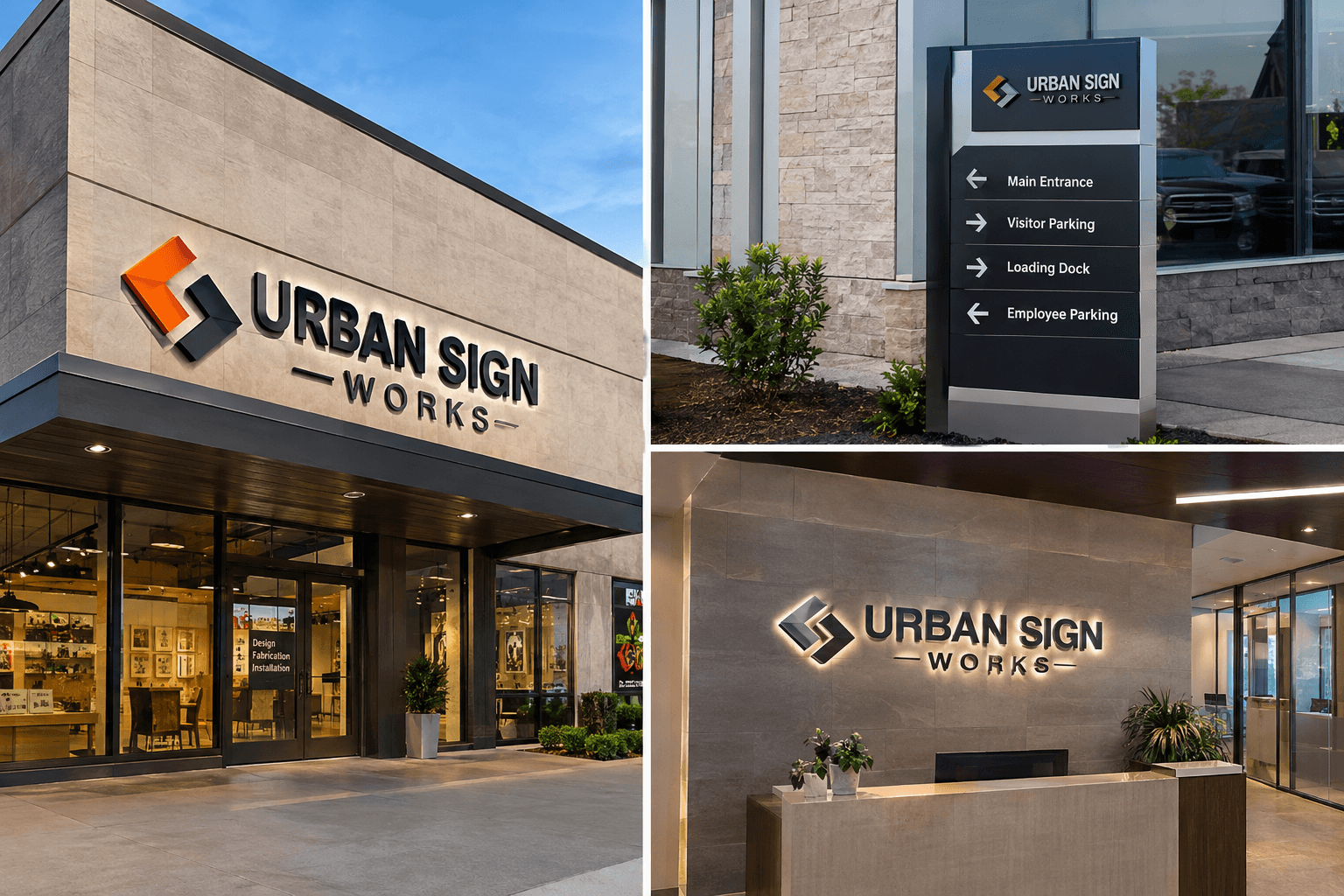
The signage meaning is broader than simply “a sign.” A sign is an individual visual communication element. Signage can refer to signs collectively or to a planned system of signs designed for a particular environment. For example, a business property might use:
- A monument sign at the entrance
- Storefront signage above the building
- Directional signs in the parking area
- A lobby sign at reception
- Room identification signs
- Information signage
- Exit and safety signs
Each sign serves a different purpose, but together they create a signage system. This distinction becomes especially useful when planning commercial properties, because visitors rarely need just one piece of information. They may need to identify the property, find the entrance, locate parking, reach a specific department, and find their way back out.
Signage definition, simply put: signage is a collection or system of signs used to identify, inform, direct, advertise, instruct, or communicate visual information.
The exact purpose depends on where the signage is installed and what the viewer needs to know. A storefront sign primarily identifies a business. A directional sign helps someone find a destination. An information sign provides details, while a promotional sign communicates a marketing message.
What Are the Main Types of Signage?
Different environments require different forms of communication, so signage comes in many types. Here are the nine most common categories.
1. Identification Signage
Identification signage tells people what a particular place, business, building, room, or department is. Examples include:
- Storefront signs
- Building signs
- Lobby signs
- Room identification signs
- Office signs
- Department signs
- Business signs
For a commercial business, exterior identification signage can make the location easier to recognize from the street or surrounding property.
2. Wayfinding Signage
Wayfinding signage helps people navigate a physical environment. It can direct visitors toward:
- Entrances
- Exits
- Parking
- Reception
- Elevators
- Restrooms
- Departments
- Buildings
- Loading areas
Wayfinding matters most in environments where visitors may not know the property layout, such as healthcare facilities, office campuses, shopping centers, hotels, educational campuses, and large commercial developments. Effective wayfinding does not simply add more signs; it places the right information where people need to make navigation decisions.
3. Information Signage
Information signage provides useful information to people at a specific location. Examples include:
- Property directories
- Visitor instructions
- Operating information
- Facility information
- Parking information
- Building directories
- Public notices
Good information signage answers a question without making the reader work unnecessarily hard to find the answer. A directory can tell visitors which businesses or departments are located inside a building, while an entrance sign can clarify where visitors should enter.
4. Directional Signage
Directional signage tells people where to go. These signs commonly use arrows, short text, numbers, or recognizable symbols. Examples include:
- “Parking →”
- “Main Entrance →”
- “Reception →”
- “Loading Area →”
- “Suite 200 →”
Directional signs are more useful when positioned before a decision point rather than after it.
5. Promotional Signage
Promotional signage supports marketing and sales activities. Businesses may use promotional signs to communicate:
- New products
- Special offers
- Events
- Seasonal campaigns
- Services
- Brand messages
Promotional signage can be temporary or integrated into a larger permanent signage strategy.
6. Illuminated Signage
Illuminated signage uses lighting to make a sign visible in low-light conditions. Common examples include:
- Illuminated channel letters
- Front-lit signs
- Backlit signs
- LED lightboxes
- Push-through illuminated signs
- Halo-lit dimensional letters
UrbanSign Works offers several illuminated commercial sign categories, including illuminated channel letters, LED lightboxes, and push-through illuminated signs. Explore our illuminated signs for businesses to compare options. The appropriate illumination depends on the sign’s location, design, viewing conditions, architecture, and project requirements.
7. Monument Signage
Monument signs are low, ground-mounted signs positioned near property entrances. Because they sit near the ground and the property line, they serve as an important identification point for approaching visitors. Businesses, office parks, shopping centers, campuses, and residential developments use them as permanent landmarks.
8. Digital Signage
Digital signage uses electronic displays to present information or changing content. Businesses may use digital displays for:
- Menus
- Announcements
- Promotions
- Directories
- Events
- Visitor information
Digital signage differs from traditional static signage because its content can be changed electronically.
9. Safety and Regulatory Signage
Safety and regulatory signs communicate rules, warnings, restrictions, or safety-related information. Examples include:
- Exit signs
- Warning signs
- Restricted-area signs
- Fire-safety signs
- Parking restriction signs
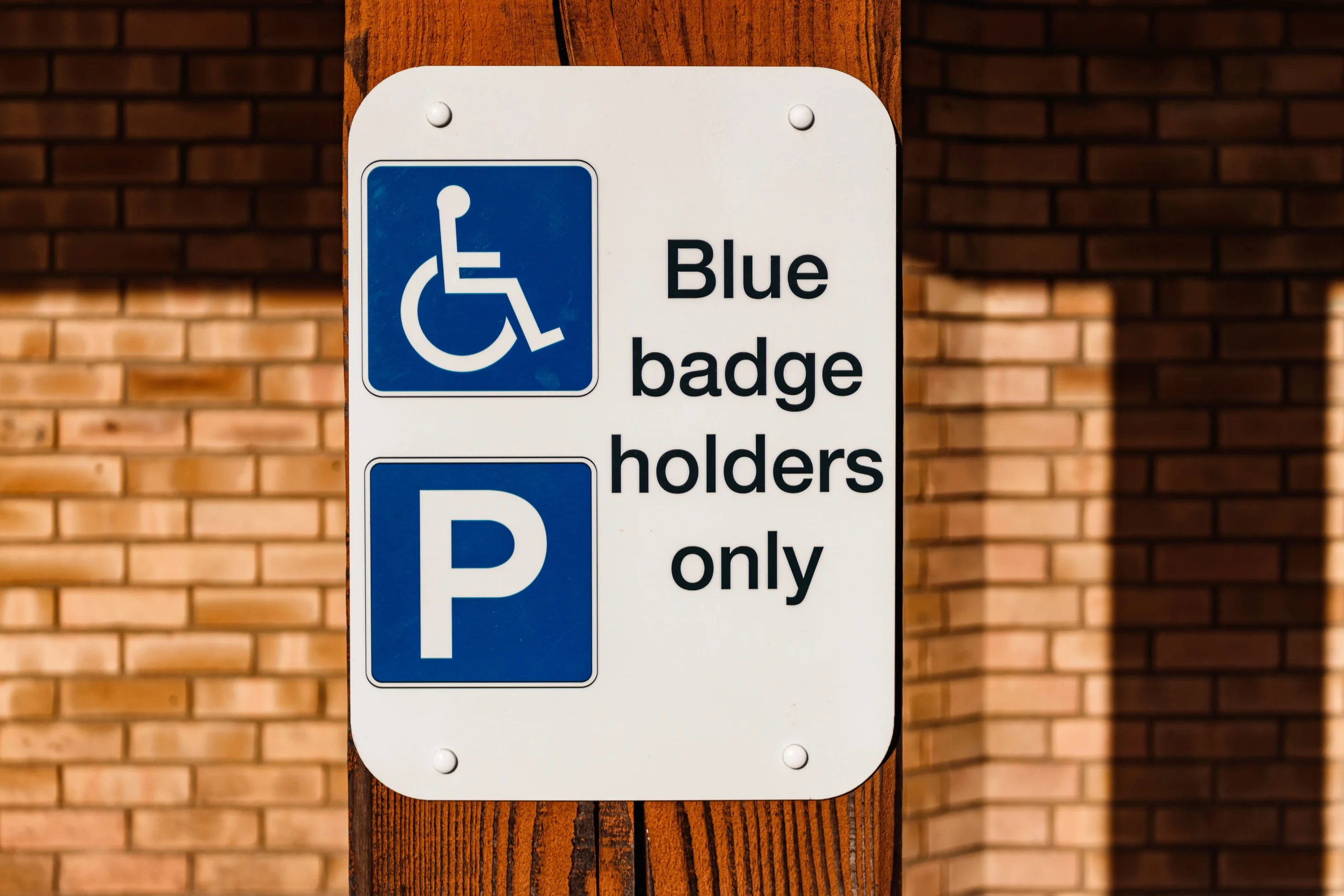
- Accessible parking signs
Requirements can vary depending on the sign’s purpose, property type, and jurisdiction, so compliance-related signage should always be evaluated against the requirements applicable to the specific project.
What Is the Difference Between a Sign and Signage?
A sign generally refers to an individual visual communication element, while signage can refer to signs collectively or to a coordinated system of signs.
| Term | Meaning | Example |
|---|---|---|
| Sign | One individual visual communication element | Storefront sign |
| Signage | Signs considered collectively | A property’s complete sign system |
| Signage system | Multiple coordinated signs serving a location | Entrance + directory + wayfinding signs |
| Wayfinding | Signage designed to help people navigate | Directional arrows |
| Information signage | Signs primarily providing information | Property directory |
The distinction matters when planning a commercial property because the goal may not be to install one attractive sign. Instead, the goal may be to create a complete signage system that communicates effectively throughout the entire visitor journey.
Why Is Signage Important?
Signage plays an important role in how people understand and interact with physical spaces.
1. Signage Helps Identify Businesses
A storefront sign or monument sign can tell people what business operates at a particular location.
2. Signage Helps People Navigate
Directional and wayfinding signage can make unfamiliar properties easier to navigate, helping visitors quickly find their desired destinations.
3. Signage Communicates Information
Information signs can provide details that visitors need without requiring assistance from staff.
4. Signage Supports Branding
Colors, typography, materials, dimensional elements, and illumination can help connect physical signage with a company’s broader visual identity.
5. Signage Improves the Visitor Experience
Clear communication can reduce confusion when people enter a large or unfamiliar property.
6. Signage Creates a Physical Brand Presence
For businesses with physical locations, signage is one of the most visible ways to connect the brand with its environment. The key is not simply making a sign bigger or brighter. Effective signage starts with understanding what people need to know, where they need to know it, and how they will view the sign.
What Makes Signage Effective?
Effective signage combines communication, design, placement, and physical construction:
- Visibility — people need to notice the sign from the intended viewing area.
- Readability — the message should be easy to understand without unnecessary effort.
- Placement — the sign should appear where its information is useful.
- Contrast — text and important visual elements should remain distinguishable from their background.
- Information hierarchy — the most important information should be visually easy to find.
- Consistency — multiple signs within the same property should work together rather than appearing unrelated.
- Appropriate scale — sign size should reflect the viewing distance, environment, architecture, and intended communication.
- Durability — exterior signage should use materials and construction appropriate for the installation environment.
How Do You Choose the Right Signage for a Business?
Start with the purpose, not the appearance. Ask these questions:
1. What does the sign need to communicate?
Is the purpose identification, information, direction, advertising, branding, or safety?
2. Where will people see it?
Consider whether the sign will be viewed from:
- A roadway
- Parking lot
- Sidewalk
- Building entrance
- Lobby
- Hallway
- Individual room
3. How far away will people be?
A sign intended for drivers approaching a property has different design considerations from a room sign viewed at close range.
4. Will it be viewed at night?
If the business operates after dark, illuminated signage may be worth considering depending on the application.
5. What does the surrounding architecture look like?
The sign should complement the building rather than compete with it.
6. What materials are appropriate?
Material selection depends on the design, environment, mounting method, appearance, and expected conditions.
7. Are permits or regulations involved?
Local sign codes, building requirements, property rules, accessibility requirements, and permitting processes can vary by location and project.
Not sure which direction fits your site? Request a free quote and we’ll help you narrow down the right sign type, materials, and placement for your property.
What Materials Are Used for Signage?
Commercial signs can be produced from different materials depending on the application and design. Common materials include:
- Aluminum
- Acrylic
- Stainless steel
- Other metals
- PVC and similar plastics
- Wood
- Fabric
- Composite materials
- LED components
Material choice should consider appearance, durability, weight, fabrication method, mounting requirements, indoor or outdoor use, maintenance, and environmental exposure. For example, dimensional metal lettering creates a different appearance from illuminated acrylic channel letters, even when both signs display the same business name. See our dimensional signs and neon signs pages for how material and lighting choices change the look.
What Is the Difference Between Interior and Exterior Signage?
| Consideration | Interior Signage | Exterior Signage |
|---|---|---|
| Primary purpose | Information, branding, navigation | Identification, visibility, branding |
| Environment | Generally protected | Exposed to outdoor conditions |
| Viewing distance | Often shorter | Can be much longer |
| Examples | Lobby signs, room signs, directories | Monument signs, storefront signs, channel letters |
| Illumination | Application-dependent | Often considered for nighttime visibility |
| Key concerns | Readability, placement, visitor flow | Visibility, mounting, weather, local requirements |
Some signage can be used in both environments when the design, materials, construction, and installation are appropriate.
What Is Commercial Signage?
Commercial signage is a type of signage used by businesses and commercial properties to identify locations, communicate information, support branding, advertise products or services, and guide visitors. Commercial signage can include:
- Storefront signs
- Channel letters
- Monument signs
- Dimensional letters
- Lobby signs
- Blade signs
- Hanging signs
- Directional signage
- Information signage
- Illuminated signs
- Digital displays
The exact combination depends on the property and the communication requirements.
Signage for Different Business Types
Different businesses have different signage needs.
Retail
Retail businesses commonly use storefront identification, promotional signage, product information, and directional signs.
Restaurants
Restaurants may use exterior signs, illuminated channel letters, menu displays, marquee letters, and branded interior signage.
Corporate Offices
Corporate offices may use lobby signs, dimensional letters, directories, room signs, and directional systems.
Healthcare Facilities
Healthcare environments can require clear identification, wayfinding, room signage, directories, and other communication elements. Accessibility requirements may apply to particular signs.
Commercial Real Estate
Commercial properties can use monument signs, tenant identification, directories, parking signage, and wayfinding.
Schools and Campuses
Educational properties often need building identification, directional signage, directories, parking signs, and room identification.
Signage and Accessibility
Accessibility is an important consideration for certain types of signage. Under the U.S. Department of Justice’s 2010 ADA Standards, applicable signs can have requirements relating to raised characters, Braille, character proportions, mounting, pictograms, and visual contrast. However, not every sign is subject to every requirement, so the applicable provisions must be determined based on the specific sign and facility.
For example, the ADA Standards address raised characters and require them to be duplicated in Braille when both visual and tactile characters are required. That means accessibility should be considered during signage planning rather than added as an afterthought. For a U.S. commercial project, verify the requirements that apply to the specific facility, jurisdiction, and sign type.
Common Signage Mistakes to Avoid
Even an attractive sign can perform poorly if its communication strategy is weak:
- Using too much information — a sign with too much text becomes difficult to scan.
- Ignoring viewing distance — a sign designed for close viewing may not work well when people see it from across a parking lot.
- Choosing appearance before purpose — starting with a visual style instead of the communication objective can result in a sign that looks good but performs poorly.
- Poor placement — even a well-designed sign cannot help people if they encounter it after they have already passed the decision point.
- Inconsistent signage — different fonts, colors, materials, and messaging styles can make a property feel disorganized.
- Forgetting nighttime conditions — businesses that operate after dark should consider how their signage will appear under nighttime viewing conditions.
- Treating every sign the same — a monument sign, lobby sign, room sign, and directional sign perform different jobs and should be planned accordingly.
Signage Planning Checklist
Before ordering signage for a business or commercial property, ask:
- What is the primary purpose?
- Who will view the sign?
- Where will they approach from?
- What is the viewing distance?
- Is the sign interior or exterior?
- Does it need illumination?
- What information must be displayed?
- Is the message easy to understand?
- Does the design support the brand?
- Are the materials suitable for the environment?
- Is the mounting location appropriate?
- Are permits required?
- Do accessibility requirements apply?
- How will the sign be installed?
- How will it be maintained?
- Does the sign work as part of the larger signage system?
For more detail on common questions, see our FAQ page.
Frequently Asked Questions About Signage
What is signage in simple words?
Signage means signs used to communicate information visually. Signs can identify a business, provide directions, display important information, promote a product or service, communicate instructions, or help people navigate a physical environment.
What is the definition of signage?
The definition of signage refers to the use or collection of signs to communicate information, identification, directions, advertising, instructions, or other visual messages. Signage can refer to an individual sign or a coordinated system of signs used throughout a property to help people understand, navigate, and interact with their surroundings.
What does the signage mean?
What signage means depends on its purpose and context. A sign may identify a business, direct visitors, provide information, communicate a warning, promote a product, or establish a strong brand presence.
What is information signage?
Information signage refers to signs that provide useful details to people in a particular environment. Examples include property directories, visitor instructions, operating information, parking information, facility details, and public notices.
What is wayfinding signage?
Wayfinding signage helps people navigate unfamiliar environments. It can direct visitors toward entrances, exits, departments, parking areas, elevators, restrooms, offices, and other destinations.
Is signage important for a business?
Yes. Signage can play an important communication and branding role for businesses with physical locations. It helps people identify the business, find entrances, navigate the property, understand available information, and recognize the company’s visual identity.
Final Answer: What Is Signage?
Signage is a visual communication system that uses signs to identify, inform, direct, advertise, instruct, or guide people. For a business, signage can begin with a storefront or monument sign and continue throughout the property with wayfinding, information signage, lobby branding, room identification, promotional displays, and safety signs. The most effective signage starts with a simple question: what does the person viewing this sign need to know or do?
For businesses planning a new sign or complete commercial signage system, UrbanSign Works provides factory-direct custom signage for U.S. businesses, including illuminated channel letters, dimensional letters, monument signs, LED lightboxes, blade and projecting signs, marquee signs, hanging signs, laser-cut metal signs, and push-through signs.
Request a Custom Signage Recommendation
If you’re planning signage for a storefront, office, commercial property, restaurant, campus, or development, provide your site photos, approximate dimensions, logo or brand files, intended application, and target installation location. UrbanSign Works can use that information to determine an appropriate signage direction and prepare a project scope for your needs.
Ready to get started? Request a free quote — or contact us with questions about sign types, materials, or permits.
Helpful Resources on Signage
- Wikipedia: Signage — encyclopedia overview of signage types, history, and uses.
- International Sign Association — the sign industry’s trade association, with research and buyer guidance.