
A monument sign is often the single most visible asset a property has — the low, ground-level sign at the entrance that drivers actually read at speed. It’s also the most complex sign project most businesses will undertake, because the sign itself is only part of the total cost. The foundation, permits, and engineering are separate line items that can rival fabrication.
Here’s the current picture as of October 2026: monument signs typically cost between $5,000 and $30,000 or more for the manufactured sign. A small, non-illuminated monument for a single-tenant office runs near the bottom of that range. A large illuminated monument with multiple tenant panels, premium finishes, and full foundation work climbs well past the top. Site work — the concrete foundation and local permits — is priced separately and varies by location.
This guide breaks down every cost driver, explains how to budget the full project (not just the sign), and shows you how to get an accurate quote.

The Short Answer: Monument Sign Price Ranges
| Configuration | Typical manufactured cost |
|---|---|
| Small non-illuminated, single tenant, painted aluminum | $5,000–$9,000 |
| Mid-size internally illuminated cabinet | $9,000–$18,000 |
| Large illuminated with tenant panels or premium cladding | $18,000–$30,000+ |
| Monument with electronic message center (EMC) | $30,000+ (request a quote) |
These ranges cover the manufactured monument — design, fabrication, crating, freight. Foundation work, permits, and engineering are separate local costs. On large structures, site work can rival the fabrication cost, so budget for it from the start.
1. Overall Size and Height
Cost scales with every dimension: more square footage means more aluminum cabinetry, more face material, more internal steel structure, and more LED modules if illuminated. A monument that’s twice as wide isn’t twice the price — but it’s substantially more, because structure and materials scale with area while engineering complexity grows too.
Local zoning often caps monument height — many municipalities limit them to 6–8 feet — so check your sign code early. Designing to the maximum when a smaller sign would read fine just spends money on structure and foundation you don’t need.
2. Cabinet Construction and Materials
- Painted aluminum cabinet with acrylic faces: The standard, cost-effective build. Durable, weather-resistant, and the basis for most of the prices above. For many businesses, this is all the sign they’ll ever need.
- Upgraded cladding: Stone, brick veneer, or textured finishes applied over the aluminum structure. Significant material and labor cost — but it transforms the sign’s presence, and for upscale developments, medical campuses, and corporate parks, it’s often worth it. A brick monument sign in particular signals permanence in a way painted aluminum can’t.
- Dimensional letters and logos on the faces: Each letter is individually fabricated, so a long tenant list or an intricate logo adds up letter by letter. Flat vinyl graphics are the budget alternative.
Material choice is where “looks like $15,000” vs. “looks like $40,000” gets decided. Spend on cladding where the audience is closest — the faces drivers and pedestrians actually see.
3. Illumination
- Internally illuminated cabinet: LED modules inside shine through acrylic faces. The most common choice — genuine nighttime visibility at a moderate cost step over non-illuminated.
- Halo-lit dimensional letters on the cabinet faces: A premium look with a premium price. Each letter is individually fabricated and stands off the face — beautiful, and the most expensive illumination option.
- External floodlighting: Landscape-style fixtures aimed at the sign from the ground. The sign itself stays simpler and cheaper; you buy and wire the fixtures separately. A practical middle path, though fixtures need their own maintenance.
If your property has evening traffic — restaurants, medical offices with extended hours, retail — illumination isn’t optional. It’s the difference between a sign that works 24 hours and one that goes dark at sunset.
4. Foundation and Footers: The Hidden Half of the Budget
A monument sign needs a concrete foundation engineered for its size, weight, and local wind loads. In colder regions, footers must extend below the frost line. This work is done by a local contractor — not the sign manufacturer — and it’s the cost driver buyers most often underestimate.
For large monuments, foundation work can rival the sign’s fabrication cost. The variables are entirely local: soil conditions, frost depth, wind-load codes, and how far the site is from the contractor’s yard. Get a local contractor’s estimate early — ideally while the sign is still in design — so the foundation number doesn’t ambush your budget later.
Practical tip: while the monument is being fabricated (several weeks), get foundation work and permits moving in parallel. The two tracks converge at installation, and running them simultaneously is how two-to-three-month projects stay on schedule.
5. Tenant Panels and Message Centers
- Multi-tenant properties need changeable tenant panels — each panel is an additional fabricated component, and a long tenant roster adds up. Design the panel system for easy updates from the start; re-fabricating panels later costs more than building a flexible system now.
- Electronic message centers (EMC/LED displays): An EMC section integrated into a monument is effectively a second product — a full LED display with its own cabinet, electronics, and content system — priced accordingly. It belongs in a separate budget line mentally, even when it’s one physical structure.
6. Permits, Zoning, and Engineering
Almost every municipality requires a sign permit for a freestanding monument, and many require engineered drawings with a professional stamp. Setback rules, height limits, and illumination restrictions vary widely — some jurisdictions cap brightness or prohibit certain lighting after hours.
A good manufacturer supplies detailed shop drawings that make the permit process smoother, but the fees, the engineering stamp (where required), and the approvals themselves are between you and your municipality. Budget both the fees and the time: permit timelines are the most common reason monument projects slip.
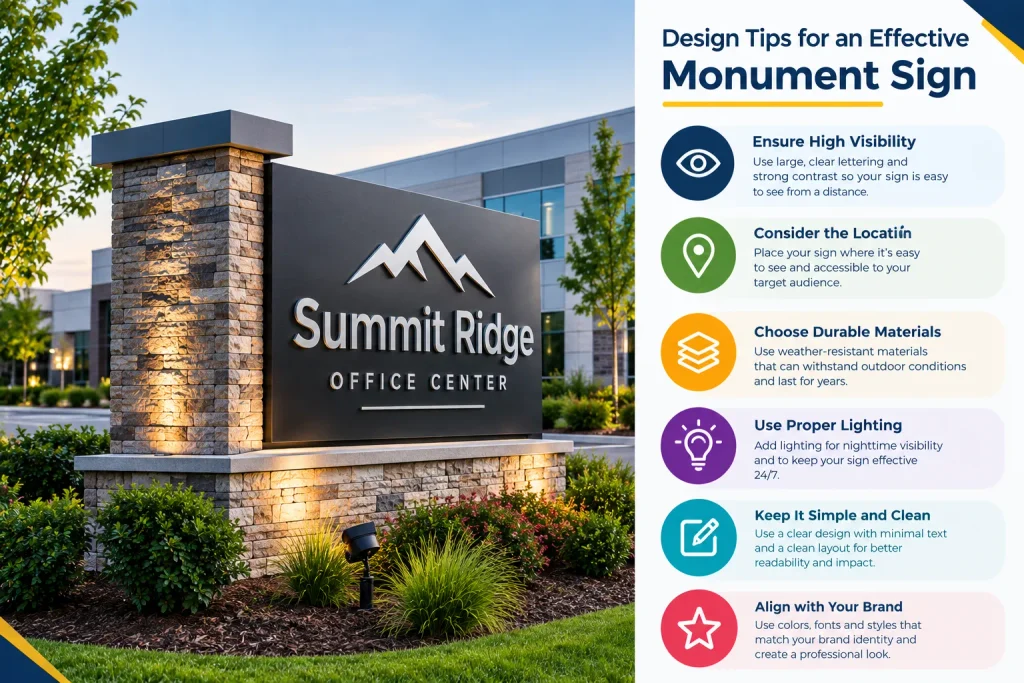
What Affects the Quote: Cost-Factor Comparison
| Factor | Low-cost choice | Higher-cost choice | Price impact |
|---|---|---|---|
| Overall size | Small, single-tenant | Large, multi-tenant | High — structure scales with area |
| Cladding | Painted aluminum | Stone / brick veneer | High — material + labor |
| Face graphics | Flat vinyl | Dimensional letters, long tenant lists | Medium |
| Illumination | Non-illuminated | Halo-lit letters | Medium-high |
| Foundation | Small, warm climate | Large, frost-line footers | High — separate local cost |
| Extras | None | EMC display section | Very high — separate product |
The Factory-Direct Advantage on Large Projects
Because the dollar amounts are large, a local shop’s markup on outsourced fabrication translates into thousands of dollars — not hundreds. A 25–30% broker margin on a $20,000 monument is $5,000–$6,000 paid for forwarding an email.
Working factory-direct means the company engineering and building your monument cabinet is the company you’re paying. The single most expensive component of the project carries no broker markup. On monument-scale budgets, that’s the highest-leverage decision in the entire project.
How to Save Money on a Monument Sign (Without Regretting It)
- Right-size the structure. Check the 6–8 foot height caps in your sign code before designing bigger than allowed — or bigger than needed.
- Choose painted aluminum over stone/brick veneer unless the development’s aesthetic demands masonry. Veneer is the single biggest upgrade cost.
- Use flat graphics instead of dimensional letters for tenant panels that change frequently.
- Consider external floodlighting instead of internal illumination for a simpler, cheaper cabinet.
- Get the foundation estimate early. Surprises in site work blow budgets more than any fabrication choice.
- Run permitting and fabrication in parallel. Time is money — a month of permit delay while a finished sign sits in storage helps no one.
If a monument feels like more sign than your location needs, compare exterior building signage options — a well-designed channel letter set or illuminated cabinet on the building itself costs far less and may serve better where road frontage is close.
How to Get an Exact Quote for Your Monument Sign
- Share your site details. Property photos, desired dimensions, number of tenants, illumination preference — and your municipality, so sign-code constraints surface early.
- Review a free mockup. See the monument rendered to scale at your entrance before committing. Scale errors are expensive at monument size.
- Get an itemized quote. The manufactured monument quoted separately from local work — fabrication, crating, and freight broken out line by line.
- Line up local contractors. While the monument is fabricated, get foundation work and permits moving. From order to standing sign, plan on roughly two to three months depending on your municipality’s permit timeline.
Frequently Asked Questions
How much does a monument sign cost?
Monument signs typically cost $5,000–$30,000+ for the manufactured sign. A small non-illuminated single-tenant monument runs near the bottom; large illuminated multi-tenant monuments with premium finishes climb well past the top. Foundation work and permits are separate local costs.
What is the cheapest type of monument sign?
A small, non-illuminated painted-aluminum monument with flat graphics for a single tenant. It’s the entry point — durable and professional without the cost drivers of illumination, masonry cladding, or tenant panels.
How long does a monument sign project take?
Cabinet fabrication takes several weeks, and foundation work plus permitting often runs in parallel. From order to standing sign, plan on roughly two to three months, depending on your municipality’s permit timeline.
Does the manufacturer handle permits and foundation work?
No — permits and foundations are local by nature. The manufacturer supplies engineered shop drawings to support your permit application; you (or your contractor) handle the municipality and the concrete.
Can a monument sign include our tenant list?
Yes. Multi-tenant monuments are designed with individual tenant panels that can be updated as tenants change. Design the panel system for easy updates from the start.
How deep does the foundation need to be?
It depends on the sign’s size and your local frost line and wind-load codes — a structural engineer or your local building department sets the requirement. In cold climates, footers must extend below the frost line.
Are monument signs worth the cost for a small business?
For businesses set back from the road or sharing a plaza, a monument sign is often the only signage drivers can actually read at speed. In those locations it’s not a luxury — it’s how customers find you.
What’s the difference between a monument sign and a pylon sign?
Monument signs are low, ground-level structures; pylon (pole) signs elevate the cabinet on poles for visibility over longer distances. Many municipalities restrict pylon signs more heavily, making monuments the practical choice.
Get Your Exact Monument Sign Price
Monument projects have the most moving parts of any sign type — fabrication, foundation, permits, engineering — and the only accurate budget comes from your specific site and specifications. Start with a free to-scale mockup at your entrance and an itemized factory-direct quote for the manufactured monument.
Get a free 3D mockup and exact quote — or contact us to talk through sizing, materials, and project timelines with a monument specialist.