
Walk down any downtown strip after dark and your eye goes straight to the glow. A neon sign has been grabbing attention since the early 1900s, and somehow it still looks current next to every digital billboard around it. If you run a business and are weighing up neon signs for business use, you are likely weighing the same question every owner asks now: is “real” glass neon worth it, or should I go with LED neon flex?
At UrbanSign Works, we manufacture illuminated signage factory-direct, including both traditional glass neon and modern LED neon flex. This guide covers how each technology actually works, the honest cost differences, lifespan and energy numbers you can rely on as of 2026, and a practical framework for choosing the right option for your space.
What Is a Neon Sign, Really?
The term “neon sign” is used loosely today to describe almost any glowing tube-style sign, including the newer LED neon flex versions. But the original technology is specific: glass tubing, hand-bent into shapes, filled with noble gas, and energized by an electric current to produce a steady glow.
The process dates back to French engineer Georges Claude, who patented his glass-bending and gas-discharge process in 1915. Within a couple of decades, neon signs were lighting up storefronts, theaters, and diners across America. That glow became shorthand for “open,” “eat here,” and “something exciting is happening inside” — and that association still works on foot traffic today.
How a Traditional Glass Neon Sign Works
The part most articles skip. Traditional neon works through gas discharge lighting, and it comes down to three components:
- A sealed glass tube bent into the desired shape, with the air pumped out to create a near-vacuum.
- Two electrodes fitted at each end of the tube.
- A small amount of noble gas at very low pressure — usually neon or argon.
When electricity is applied to the electrodes, electrons are stripped from the gas atoms, turning them into charged ions. As those ions and free electrons collide inside the tube, energy is released as light (photons). Pure neon gas produces the signature red-orange glow. Every other color — blue, green, pink, yellow — comes from using a different gas (argon with a bit of mercury produces blue) or coating the inside of the tube with a fluorescent phosphor powder that shifts the color when the gas discharge hits it. That is why a skilled glassbender can produce dozens of colors from one design.
The process uses far less power than the incandescent lighting it replaced, and produces very little heat — part of why neon held up for decades with minimal maintenance.
LED Neon Flex: The Modern Alternative
LED neon signs (often called neon flex) use flexible silicone or PVC tubing packed with small LED chips instead of gas. The tubing mimics the continuous line of light of glass neon closely enough that most customers cannot tell the difference once it is mounted.
The differences are in the technology: no glass, no gas, no high-voltage transformers. LEDs run on low voltage (typically 12V or 24V), stay cool to the touch, and are shatterproof. The tubing can be cut, bent into intricate shapes, and even dimmed or color-changed with a remote — things glass neon cannot do without building separate units.
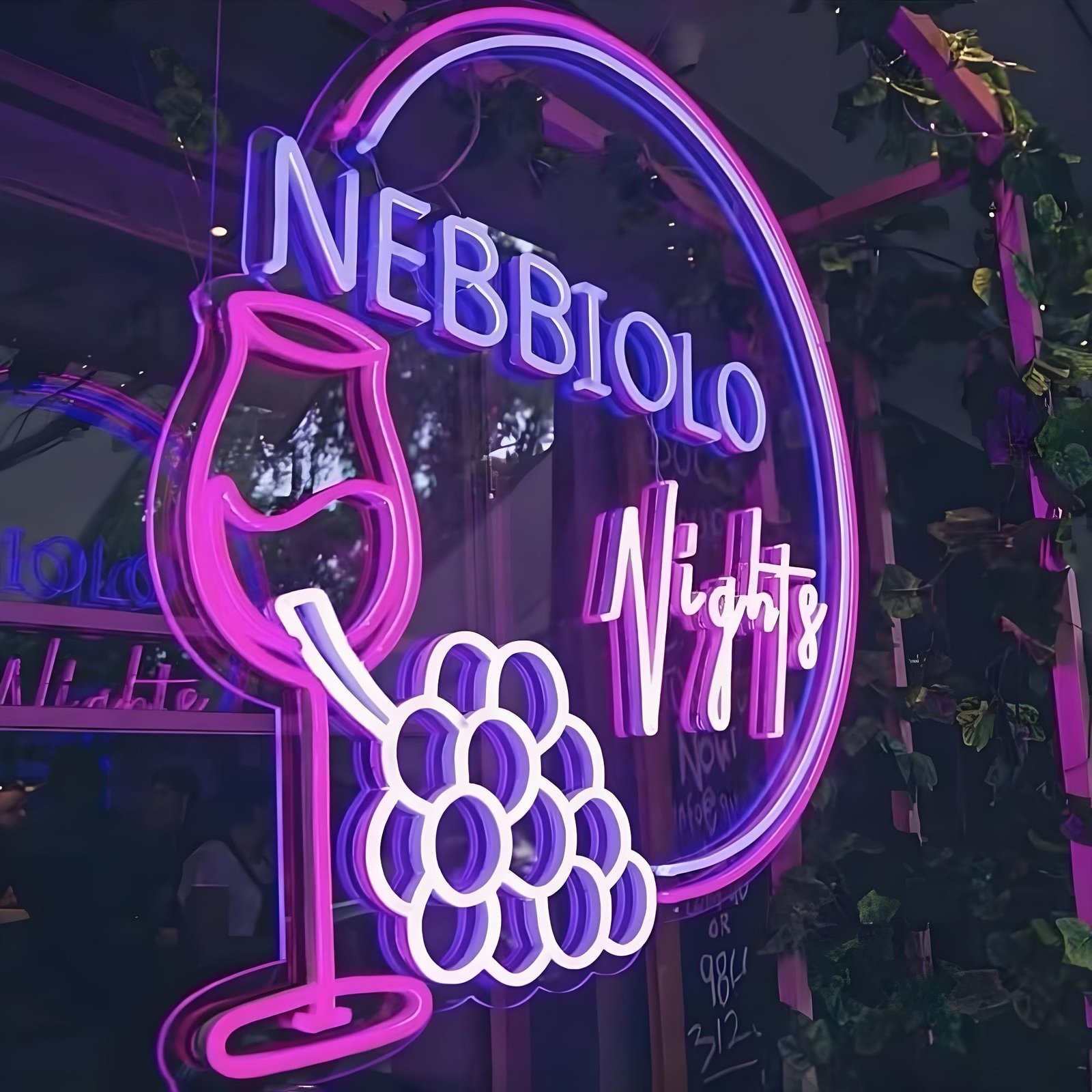
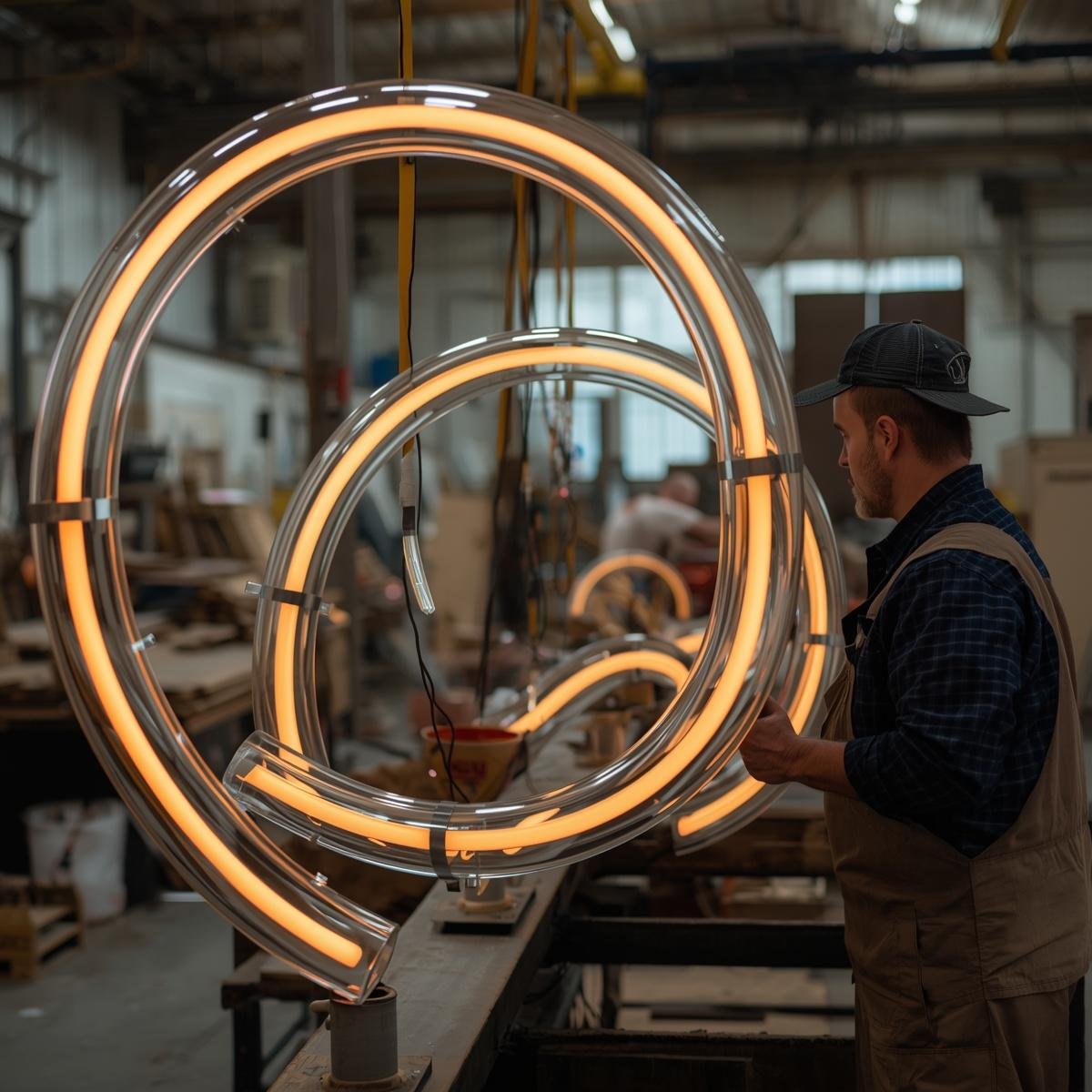
Glass Neon vs LED Neon: Honest Comparison
Here is the head-to-head on the factors business owners actually care about:
| Factor | Traditional Glass Neon | LED Neon Flex |
|---|---|---|
| Upfront cost | Higher — hand-bent by a skilled glassbender; a small piece typically starts around $300–$500, with larger storefront pieces running $1,000–$3,000+ | Lower — typically 40–60% less than equivalent glass neon for the same design |
| Lifespan | 8–15 years with proper care | LED chips rated for roughly 30,000–50,000 hours of use; in typical business hours this can mean 5–10+ years of service |
| Energy use | Relatively low vs. older lighting, but higher than LED — a typical glass neon sign draws roughly 3–4 times the power of an equivalent LED neon piece | Very low — LEDs use a fraction of the power, generally on the order of 80–90% less electricity than traditional neon for comparable brightness |
| Durability | Fragile — glass can break from impact or vibration | Shatterproof — silicone tubing survives bumps, shipping, and handling far better |
| Heat | Warm to the touch; runs on high-voltage transformers | Cool to the touch; low-voltage power supplies |
| Repairability | Requires a neon glassbender to re-bend and re-gas damaged sections | Sections can be cut out and replaced; modular repair |
| Color and dimming | Fixed color per tube; dimming is limited | Remote-controlled dimming and multi-color/RGB options widely available |
| Outdoor suitability | Possible but the glass is vulnerable to weather, impact, and temperature swings | Purpose-built outdoor-rated LED neon is the standard choice for exteriors |
| Authenticity | The genuine article — warm, luminous glow that vintage brands and restoration projects demand | Visually close, but purists can spot the difference on close inspection |
The honest takeaway: for most small businesses in 2026, LED neon flex is the practical choice — lower upfront cost, lower running cost, no fragility, and more control. Glass neon remains the right call for businesses chasing an authentic vintage look, historic restorations, or collector-grade pieces where the real thing matters. Our neon signs collection covers both, so you can compare options against your actual design.
Types of Neon Signs Businesses Order
Not every neon sign serves the same purpose. The most common categories:
- Open/Closed signs — small, affordable, and one of the highest-ROI signage options for retail storefronts. Available in both glass and LED.
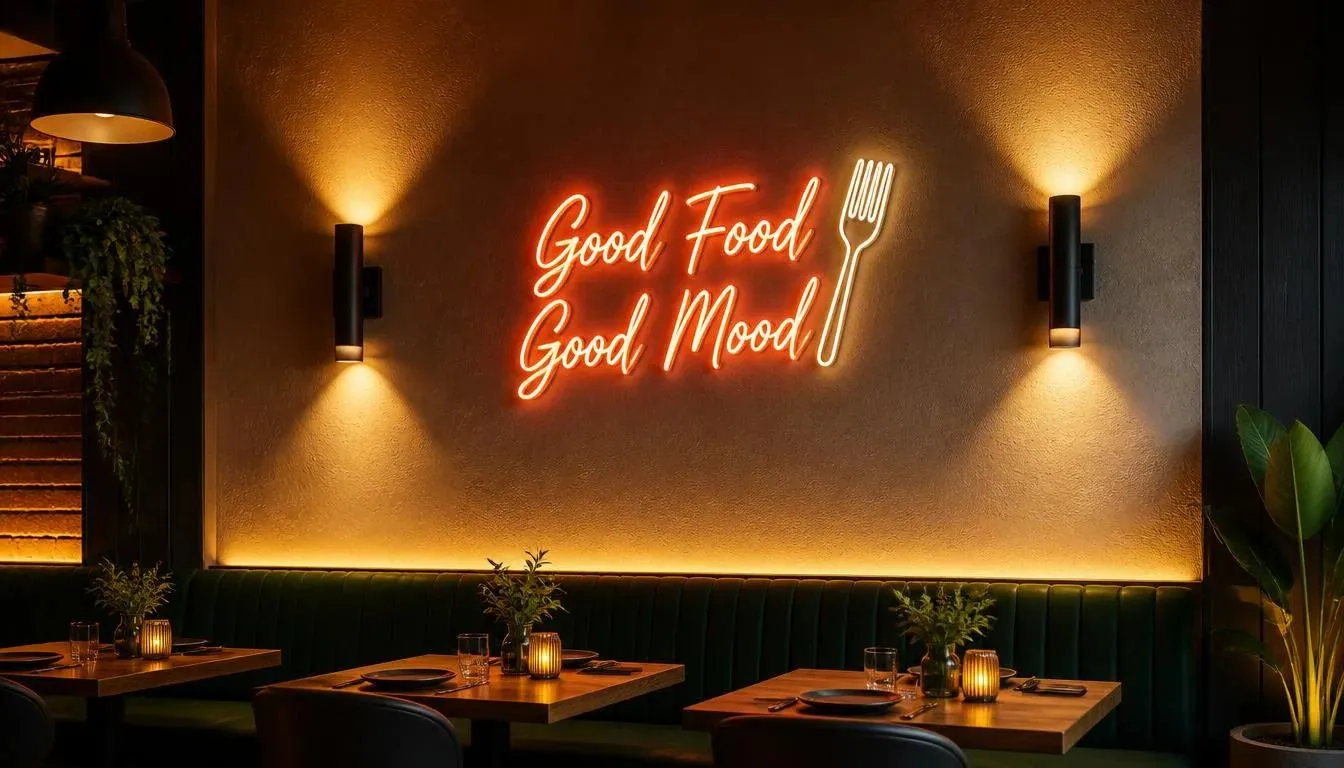
- Custom logo signs — a business name or logo rendered in neon or LED neon flex, typically mounted indoors as a backdrop or brand statement. These are the centerpiece pieces for restaurants, salons, and studios.
- Window signs — smaller pieces advertising specific offerings: “Fresh Coffee,” “Tattoo,” “Live Music.” Highly photogenic.
- Channel letters with neon/LED illumination — larger illuminated letters for exterior storefront branding; many now use LED modules inside acrylic letter faces. See our channel letters signage for the storefront standard.
- Decorative and ambiance signs — used in restaurants, bars, and salons purely to set a mood or aesthetic rather than convey information.
Why Businesses Still Choose Neon
Digital signage and printed banners have their place, but neon has not gone away — and the reasons are commercial, not sentimental:
- Instant visibility. A glowing sign cuts through visual clutter day or night, especially in low light when most impulse foot traffic happens.
- Brand personality. A custom neon logo gives a space personality that a flat printed sign cannot. It signals that thought went into the place.
- Photogenic marketing. Neon signs are practically built for social media. Customers photograph them, tag the business, and generate free organic exposure.
- Strong cost-per-year. Whether glass or LED, a well-made neon sign works for years with minimal upkeep, making it one of the better cost-per-year investments in physical marketing.
- Versatility. From a subtle “Open” sign in a café window to a full storefront logo, neon scales to almost any budget and space.
If you are weighing neon against other illuminated options, our overview of illuminated signs for businesses compares the full range of lit sign types.
How to Choose the Right Neon Sign for Your Business
Five practical questions will narrow your options fast:
1. Indoor or outdoor?
Outdoor signs need weatherproof housings and UV-resistant materials. Not every neon or LED neon product is rated for outside use — confirm the rating before ordering. For storefront exteriors, outdoor-rated LED neon flex or LED signs built for weather exposure are the safe default.
2. What is your budget?
As a rough guide: small LED neon pieces (a short word or simple icon) often start in the low hundreds of dollars, while larger custom logo pieces or full storefront installations can run into the thousands. Traditional glass neon typically costs more because of the manual glasswork. Always get an itemized quote rather than relying on published ranges — most reputable shops, including ours, will walk you through options at different price points before you commit. You can get a free 3D mockup of your design to see the finished piece before you commit.
3. How complex is the design?
Intricate logos, small text, or tight curves are usually easier and more reliable to produce in LED neon flex than in hand-bent glass. Glassbending has physical limits on how tight a curve can be without cracking the tube.
4. How much space do you have?
A sign that is too small gets lost on a busy storefront; one that is too large overwhelms a small interior. A good sign shop will help you scale the design to the space. Measure the wall and check viewing distance from the street or entrance before finalizing dimensions.
5. Do you need dimming or color-changing?
Many LED neon signs support remote-controlled brightness and multiple colors — a feature glass neon typically cannot offer without separate units. If the sign will double as evening ambiance in a restaurant or bar, this matters.
Maintenance and Lifespan
Glass neon signs are more delicate but can last over a decade with careful handling. Avoid physical impact, keep transformers in good condition, and have a professional handle any repairs — working with high-voltage gas tubes is not a DIY job.
LED neon signs need almost no maintenance. Wipe down the silicone tubing occasionally, keep the power supply protected from moisture if it is outdoors, and the LEDs themselves are rated for tens of thousands of hours of use. In many cases, LED neon outlasts the design’s relevance before the lighting itself fails.
What Does a Neon Sign Cost in 2026?
Pricing depends heavily on size, complexity, and glass vs LED. As a general guide:
- Small LED neon (a short word or simple icon): typically from the low hundreds of dollars.
- Large LED neon logo pieces: roughly $500–$2,000 depending on size and intricacy.
- Traditional glass neon: typically starts around $300–$500 for small pieces, with storefront-scale pieces running $1,000–$3,000+ due to hand glasswork.
These are ranges, not quotes — an accurate number depends on your exact design, dimensions, and mounting. Our FAQ page answers more common questions about custom sign pricing and ordering.
Frequently Asked Questions
Is a neon light sign the same as an LED neon sign?
Not exactly. Traditional neon signs use glass tubes filled with gas, while LED neon signs use flexible tubing with LED chips inside to mimic the same glow. They look similar from a distance but use completely different technology, with different costs, lifespans, and energy profiles.
How long does a neon sign last?
Glass neon signs typically last 8 to 15 years with proper care. LED neon signs can last even longer in practice, since LED chips are rated for roughly 30,000–50,000 hours of continuous use — at typical business hours, that is many years of service.
Are neon signs expensive to run?
Glass neon uses relatively low power compared to older lighting types, but LED neon versions are far more energy-efficient — roughly 80–90% less electricity than equivalent glass neon. Either way, running costs for a typical business neon sign are modest.
Can I get a neon sign for outdoor use?
Yes, but you need one specifically rated for outdoor conditions. Weatherproof LED neon with sealed housings is the most common and practical choice for storefronts and outdoor branding. Glass neon can be used outdoors but needs protection from impact and weather.
Which is better for a small business: glass or LED neon?
For most small businesses, LED neon flex wins on practicality: lower upfront cost, much lower running cost, shatterproof, dimmable, and easy to repair. Glass neon is the better choice when you specifically want the authentic vintage look or are restoring a historic property.
Do LED neon signs look “fake”?
Modern LED neon flex is convincing at normal viewing distance — most customers cannot tell the difference once it is mounted. On very close inspection, purists may notice the difference in how the light diffuses, but for storefront and interior branding purposes, it reads as genuine neon.
Final Thoughts
A neon sign is one of the few pieces of marketing that pulls double duty: functional signage and design statement at the same time. Whether you choose authentic glass neon for that timeless glow or modern LED neon for durability and lower running costs, the idea Georges Claude patented over a century ago still works — electricity, gas, and glass (or LEDs) working together to make something impossible to ignore.
Ready to Design Your Neon Sign?
Tell us about your space and your design — a word, a logo, or just an idea. We will recommend the right technology (glass or LED neon), build you a free 3D mockup so you can see the finished piece before you commit, and quote it factory-direct with no broker markup.