
Walk down any commercial street and the first thing that tells you where you are is a sign board. It names the shop, points the way, or warns of a hazard — often before you notice anything else around it. Yet few people stop to ask how these signs are classified, made, or chosen.
This guide explains what a sign board sign is, the six main categories, the most popular styles, the best materials, and practical buying tips, so your next sign is a confident decision rather than a guess.
Why Every Business Needs a Sign Board
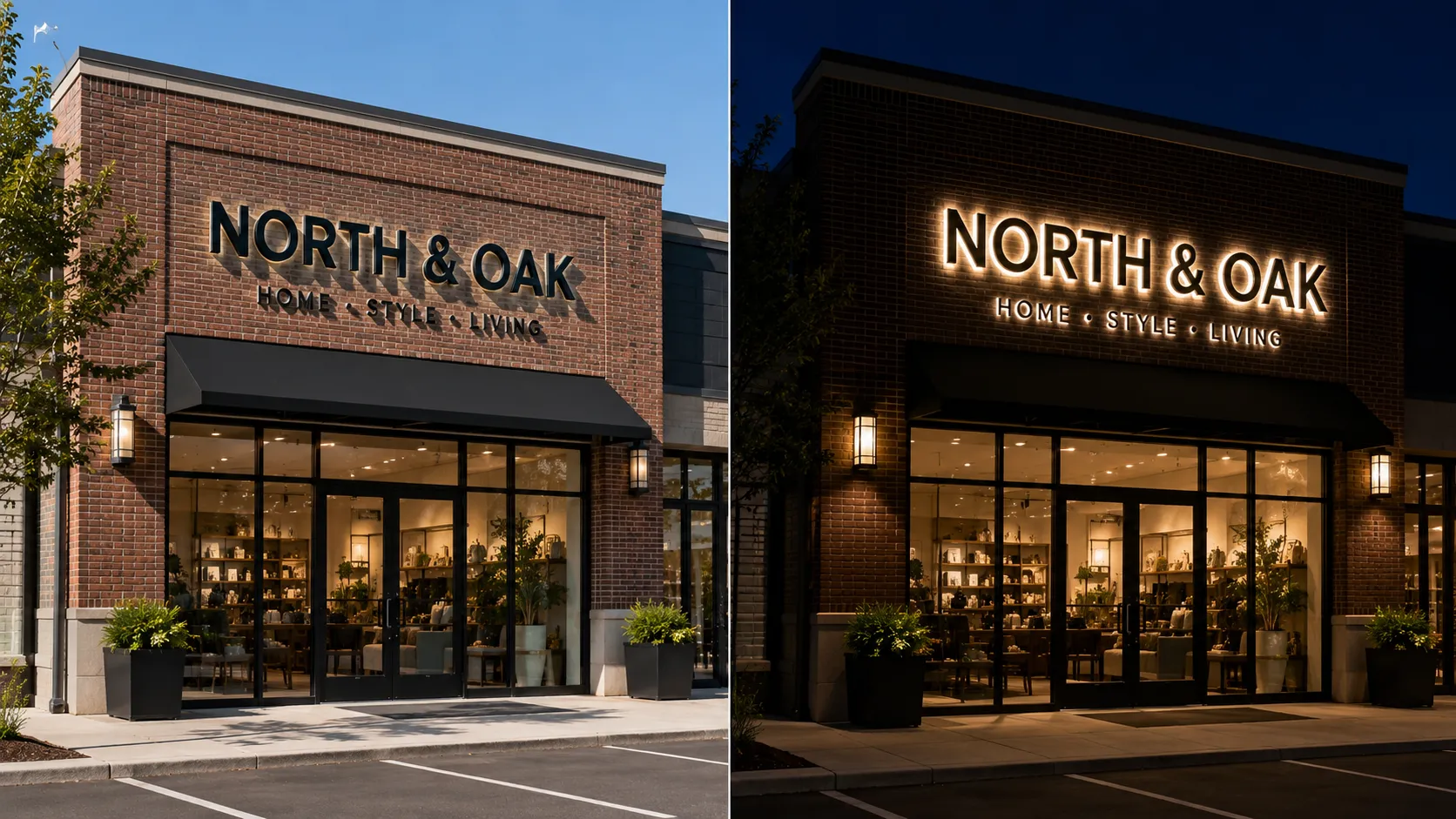
A business sign board is often the first point of contact between a company and a new customer. It tells people you exist, what you offer, and where to find the entrance. Without it, even a great shop can be invisible to anyone walking past.
It also works around the clock. A lit sign board keeps your brand visible after closing time, and a durable one needs little attention once installed. Compared with repeated paid advertising, that makes it one of the more economical ways to stay in front of local customers.
Signs build trust too. A neat, well-made board suggests a business that cares about details, while a faded or damaged one can quietly suggest the opposite. Beyond marketing, many sign boards protect people by showing exits, hazards, and rules — making them part of everyday safety rather than decoration.
The 6 Main Categories of Sign Boards by Purpose
The easiest way to understand sign boards is by what they are meant to do. Here are the six main categories.
1. Commercial and Business Sign Boards
These carry a business name and logo and sit on or near the premises. Fascia boards, lightboxes, and 3D letters all belong here. Their job is brand recognition, so design, color, and lighting matter most. Shops, restaurants, clinics, banks, and offices all rely on them — including custom dimensional signs and illuminated signs built for storefronts.
2. Informational and Directional Sign Boards
Informational boards tell people what a place offers, such as opening hours, department names, or price lists. Directional boards guide movement with arrows and labels. Hospitals, campuses, malls, and car parks depend on them because visitors can find their way without asking for help.
3. Safety and Regulatory Sign Boards
These boards warn of hazards, mark exits, or state rules, and they follow established conventions for color and symbols so people recognize them instantly. Factories, construction sites, warehouses, and public buildings use them. Reflective materials help them stay visible in low light.
4. Road and Traffic Sign Boards
Road boards regulate and guide drivers — speed limits, warnings, directions, parking rules. They are produced to standard shapes, sizes, and reflective specifications set by transport authorities, which is why they are usually made by specialist manufacturers rather than ordinary sign shops.
5. Digital and LED Sign Boards
Digital boards use LED or LCD screens to show changing text, images, or video. Messages can be updated in minutes, which suits menus, offers, and event schedules. They cost more upfront and need reliable power and content management, but they remove the need to reprint.
6. Temporary and Promotional Sign Boards
Banners, A-frame boards, and roll-up stands support sales, openings, and events. They are cheap, portable, and quick to produce, but they wear faster outdoors, so they work best as a supplement to a permanent sign board rather than a replacement.
| Category | Main purpose | Typical places |
|---|---|---|
| Commercial | Brand identity | Shops, offices, restaurants |
| Informational & directional | Guide and inform | Hospitals, malls, campuses |
| Safety & regulatory | Warn and protect | Factories, sites, warehouses |
| Road & traffic | Direct drivers | Roads, car parks |
| Digital & LED | Changeable messages | Showrooms, cafés, forecourts |
| Temporary | Short promotions | Events, openings, sales |
Popular Sign Board Styles
Within the commercial category, several styles dominate. Each gives a different look and level of visibility.
| Style | Look | Lighting | Best for |
|---|---|---|---|
| 3D letters | Raised, premium | Optional backlight | Offices, showrooms, clinics |
| Channel letters | Individual glowing forms | LED inside | Storefronts, malls |
| Lightbox | Glowing panel, swappable face | Built in | Shops, pharmacies |
| Frontlit board | Flat face lit from the front | Yes | Fascia boards, general retail |
| Neon-style LED | Retro glow | LED | Cafés, salons, studios — see neon signs |
| Acrylic board | Clean and modern | Optional | Offices, reception, schools |
Frontlit vs. backlit: a frontlit sign board has light shining onto or through the front face, while a backlit one lights from behind so the letters appear to glow. Backlit signs usually look more refined at night, but frontlit boards are simpler and often cheaper.
Many businesses combine styles. A fascia lightbox can carry the name, 3D letters can add premium branding on an upper wall, and acrylic panels can handle directions. If they share colors, fonts, and logo treatment, the whole set reads as one consistent identity rather than a collection of unrelated boards.
Best Materials for a Sign Board
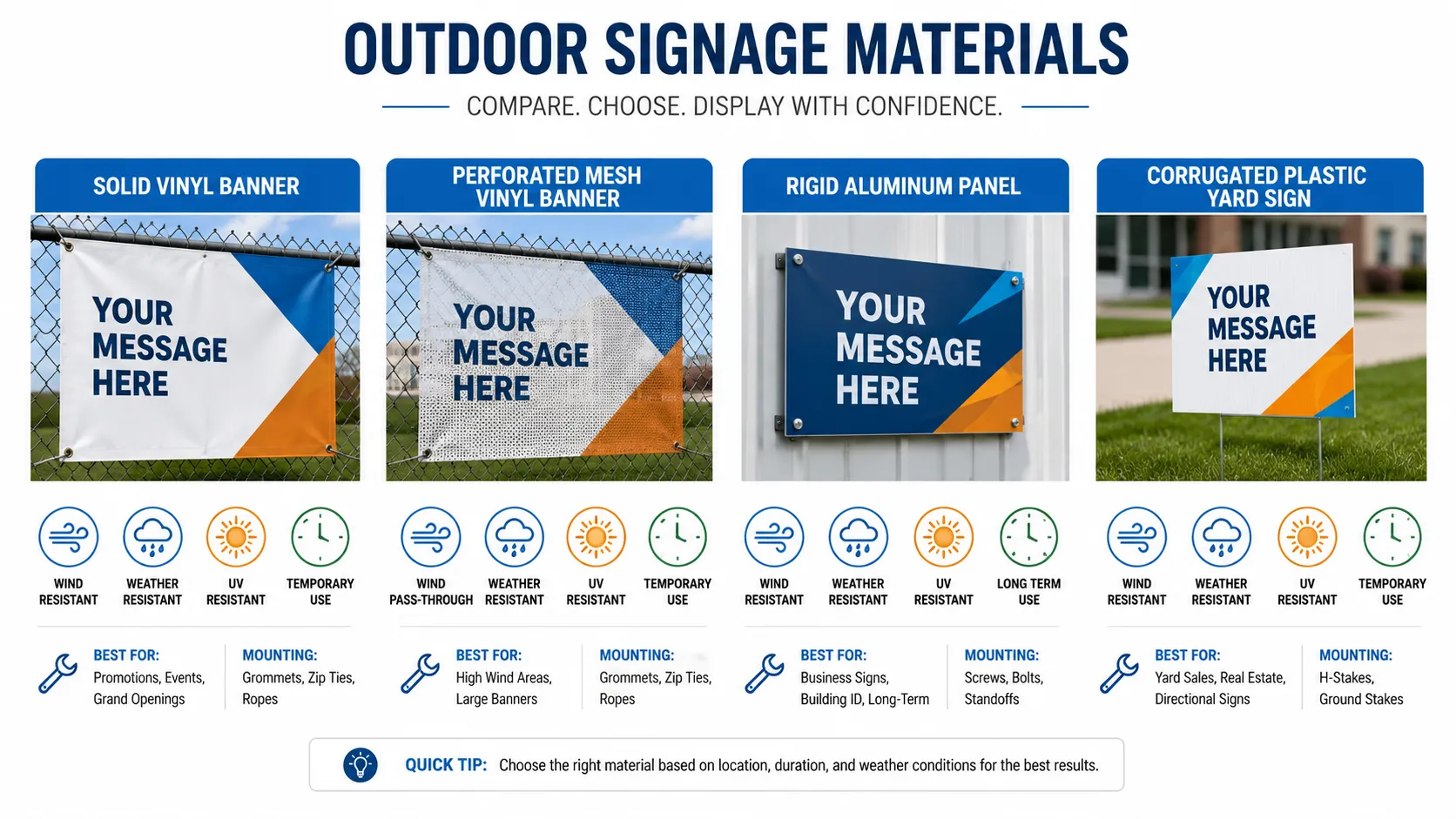
The material decides how long a sign board lasts and how it looks after a few seasons of sun and rain. In hot, humid regions, weather resistance should rank high on your list.
| Material | Strengths | Limits |
|---|---|---|
| aluminum | Light, rust-resistant, long-lasting | Needs a good coating for color |
| ACP (aluminum composite panel) | Flat, smooth, many colors | Cut edges need sealing |
| Stainless steel | Strong, premium, corrosion resistant | Higher cost |
| PVC or foam board | Light and easy to cut | Better for indoor or sheltered use |
| Vinyl and flex | Cheap, vivid prints | Fades faster outdoors |
Invest in the frame, fixings, and waterproofing first, since these are hardest to change later. Printed faces can be refreshed at lower cost. Ask your maker about UV-stable inks and sealed LED modules, especially for outdoor sign boards facing direct afternoon sun.
How a Sign Board Is Made: From Design to Installation
Knowing the process helps you ask better questions and spot shortcuts.
- Brief and site check: You share your business name, logo, and goals. The maker measures the wall or location, notes viewing distance, and checks power access.
- Design and proof: A layout is prepared with colors, fonts, and sizes, often shown on a photo of your building. Approve it before production starts.
- Fabrication: Materials are cut by CNC or laser, faces are printed or painted, frames are welded or bent, and lighting is assembled.
- Quality check: Lighting, colors, edges, and finishing are tested in the workshop, where mistakes are cheaper to fix.
- Installation: The sign is fixed with anchors suited to the wall type, wiring is connected safely, and the finished work is inspected.
How to Choose the Right Sign Board: A Checklist
Use this checklist before you approve any quotation:
- Purpose: Decide whether the sign must brand, inform, guide, or warn.
- Location and distance: A commonly used guideline suggests about 2.5 cm of letter height for every 3 meters of viewing distance.
- Lighting: If you trade after dark, plan illumination from the start.
- Material: Match it to sun, rain, dust, and humidity at your site.
- Brand consistency: Keep colors and logo identical across all signs.
- Message length: Use a name, a logo, and one short line.
- Budget and warranty: Compare itemized quotations, not just the final total.
- Local rules: Confirm what the authority and property owner allow — in the U.S., public-space signs must also meet ADA accessibility requirements.
If you want help weighing these options for your own building, get a free 3D mockup of your custom sign board design before production begins.
Sign Board Cost: What Drives the Price?
Prices differ by city and supplier, so a single figure rarely applies. Typical US ranges (as of 2026):
| Sign board type | Typical cost range |
|---|---|
| Printed flex/vinyl board (small) | $50–$150 |
| ACP/aluminum panel with vinyl graphics (4′×8′) | $300–$800 |
| Acrylic panel with dimensional letters | $500–$1,500 |
| Illuminated lightbox cabinet | $600–$1,500 |
| Channel letter set (standard storefront) | $2,000–$6,000 |
| Premium stainless-steel fabricated sign | $1,500–$5,000+ |
These factors drive any quotation:
- Size: Bigger signs need more material and stronger structures.
- Material: Stainless steel and thick acrylic cost more than flex or standard ACP.
- Lighting: LED modules, wiring, and power supplies add cost.
- Design complexity: Custom shapes and 3D depth take more fabrication time.
- Installation: Height, scaffolding, and wall type change labor needs.
- Permits and engineering: Large or freestanding signs may need approvals and structural checks.
- Warranty: Longer cover often reflects better materials.
Compare cost per year of use rather than the first price. A sign that lasts several years longer is usually the cheaper choice.
Maintenance and Care Tips
A little care keeps any sign board looking sharp for years:
- Clean regularly: Use a soft cloth and mild soap; avoid harsh solvents on acrylic.
- Inspect fixings: Check brackets, bolts, and anchors after storms.
- Test the lighting: Replace failing LED modules early.
- Watch for early damage: Fading, peeling, rust spots, and water entry are easier to fix when small.
- Keep the view clear: Trim branches or move objects that block the sign.
Common Mistakes to Avoid
- Putting too much text on one board
- Choosing low-contrast colors that vanish in glare
- Ignoring viewing distance when sizing letters
- Using indoor-grade materials outdoors
- Skipping lighting for an evening business
- Forgetting permits and landlord approval
- Hiring a maker without checking previous work
Frequently Asked Questions About Sign Boards
What is a sign board sign?
A sign board sign is a board or panel that displays text, symbols, or a logo to identify a place, give information, guide people, or warn of hazards. It can be indoor or outdoor, lit or unlit, and made from materials such as aluminum, acrylic, or vinyl.
What are the main types of sign boards?
By purpose, the main types are commercial, informational and directional, safety and regulatory, road and traffic, digital and LED, and temporary or promotional sign boards. Commercial boards also come in styles such as 3D letters, lightboxes, and channel letters.
Which material is best for an outdoor sign board?
aluminum, ACP, UV-protected acrylic, and stainless steel handle sun and rain well. For coastal or very humid areas, corrosion-resistant fittings and quality coatings matter just as much as the main material.
How much does a custom sign board cost?
Simple printed boards start around $50–$150, aluminum or ACP panels typically run $300–$800, illuminated lightboxes $600–$1,500, and channel letter sets $2,000–$6,000 or more depending on size, materials, lighting, and installation.
How long does a sign board last?
It depends on materials, climate, and care. Well-made metal and acrylic signs commonly last several years — often a decade with regular maintenance — while flex and vinyl boards usually need replacing within a year or two in strong sun.
Do I need permission to put up a sign board?
Often yes. Local authorities, building managers, and landlords may regulate size, height, lighting, and placement, so confirm the rules and get approval in writing before fabrication begins. See the signage FAQ for more on common requirements.
Get a Sign Board Built for Your Business
A sign board does quiet but important work. It introduces your brand, guides people, and in many places keeps them safe — all without saying a word. Start with the purpose, choose a style and material that suits your location and climate, plan lighting early, and compare itemized quotations.
Request a free quote for your custom sign board, or contact us to discuss materials, lighting, and installation for your site.