
Walk into a well-run office, clinic, or shop, and you rarely feel lost. That’s usually good indoor signage at work: clear, consistent, and placed exactly where people need it.
This guide explains what indoor signage is, the main types, how common materials compare, typical costs, and how to choose the right option for your space. By the end, you’ll know how to build a signage plan that looks professional and keeps working for years.
What Is Indoor Signage?
Indoor signage is any sign, graphic, or display installed inside a building to guide, inform, identify, or promote. It ranges from a logo wall in reception and door nameplates to floor graphics, hanging banners, and digital screens.
Indoor signs do four jobs. They direct people (wayfinding), inform them (safety notices, rules, opening hours), identify spaces and brands, and persuade customers through promotions and product displays.
Unlike outdoor signs, which must survive sun, rain, and wind, indoor signs are read up close. Print sharpness, edge finish, and material quality are far more visible. The best interior signage works as a system rather than a set of separate pieces — fonts, colors, icons, and mounting styles stay consistent, so visitors read the space as one organized, trustworthy environment.
Why Indoor Signage Matters
Many businesses treat signs as a finishing touch. In practice, they shape how people move through a space and what they think of your brand.
Better Navigation and Customer Experience
People feel uneasy in unfamiliar buildings. Clear directional signs, floor numbers, and room labels remove that friction, reducing the “where is…?” questions your staff answer all day and helping visitors reach appointments on time. In busy places such as clinics, shopping centers, and schools, good wayfinding improves the whole visit.
Stronger Brand Identity
A reception logo sign, branded wall graphics, and matching door plates tell visitors who you are before the first conversation begins. Consistent colors, fonts, and finishes build recognition and signal that your business pays attention to detail.
Safety and Compliance
Exit signs, fire equipment labels, accessibility signs, and warning notices are not optional extras. Visible, correct safety signage protects people and helps businesses meet local building and accessibility requirements.Always confirm the rules that apply in your area before finalizing any design.
Types of Indoor Signage
The right sign depends on the job it needs to do. These are the main types of indoor signage and where each works best.
Wall and Lobby Signs
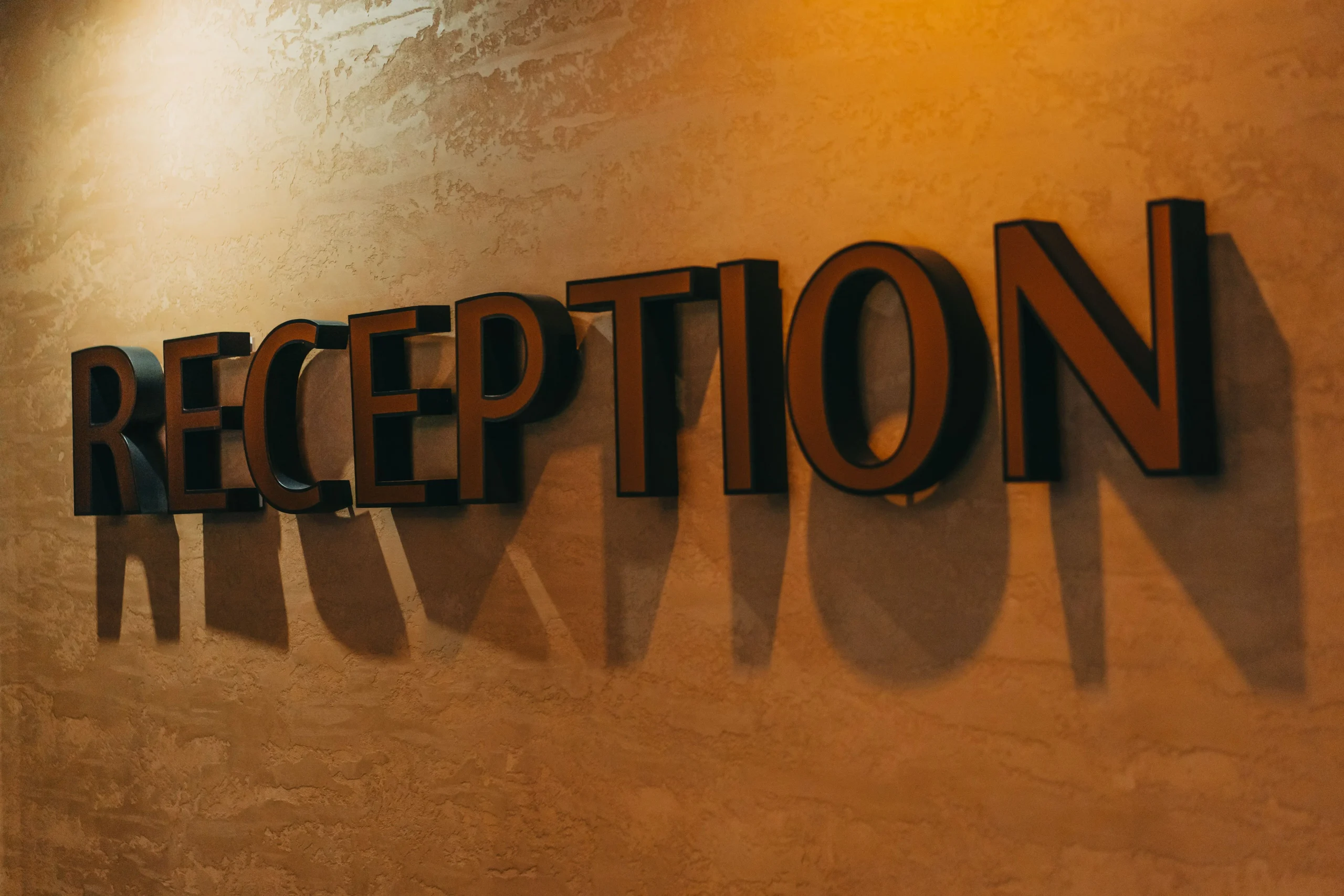
Logo walls, dimensional letters, and reception signs sit where visitors first look. Raised or backlit lettering in acrylic, metal, or PVC gives a polished first impression — suited to lobbies, showrooms, and waiting areas. Dimensional letter signs are the go-to choice for reception branding.
Directional and Wayfinding Signs
Arrows, floor numbers, department names, and directories guide people through larger buildings. Keep wording short, use consistent symbols, and repeat key information at every decision point — junctions, stairwells, and elevator lobbies.
Door and Room Signs
Nameplates, room numbers, and restroom signs identify spaces. Permanent room identification often must meet accessibility rules, including tactile characters and Braille in some regions — check the standard that applies to your location.
Floor Graphics
Printed floor decals direct queues, mark safe walkways, and point shoppers toward promotions. They need slip-resistant lamination and an adhesive suited to the flooring.
Window Graphics and Decals
Frosted films, privacy graphics, and printed decals on interior glass add branding and privacy while still letting light through. They work well for meeting rooms, clinics, and retail displays.
Hanging and Ceiling Signs
Suspended signs stay visible over crowds and shelving — useful in large stores, food courts, and warehouses. Check the ceiling structure and weight limits before installation. See our hanging signs for commercial-grade options.
Banners, Stands and Display Boards
Retractable banners, foam board displays, and poster frames are flexible and cost-effective for events, promotions, and temporary messages. Easy to swap when offers change.
Decorative Neon Accents
LED neon wall signs have become a staple of restaurant, salon, and boutique interiors — brand phrases and logos in warm glow. Unlike old glass neon, modern LED versions run cool and sip power. Browse custom neon signs for interior-rated designs.
Digital Indoor Signage
LCD screens and digital menu boards allow instant updates, scheduling, and video. They suit restaurants, waiting rooms, and corporate lobbies — but need power, software, and regular content management.
Types at a Glance
| Sign Type | Best For | Main Advantage |
|---|---|---|
| Wall and lobby signs | Reception areas, showrooms | Strong first impression |
| Directional signs | Large offices, hospitals, malls | Faster, easier navigation |
| Door and room signs | Offices, schools, clinics | Clear identification |
| Floor graphics | Retail aisles, queues | High visibility at low cost |
| Window graphics | Meeting rooms, shopfronts | Privacy plus branding |
| Hanging signs | Big stores, food courts | Visible over crowds |
| Banners and displays | Events, promotions | Flexible and affordable |
| Decorative neon | Restaurants, salons, retail | Brand warmth and style |
| Digital signage | Restaurants, lobbies | Instant content updates |
Indoor Signage Materials Compared
Material choice affects appearance, lifespan, and cost. Here’s how common options compare for interior use:
| Material | Look and Feel | Durability | Best For |
|---|---|---|---|
| Acrylic | Glossy, modern, clean edges | High | Reception signs, door plates |
| Aluminum composite | Flat, rigid, printed or matte | High | Large panels, wayfinding |
| PVC / foam board | Lightweight, smooth | Short to medium term | Promotions, temporary displays |
| Self-adhesive vinyl | Flexible, wide color range | Medium to high | Wall, floor, and window graphics |
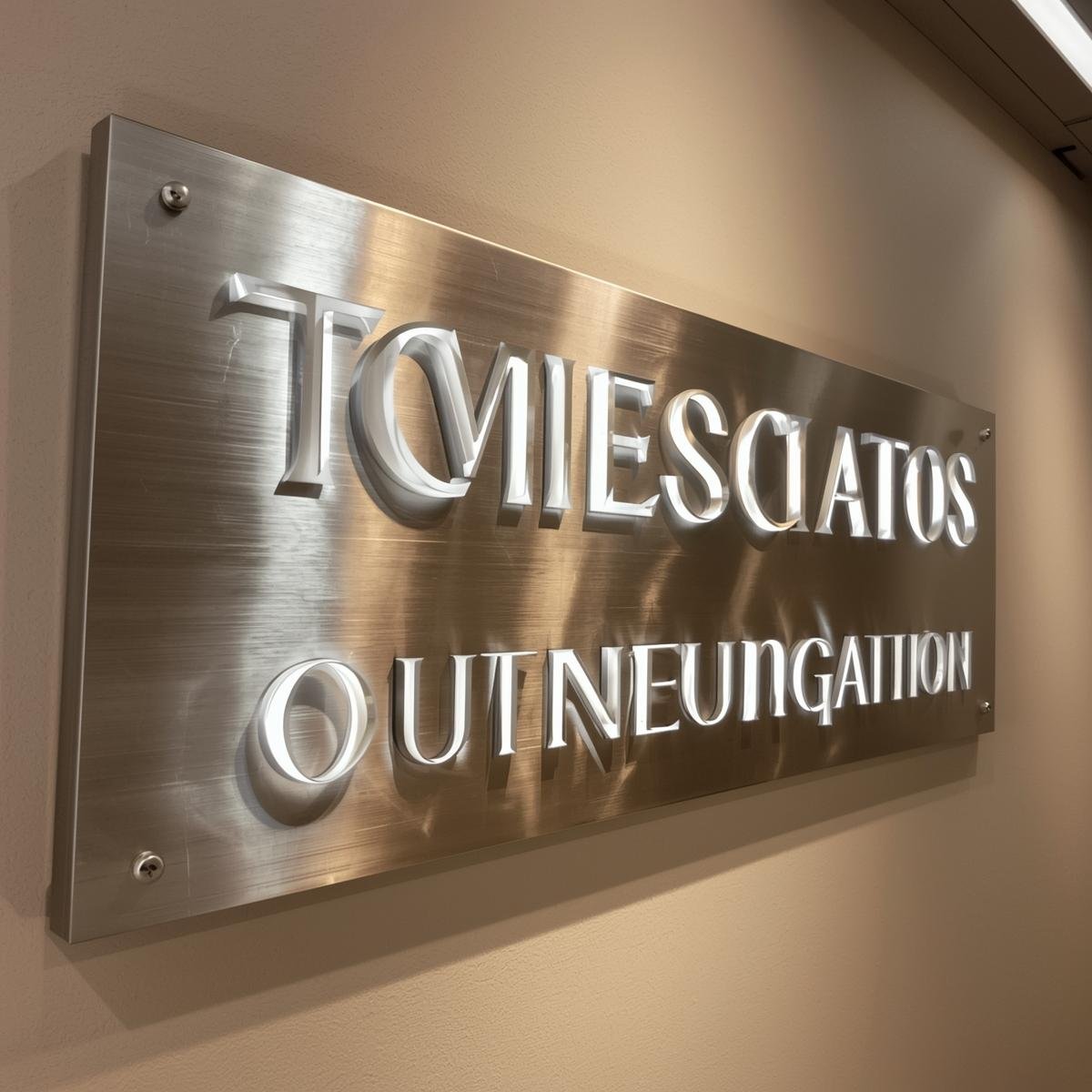
| Brushed metal / brass | Premium, architectural | Very high | Corporate lobbies |
| Wood | Warm, natural | High indoors | Boutiques, cafés, hospitality |
| Fabric | Soft, lightweight | Medium | Banners, backdrops, tension frames |
Finishing matters as much as the material itself. Printed vinyl and laminates mounted on rigid boards should go on without bubbles, wrinkles, or lifting edges — which is why professional shops use controlled-pressure application equipment. A rushed mounting job can spoil a good design within months. Lamination adds protection against scratches and fading under indoor lighting.
Pro tip: Ask your supplier for a physical sample of the exact material and finish. Colors and gloss levels often look different on screen than on a wall under your own lighting.
Indoor Signage for Different Spaces
Offices
Offices benefit from a branded reception sign, clear meeting room and department labels, and directional signs near elevators and corridors. Matching door plates make the workplace look organized, and visitor-facing signs reduce interruptions at the front desk. Frosted privacy films on meeting-room glass add a professional touch.
Retail Stores
In shops, signage guides shoppers and influences buying decisions. Category headers, end-cap displays, floor graphics, and promotional signs should match the store’s visual style. Retail merchandising specialists treat sign placement as part of the wider shelf strategy — a well-placed sign supports the product beside it. Illuminated signs like lightboxes and LED displays draw eyes to promotions and key categories.
Clinics and Healthcare Spaces
Patients are often stressed or in a hurry. Large, high-contrast, jargon-free signs with consistent color coding help them find departments quickly. Accessibility features matter even more here — tactile room signs and high-contrast wayfinding aren’t nice-to-haves in healthcare.
Restaurants and Schools
Restaurants rely on menu boards, entrance branding, and restroom signs. Schools and campuses need room numbers, safety notices, and notice boards. In both, durable, easy-to-clean materials are worth the extra spend.
Not sure which sign types your space needs? Get a free 3D mockup — we’ll visualize the full package in your actual interior before you commit to anything.
 >
>
How to Choose the Right Indoor Signage
Use this simple process to avoid costly mistakes:
- Define the goal. Decide whether each sign should direct, inform, identify, or sell. One sign trying to do everything usually does nothing well.
- Study the space. Note viewing distance, ceiling height, lighting, and foot traffic. A sign read from five meters needs very different lettering from one read at arm’s length.
- Pick the sign type. Match your goal to the types above — wayfinding for large buildings, window graphics for privacy, neon accents for atmosphere.
- Choose material and finish. Balance budget, lifespan, and style. Permanent signs justify acrylic or metal; promotions suit foam board or vinyl.
- Check compliance. Confirm fire, safety, and accessibility requirements before design approval.
- Plan for change. If information updates often, choose modular holders, replaceable inserts, or digital displays.
Typical Indoor Signage Costs
Indoor signage prices vary widely, but these ranges cover most SMB projects:
- Door plates and room signs: $40–$150 each
- Reception dimensional letter sets: $500–$2,500 depending on size and material
- Interior neon wall signs: $300–$1,500 depending on size and complexity
- Window vinyl graphics: $100–$600 per window
- Hanging wayfinding signs: $150–$800 each
- Digital displays: $500–$3,000+ per screen, plus content management
Quantity discounts matter — ordering the full sign package at once from one manufacturer usually costs less per sign than piecemeal ordering, and keeps everything consistent.
Design and Placement Best Practices
Good design makes a sign readable in two seconds. A common rule of thumb is about one inch of letter height for every ten feet of viewing distance — treat it as a starting point and adjust for font style and lighting.
- Contrast first: Dark text on a light background, or the reverse, beats subtle color pairings every time.
- Fewer words: Short messages are read; long paragraphs are ignored.
- Clear hierarchy: Make the most important information largest and keep icons consistent.
- Eye-level placement: Mount signs where people naturally look, and avoid glare from windows or spotlights.
- White space: Space around text improves readability and looks more professional.
Pro tip: Walk the route as a first-time visitor before installation. Wherever you hesitate, a sign is probably missing.
Installation, Maintenance and Upkeep
Installation should match the surface. Glass, drywall, brick, and concrete each need suitable fixings or adhesives, and illuminated signs need safe wiring. For upkeep: dust signs regularly, clean with non-abrasive products, check adhesive edges, and refresh worn graphics before they make the space look neglected. Prices vary by sign size, material, lighting, design complexity, quantity, and installation difficulty — digital displays add hardware, software, and content costs on top.
Frequently Asked Questions
What is indoor signage?
Indoor signage is any sign, graphic, or display placed inside a building to guide, inform, identify, or promote. Examples include lobby signs, door plates, floor graphics, window decals, and digital screens.
What are the most common types of indoor signage?
The most common types are wall and lobby signs, directional and wayfinding signs, door and room signs, floor graphics, window graphics, hanging signs, banners, and digital displays.
Which material is best for indoor signs?
It depends on the use. Acrylic and aluminum composite panels suit permanent signs, metal and wood suit premium interiors, and vinyl, foam board, and fabric suit graphics and short-term promotions.
How much does indoor signage cost for a small office?
A typical small office package — reception logo sign, door plates, and basic wayfinding — generally runs $1,500–$5,000 depending on materials. Larger fit-outs with multiple floors and digital displays scale from there.
Does indoor signage need to follow accessibility guidelines?
Often yes. Many regions require high contrast, readable fonts, and tactile characters or Braille on permanent room signs. Requirements differ by location, so confirm local rules before production.
How do I choose indoor signage for my office or store?
Define what each sign must do, assess viewing distance and lighting, select a suitable type and material, check compliance rules, and keep the design consistent with your brand.
Sign Your Interior Like You Mean It
Indoor signage does far more than decorate a wall. It guides visitors, supports safety, strengthens your brand, and influences how customers feel in your space. Start with your goals, walk your space as a visitor would, and invest in quality finishing — the result is a clearer, safer, more confident business environment.
UrbanSign Works manufactures custom indoor signage factory-direct: lobby letters, wayfinding systems, neon accents, and window graphics — all designed with a free 3D mockup before fabrication.