
An a-frame sign is one of the few pieces of signage that meets customers where they already are — on the sidewalk, at eye level, seconds from your door. Also called sandwich board signs, these portable folding displays let restaurants, cafes, retailers, salons, and service businesses advertise daily specials, promote events, or point visitors in the right direction without a permanent installation.
While a-frame signs are easy to set out each morning, getting real results from them takes more than leaning a board against the wall. The frame type, graphic design, stability, and placement all decide whether passersby read the message or walk straight past. This guide covers how to choose, design, and place outdoor a-frame signs that actually earn their spot on the sidewalk.
What Is an A-Frame Sign?
An a-frame sign uses two rigid panels joined at the top (or along the sides) so they open into a freestanding “A” shape. Most designs carry a message on both faces, so pedestrians approaching from either direction can read it. Unlike a mounted storefront sign, sidewalk signs for business can be repositioned during the day and stored indoors at closing time.
The format suits any message that changes often: lunch specials, seasonal sales, new arrivals, event announcements, open-house directions. If your message is permanent, a mounted sign usually serves better — an a-frame earns its keep when the message is temporary.
Why Businesses Use A-Frame (Sandwich Board) Signs
Extend Your Storefront Toward the Street
Your building sign has to do its job from a fixed position. An a-frame extends your message toward pedestrian traffic, catching attention before people reach your entrance. On a busy street, that extra few feet of reach is often the difference between a glance and a visit.
Promote Specials Without Reprinting
A sandwich board lets you announce:
- Daily and lunch specials
- Seasonal sales and clearance events
- New products or menu items
- Grand openings and pop-up events
- Service announcements (new hours, now hiring)
Because the message sits at pedestrian eye level, customers understand the offer without stepping inside.
Give Directions Where People Need Them
A-frame signs double as temporary wayfinding: point visitors toward your entrance, parking, reception desk, or event room. They are especially useful for businesses tucked inside larger properties, venues with multiple entrances, or anywhere the front door is not obvious from the street.
Stay Flexible
Set it out at opening, bring it in at close. No structural permits, no electrician, no holes in the facade. For leased spaces or seasonal businesses, that flexibility matters.

Common Types of A-Frame Signs
| Type | How it works | Best for | Typical price range |
|---|---|---|---|
| Printed A-frame | Full-color graphics permanently applied to rigid panels | Long-term branding, fixed promotions | $150–$600 |
| Changeable-insert frame | Drop-in or slide-in graphic panels you swap yourself | Rotating promotions | $120–$400 for the frame; inserts $30–$100 each |
| Chalkboard A-frame | Chalk or liquid-chalk panels written by hand | Daily specials, menus, cafes | $80–$250 |
| Outdoor-rated / weighted | Weather-sealed panels, heavier frame or ballast | Windy or exposed sidewalks | $200–$800 |
Printed panels give a polished brand look; changeable inserts balance polish with flexibility. Chalkboards are the cheapest way to change a message daily, but they depend on someone with decent handwriting — and they need rewriting after rain unless the panels are protected.
One limitation to plan around: a plain a-frame goes quiet after dark. If evening foot traffic matters to your business, pair the sidewalk sign with illuminated signs for businesses on the building itself so your brand keeps working when the A-frame comes inside.
How to Design an A-Frame Sign People Actually Read
Pedestrians give a sidewalk sign about two seconds. Design for that.
Keep One Message Per Sign
Do not list the whole menu. Pick the single thing that should make someone stop:
- TODAY’S LUNCH — $12.99
- 30% OFF ALL DENIM
- WALK-INS WELCOME
Use Large, High-Contrast Type
Lettering must stay legible from across the sidewalk or street — for most a-frames, that means headline text at least 3–4 inches tall. Dark text on a light panel (or light text on a dark panel) beats subtle brand-color combinations at distance, every time. Reserve script or decorative fonts for small accents; the headline should be a clean, bold face.
Keep the Branding Consistent
Your a-frame should look like it belongs to your business: same logo, same colors, same voice as your storefront. If your permanent outdoor business signage is a crisp modern set, a scrawled board undermines it — and vice versa. Consistency is what turns a glance into recognition.
End With a Clear Call to Action
Tell people what to do next:
- Enter here
- Ask about today’s special
- Follow the signs
- Scan to see the menu
Want a professional layout before you print? Get a free 3D mockup — our designers will set your message and branding into a to-scale preview so you can check readability before anything goes to production.
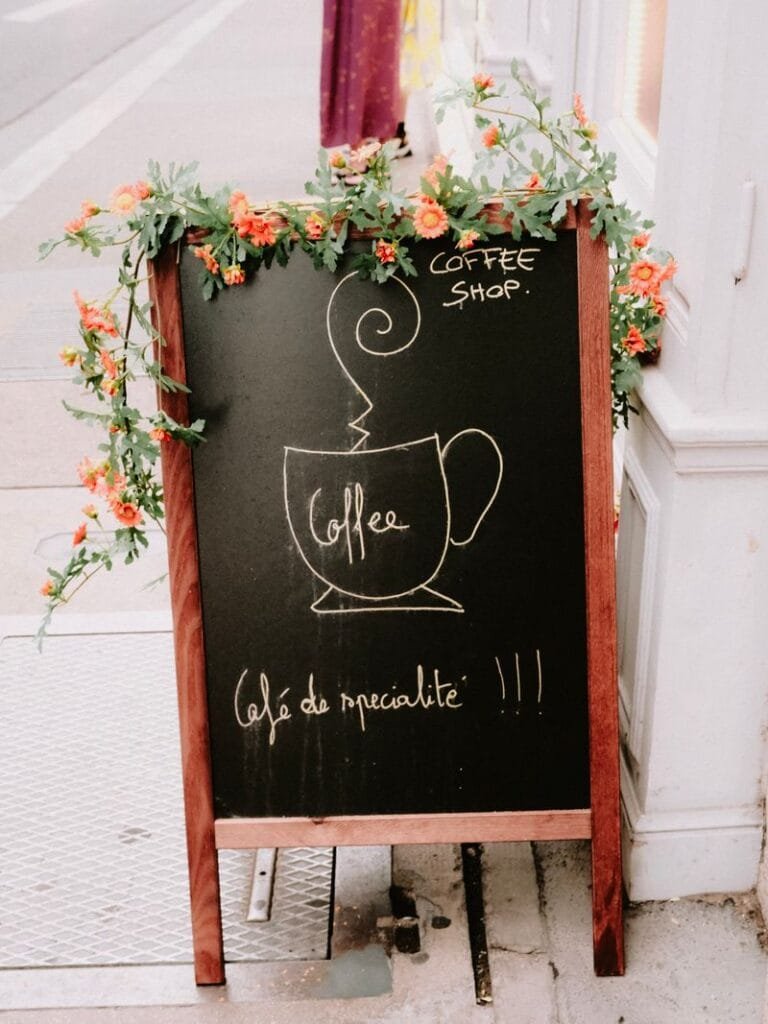
Where to Place an A-Frame Sign
Placement decides whether the sign works. Aim for a spot that is:
- Visible to approaching pedestrians before they pass your door
- Close enough to the storefront to stay associated with your business
- Clear of entrances, exits, and door swings
- Out of the main walking path — keep a clear pedestrian lane (many cities require about 4 feet of clear sidewalk)
- Stable for the actual conditions: wind, slopes, uneven pavement
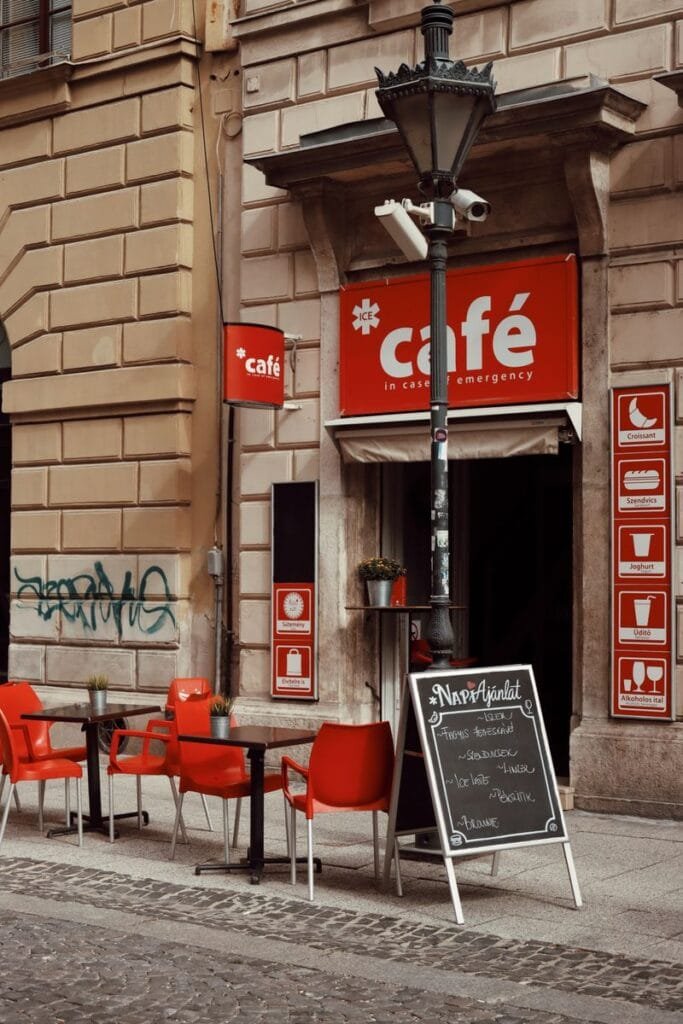
Check local rules before placing anything on a public sidewalk. Many municipalities require a permit for sidewalk signs, limit the number per business, or restrict placement to business hours. A quick call to your city’s planning office beats a citation.
A-Frame Sign vs. Permanent Storefront Sign
| Feature | A-Frame Sign | Permanent Storefront Sign |
|---|---|---|
| Portability | High — moved daily | None |
| Message changes | Easy on the right design | Infrequent, planned |
| Installation | Temporary, freestanding | Professionally mounted |
| Promotional use | Excellent | Limited |
| Brand identification | Supporting role | Primary role |
| Placement flexibility | High | Fixed |
| Best use | Offers, directions, temporary messages | Long-term branding |
Most businesses benefit from both: the permanent sign identifies the business, the a-frame carries the changing message. A hanging (blade) sign is another strong complement — it catches pedestrians approaching from down the street, while the a-frame speaks to people already at your door.
Materials, Stability, and Outdoor Use
Outdoor a-frame signs live a harder life than anything inside your shop. When choosing one, check:
- Frame construction: metal or hardwood frames outlast plastic in daily outdoor use.
- Panel material: sealed or laminated panels resist moisture and UV fading.
- Stability: in windy areas, look for weighted bases, ballast options, or wind-slot designs.
- Replaceable graphics: changeable-insert frames cost more upfront but save money every time the message changes.
- Storage: folding frames that collapse flat are easier to bring in each night — and bringing signs in at night noticeably extends their life.
A lightweight sign is convenient until the first gusty afternoon. Match the stability to your actual sidewalk conditions, not the product photo.
Common A-Frame Sign Mistakes
- Too much information. A crowded panel does not get read; it gets skipped.
- Text too small. Lettering that looks fine on a screen can disappear at twenty feet.
- Weak contrast. Brand colors that look elegant up close can blur into each other at distance.
- Hidden placement. Behind planters, parked cars, or the neighboring shop’s board — if pedestrians cannot see it, it is not advertising.
- Ignoring local rules. Sidewalk sign permits and clearance requirements are real; check before you invest.
- Neglecting maintenance. Faded graphics, wobbly hinges, and dirty panels quietly tell customers the business does not pay attention to details.
A-Frame Sign Planning Checklist
Before you order, answer these:
- What is the single message the sign must carry?
- Who needs to see it, and from which direction will they approach?
- How far away must the headline be readable?
- How often will the message change — daily, weekly, seasonally?
- Will the sign live indoors, outdoors, or both?
- What is the wind and weather exposure like?
- Does the design match your existing branding?
- Does your city require a permit or specific sidewalk clearance?
- Where will you store it overnight?
Answering these first helps you pick a format that fits the real application instead of choosing on looks alone.
Frequently Asked Questions
What are a-frame signs used for?
Storefront advertising, daily specials, seasonal promotions, event announcements, and temporary directional signage — anywhere a business needs a visible, changeable message at street level.
Are a-frame signs portable?
Yes. The folding design lets most a-frame signs collapse flat, so staff can set them out each morning and store them indoors at night.
Can a-frame signs be used outdoors?
Many are built for it, but construction matters: sealed panels, UV-resistant graphics, and a weighted or wind-resistant frame are the difference between a sign that lasts seasons and one that lasts weeks.
Can an a-frame sign be double-sided?
Almost always. Two-panel designs display a message in both directions, doubling the number of passersby who see it.
What size should an a-frame sign be?
Common sidewalk sizes run about 24″ x 36″ to 36″ x 48″ per panel. Choose based on viewing distance: a sign read from across a wide street needs a bigger panel and taller lettering than one read from a narrow sidewalk.
Do I need a permit for a sidewalk sign?
It depends on your city. Many municipalities regulate sidewalk signs — permits, size limits, placement hours, and required pedestrian clearance are all common. Check with your local planning office before placing one on public property. Broader sign questions are covered in our signage FAQ.
Get an A-Frame Sign That Matches Your Storefront
A well-planned a-frame sign is a small investment that works every business day — promoting specials, guiding visitors, and pulling foot traffic through your door. UrbanSign Works builds custom a-frame and sidewalk signage matched to your branding, sized for your viewing distance, and constructed for your actual conditions.
Request a quote for a free design mockup, or contact us to talk through the right format for your business.