
A well-designed storefront sign helps customers identify your business, recognize your brand, and understand where to enter. Whether you operate a retail shop, restaurant, salon, medical office, showroom, or professional service business, the right exterior sign should work with the building rather than simply sit on it.
Modern storefront signs range from illuminated channel letters and dimensional letters to cabinet signs, blade signs, window graphics, and other custom solutions. The best choice depends on your building, viewing distance, brand identity, lighting conditions, local requirements, and installation surface. This guide explains the main options and the practical decisions to make before ordering a sign.
What Are Storefront Signs?
Storefront signs are exterior signs used to identify and brand a business on or around its commercial building. They can display a business name, logo, symbol, or other essential information that helps customers recognize the location.
The term covers several different sign formats. A sign mounted directly above an entrance may look completely different from a projecting sign designed for pedestrians approaching from the sidewalk. Effective storefront signage therefore starts with the site, not just the artwork.
Why Storefront Signage Matters
Your exterior sign often becomes one of the first physical brand elements a customer encounters. It needs to communicate the business identity quickly without making people work to understand it. Good store signage can help with several practical goals:
- Identify the business from the street
- Reinforce brand identity
- Improve exterior presentation
- Help customers locate an entrance
- Create stronger visibility from pedestrian or vehicle approaches
- Extend brand presence beyond the interior
- Provide a consistent visual identity across locations
The important distinction is between simply displaying a name and designing signage around the way people actually approach the building. A customer driving past a shopping center has a different viewing situation from someone walking along a dense retail street. The sign should account for that difference.
Common Types of Storefront Signs
There is no single best sign for store applications. Different building layouts and businesses call for different solutions.
1. Channel Letter Signs
Channel letters are individual three-dimensional letters or logo elements fabricated for direct facade mounting or installation on a raceway. They are particularly useful when a business wants its name to stand apart from the building surface. Illuminated versions also provide nighttime visibility. Common illumination approaches include:
- Front-lit faces
- Halo or reverse illumination
- Combination illumination
- Non-illuminated dimensional construction
Channel letter signs work well for retailers, restaurants, hotels, offices, shopping centers, and other businesses where the business name needs strong facade presence.
2. Dimensional Letter Signs
Dimensional letters create depth without necessarily using internal illumination. Depending on the design, they can use materials such as aluminum, acrylic, or other fabricated materials. Metal finishes create a more architectural appearance, while acrylic supports a broader range of colors and visual treatments. These signs work especially well when the building already has strong architectural lighting or when a clean, understated appearance is preferred.
3. Illuminated Cabinet Signs
A cabinet sign uses a structured enclosure with a sign face illuminated from inside. This format provides a broad, unified display area for a logo or business name. Cabinet construction is particularly useful when the desired artwork works better as a complete panel rather than separate letters.
4. Blade and Projecting Signs
A blade sign extends perpendicular from a building facade instead of facing directly toward the street. This orientation is useful in pedestrian-oriented environments because people approaching along the sidewalk may see the sign before they are directly in front of the storefront. Purpose-built hanging signs serve a similar role at entrances and walkways. A projecting sign can also add another layer of visual interest to a facade without competing with the primary sign above the entrance.
5. Window Graphics and Lettering
Windows offer additional space for branding, business information, promotional messages, or privacy treatments. Window graphics can supplement a primary storefront sign rather than replace it. They are especially useful when the facade has limited wall space. The key is maintaining readability — covering too much glass with competing messages makes the storefront feel visually crowded.
6. Awning Signs
Awnings combine architectural function with branding. A business name or logo can appear on the front face or another visible section of the awning. This approach works particularly well for restaurants, cafés, boutiques, and businesses where the storefront benefits from a more integrated architectural appearance.
7. Hanging Signs
Hanging signs provide another visual identification point around an entrance or pedestrian path. They are especially useful where customers approach from multiple directions, although the available mounting structure and local requirements need to be evaluated before fabrication.
Storefront Sign Cost Comparison
What should you budget? Typical US cost ranges (as of 2026) for a small-to-medium retail storefront:
| Sign type | Typical cost range | Best for |
|---|---|---|
| Channel letters (illuminated) | $2,000–$6,000 | Maximum facade presence, day + night |
| Dimensional letters (non-illuminated) | $800–$3,000 | Architectural, upscale look |
| Illuminated cabinet sign | $1,500–$5,000 | Bold, unified panel display |
| Blade / projecting sign | $500–$2,000 | Pedestrian streets, double-sided visibility |
| Window graphics and lettering | $200–$1,000 | Supplemental branding on glass |
| Awning sign | $1,500–$5,000 | Restaurants, cafés, boutiques |
| Hanging sign | $300–$1,200 | Entrances, walkways, multi-direction visibility |
Final pricing depends on dimensions, materials, illumination, electrical work, installation access, and permitting. If you’d like an itemized estimate for your building, get a free 3D mockup of your storefront sign design before committing.
7 Storefront Sign Ideas for Different Business Types
1. Halo-Lit Channel Letters for Upscale Retail
Halo-lit (reverse-lit) letters throw light back onto the facade, creating an elegant glow around each letter. Ideal for boutiques, jewelry stores, and restaurants that want a premium nighttime look without a bright glowing face.
2. Rustic Wood and Metal for Cafés and Restaurants
A wood-textured or reclaimed-look panel with routed or metal letters gives cafés, bakeries, and craft restaurants a warm, handcrafted identity that fits brick and historic facades.
3. Blade Sign + Window Graphics for Pedestrian Streets
On busy sidewalks, pair a double-sided blade sign (catches walkers approaching from either direction) with clean window lettering for hours and services. Two signs, one coherent brand.
4. Push-Through Cabinet for Shopping Centers
Where landlords require a cabinet format, push-through letters in an illuminated cabinet give you the depth and glow of dimensional letters within the approved enclosure — compliant and attractive.
5. Backlit Acrylic for Medical and Professional Offices
A clean backlit acrylic panel with the practice name reads professional day and night, keeps the message short, and works within conservative building standards common in office and medical districts.
6. Neon-Style LED Accent for Salons and Studios
A warm neon-style LED accent in the window or above the entrance gives salons, barbershops, and studios a distinctive glow that photographs well for social media — free marketing every evening.
7. Full Storefront System: Facade + Blade + Door Lettering
The strongest storefronts layer identification: channel letters on the facade for drivers, a blade sign for pedestrians, and door lettering with hours for up-close visitors. Each element has one job; together they cover every approach.
Store Sign vs. Storefront Sign: What’s the Difference?
The phrases “store sign” and “storefront sign” are often used interchangeably, but they can describe slightly different scopes:
- A store sign generally refers to a sign identifying a retail or commercial business.
- A storefront sign more specifically describes signage associated with the building facade or storefront area.
For example, a freestanding sign near a shopping-center entrance may identify a business but not physically attach to its storefront. Meanwhile, channel letters mounted directly above a shop entrance are clearly a storefront sign. In broader store signage planning, both exterior and interior signs form part of the customer’s overall experience.
Storefront Signage Should Start With the Site
One of the biggest mistakes businesses make is choosing a sign before considering the building. Before selecting a design, examine:
Viewing Distance
How far away will customers first see the sign? A sign intended for pedestrians can use a different visual strategy from one that needs to be recognized by approaching drivers.
Approach Direction
Determine where customers come from. A corner business may have visibility from two streets, while an interior shopping-center unit may primarily face a pedestrian walkway or parking lot.
Building Architecture
Look at:
- Facade material
- Available mounting area
- Existing architectural features
- Roofline
- Windows
- Doors
- Lighting
- Columns
- Sign bands
- Exterior finishes
The sign should appear intentional rather than attached as an afterthought.
Day and Night Visibility
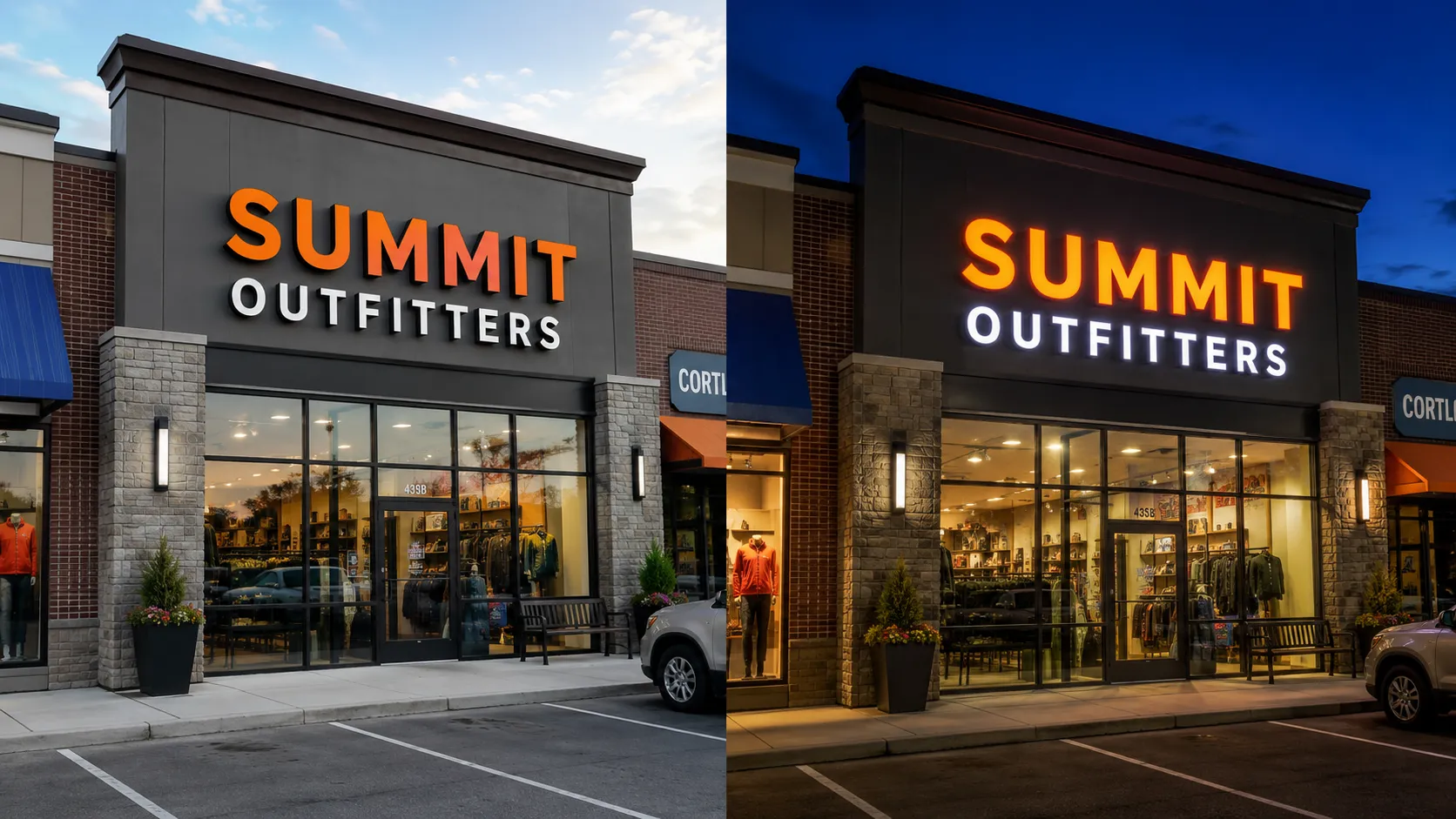
If the business operates after dark, consider how the sign will look when surrounding daylight disappears. Illumination changes the visual hierarchy of a storefront, so evaluate brightness, contrast, surrounding lighting, and the appearance of the sign after sunset. Explore illuminated signs for businesses for the main approaches.
Choosing the Right Materials
Materials affect appearance, construction, weight, maintenance, and the overall design language of a storefront.
Aluminum
Aluminum is widely used for fabricated commercial signage because it supports lightweight fabricated structures and a variety of finishes.
Acrylic
Acrylic can be used for illuminated faces, dimensional elements, and other sign components. It supports different colors, finishes, and translucent effects depending on the application.
Metal
Fabricated metal letters and panels create a strong architectural appearance. Different finishes can make the same basic sign design feel modern, industrial, traditional, or understated.
Vinyl
Vinyl graphics provide a flexible solution for windows and other smooth surfaces. They are often used for branding, lettering, promotional messaging, and supplementary information.
Material selection should follow the sign’s intended environment, construction method, appearance, and maintenance requirements rather than simply choosing the cheapest available option.
Illuminated vs. Non-Illuminated Storefront Signs
One of the most important design decisions is whether your sign should produce its own light.
Illuminated Signs
Illuminated signage improves visibility in low-light conditions and gives the storefront a stronger presence after sunset. Options include:
- Front-lit channel letters
- Halo-lit letters
- Illuminated cabinet signs
- LED lightboxes
- Other custom illuminated constructions
Non-Illuminated Signs
Non-illuminated signs can provide a cleaner or more architectural appearance and may work well when the building already has adequate exterior lighting.
The right choice depends on operating hours, surrounding light levels, brand style, building architecture, and local sign requirements.
Designing an Effective Storefront Sign
Keep the Main Message Clear
The business name or logo should usually remain the dominant element.
Prioritize Contrast
Text and graphics should remain distinguishable from the sign background and surrounding building.
Limit Competing Elements
Too many fonts, colors, messages, or decorative elements weaken the primary message.
Match the Architecture
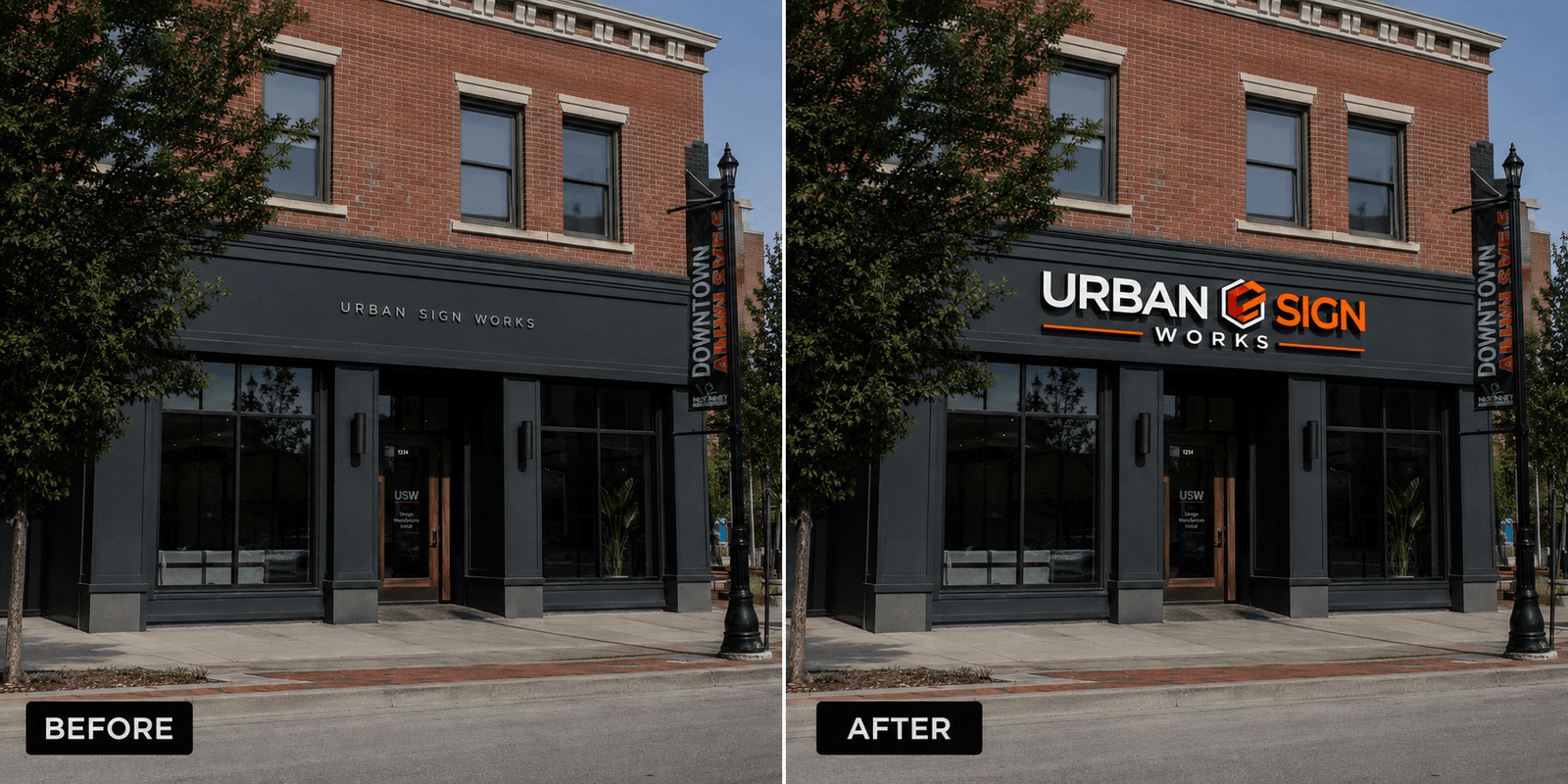
A modern aluminum-and-glass building may call for a different sign treatment than a traditional brick storefront. The goal is not to make the sign disappear — it is to make it look like it belongs there.
Storefront Signage for Different Businesses
Retail Stores
Retail businesses often need strong brand identification and visibility from passing customers. Channel letters, dimensional letters, window graphics, and illuminated signs can work together.
Restaurants and Cafés
Restaurants benefit from signage that communicates the brand from both pedestrian and vehicle approaches. Illuminated signs also support visibility after dark.
Salons and Boutiques
Smaller businesses can use dimensional letters, blade signs, window graphics, or refined metal signage to create a distinctive storefront without overwhelming the facade.
Medical and Professional Offices
A clean, restrained sign communicates professionalism while keeping the business easy to identify.
Shopping Centers
Shopping-center signage often needs to work within an established tenant sign band, architectural program, or property-management standard. Confirm the available space and mounting method before design approval.
How to Plan Storefront Signs for Multiple Locations
Businesses with multiple locations should think beyond one sign. A strong signage system should establish consistent rules for:
- Logo proportions
- Colors
- Letter styles
- Illumination
- Materials
- Mounting approach
- Sign dimensions
- Brand presentation
The individual buildings will not always be identical. A successful rollout balances brand consistency with site-specific adaptation — a corner location, shopping-center unit, standalone building, and historic-style storefront may each require a different physical solution while maintaining recognizable brand identity.
Common Storefront Sign Mistakes
- Choosing a sign without considering viewing conditions — a beautiful sign underperforms if customers can’t easily see it from the primary approach.
- Using too much information — a storefront is not a brochure.
- Ignoring the building — a sign that clashes with the facade makes a professional business look unfinished.
- Treating lighting as an afterthought — for illuminated signage, lighting belongs in the design phase, not the end.
- Forgetting installation requirements — mounting surface, attachment method, electrical work, access, and surrounding construction all affect the final installation.
- Assuming one design fits every location — multi-location businesses need a flexible signage standard, not identical dimensions on different buildings.
Permits and Local Sign Requirements
Before fabrication, check the requirements for the project location. Sign regulations vary by city, county, zoning district, property, and building type. Requirements may address:
- Sign area
- Placement
- Projection
- Illumination
- Electrical work
- Mounting
- Number of signs
- Historic districts
- Tenant restrictions
Do not assume a design approved in one location will automatically be allowed in another. For projects involving accessibility, electrical work, structural attachment, or local sign codes, confirm the applicable requirements with the relevant authority or qualified professional. The U.S. Small Business Administration offers general guidance on navigating local business requirements.
A Practical Storefront Sign Selection Checklist
Before requesting a quote, gather the following information:
| Project question | What to prepare |
|---|---|
| Business identity | Logo, business name, brand colors |
| Building | Photos of the complete storefront |
| Mounting area | Approximate available dimensions |
| Visibility | Primary pedestrian and vehicle approaches |
| Operating hours | Daytime, evening, or both |
| Lighting | Existing exterior lighting |
| Sign preference | Illuminated or non-illuminated |
| Location | City, state, and property information |
| Existing requirements | Landlord, shopping-center, or property standards |
| Installation | New installation or sign replacement |
| Additional branding | Window graphics, blade signs, or other elements |
Providing this information early helps a sign provider understand the project instead of designing from incomplete assumptions.
What Should You Ask a Sign Company?
- What sign type fits my building and viewing conditions?
- What mounting method does the design require?
- What materials will the sign use?
- Will the sign be illuminated?
- What electrical work is required, if any?
- What information is needed for permitting?
- Does the property have landlord or shopping-center sign standards?
- How will the sign be serviced or maintained?
- What is included in the installation scope?
- Are there site conditions that could change the final design?
These questions make it easier to compare proposals that may appear similar but contain different scopes.
Storefront Signs as Part of a Larger Signage System
A storefront should not always rely on one sign. Depending on the property, a business may combine:
- Primary facade signage
- Blade or projecting signage
- Window graphics
- Door lettering
- Entrance identification
- Parking or directional signs
- Interior wayfinding
- Promotional graphics
This creates a connected customer experience from the street to the entrance and, when appropriate, through the interior. Storefront signage works best when every element has a clear job instead of competing for attention.
Frequently Asked Questions
What is the best type of storefront sign?
There is no universal best option. Channel letters, dimensional letters, cabinet signs, blade signs, window graphics, and other formats suit different buildings and visibility conditions. The right choice depends on your location, facade, brand, viewing distance, operating hours, and applicable requirements.
How much does a storefront sign cost?
Prices vary substantially by sign type, dimensions, materials, illumination, fabrication, installation, electrical work, site conditions, and permitting. As a rough guide: dimensional letters $800–$3,000, illuminated cabinet signs $1,500–$5,000, channel letter sets $2,000–$6,000. A reliable quote is based on the actual project scope, not a generic assumption.
What makes a good storefront sign?
A good store sign clearly identifies the business, remains readable from the intended viewing distance, fits the building, supports the brand, and uses an appropriate construction and mounting method.
Can storefront signs be illuminated?
Yes. Many storefront formats incorporate LED illumination. The appropriate solution depends on sign construction, desired appearance, operating hours, building, and local requirements.
What is the difference between storefront signage and store signage?
Storefront signage generally focuses on signs associated with the exterior storefront and facade. Store signage can be broader — covering exterior identification, window graphics, promotional signs, interior signs, and wayfinding.
What is a good sign for store visibility at night?
An illuminated sign provides stronger nighttime visibility than a non-illuminated sign, but the design should balance brightness, contrast, readability, surrounding lighting, and applicable local requirements. See the signage FAQ for more guidance.
Do storefront signs require permits?
Some projects require permits or approvals; others fall under different local rules. Requirements vary by jurisdiction and property, so confirm the applicable local regulations before fabrication and installation.
Plan Your Storefront Sign With a Free 3D Mockup
The right storefront signs connect the building, brand, customer approach, and physical environment into one recognizable identity. Start with the site — where customers approach from, how far away they need to recognize the business, what the building can accommodate, and how the sign should look day and night.
Request a free quote with a 3D mockup of your storefront design, or contact us to discuss sign types, materials, and installation for your building.