
Choosing a business sign feels like it should be simple — pick something that looks good with your name on it. In practice, the sign that wins in a design mockup often underperforms on the actual building: too small to read from the road, washed out at night, made from materials that fade within two years, or blocked by an awning nobody thought about.
This guide is the chooser’s guide, not the pricing guide. It walks through how to match a sign to your location, customers, and operating hours — the decisions that determine whether a sign earns its cost. (If you want cost breakdowns by sign type, see our separate pricing post: How Much Does a Business Sign Cost?)
Fast answer: the best business sign is the one that matches your location, viewing distance, lighting conditions, brand style, local rules, and operating hours. Start with the business goal, then choose the sign type, materials, and visibility strategy that support that goal.
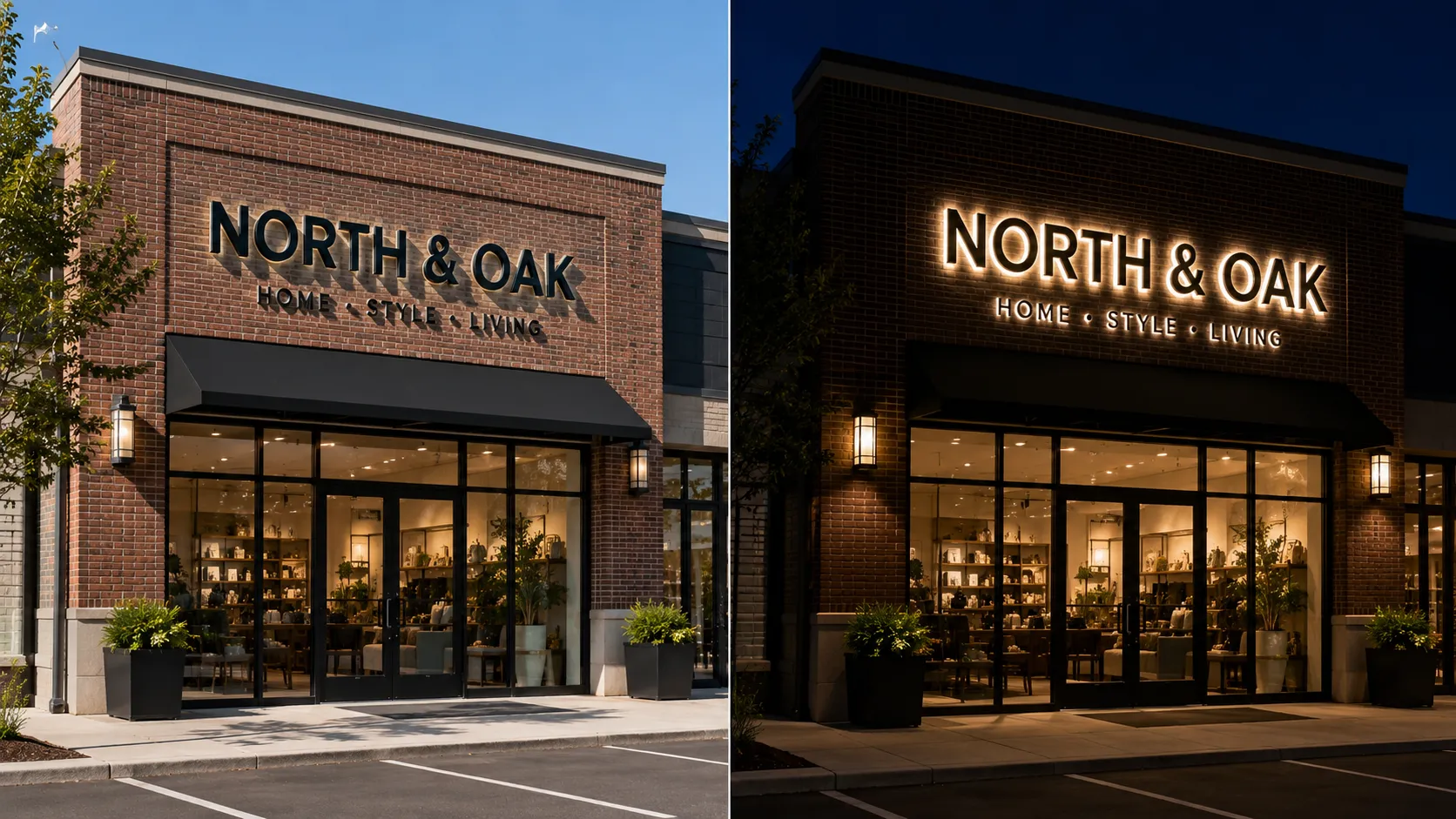
Why Your Business Sign Matters More Than You Think
A business sign is often the first physical touchpoint between your brand and a prospective customer. Before anyone talks to your staff, clicks your ad, or reads your brochure, they judge the business by what the sign communicates from the street.
It does four jobs at once:
- Visibility — helps people locate you quickly, even in visually noisy environments like retail strips, main roads, and multi-tenant plazas.
- Trust — professional signage signals that the business is established and intentional. A weak sign can undermine a strong business.
- Branding — colors, typography, illumination style, and material quality shape perception long before a sales conversation.
- Navigation — clear identification reduces friction in the customer journey: fewer missed turns, fewer confused visitors.
For many businesses, the right answer is not a single sign but a sign system: one exterior sign to get attention, one wayfinding layer to guide people, and one interior branding layer to reinforce trust once customers enter.
The Main Sign Types — Matched to Business Goals
Not every sign solves the same problem. Match the type to what your business actually needs.
Outdoor Business Signs: Attention and Location Finding
| Sign type | Best for | Typical setting | Illumination |
|---|---|---|---|
| Channel letters | Storefront branding, strong night visibility | Retail, restaurants, services | Internally lit |
| Monument signs | Roadside identification at entrances | Plazas, offices, campuses | Optional |
| Blade / projecting signs | Pedestrian side-angle visibility | Downtown streets, old towns | Often lit |
| LED cabinet signs | Bright face, larger message area | Auto, services, multi-tenant | Yes |
Channel letter signs — individually lit, three-dimensional letters mounted directly to the building — remain the most recognizable storefront format because they are highly visible at night and easy to customize to a brand’s font and color. Monument signs sit low and read as permanent and professional; blade signs catch pedestrians approaching from down the street at a right angle to your facade.
Interior Business Signs: Trust, Navigation, Brand Experience
- Lobby signs — first impressions inside the space; dimensional lettering in metal, acrylic, or wood is the standard.
- Wayfinding signs — directories, room identifiers, and directional signs that guide visitors through the space.
- ADA-compliant signs — required for accessibility in most public buildings; tactile lettering and Braille.
- Wall graphics — storytelling and interior brand presence at a lower cost than fabricated letters.
Illuminated vs. Non-Illuminated
Illumination is its own decision, not a feature of one sign type. If your business operates after dark, sits on a shaded street, or competes in a visually busy corridor, lighting is what keeps the sign working when daylight does not. See our illuminated signs for businesses for the main options — channel letters, halo-lit letters, lightboxes, and externally lit signs.
Not every business needs illumination. A daytime-only office with strong street presence can perform well with a non-illuminated dimensional sign — and save on both fabrication and electrical work.
Materials That Perform: What Lasts Outdoors
Materials decide how the sign looks in year one and how it looks in year seven. A visually attractive sign can fail commercially if the material is wrong for the environment.
| Material | Why businesses choose it | Best use cases |
|---|---|---|
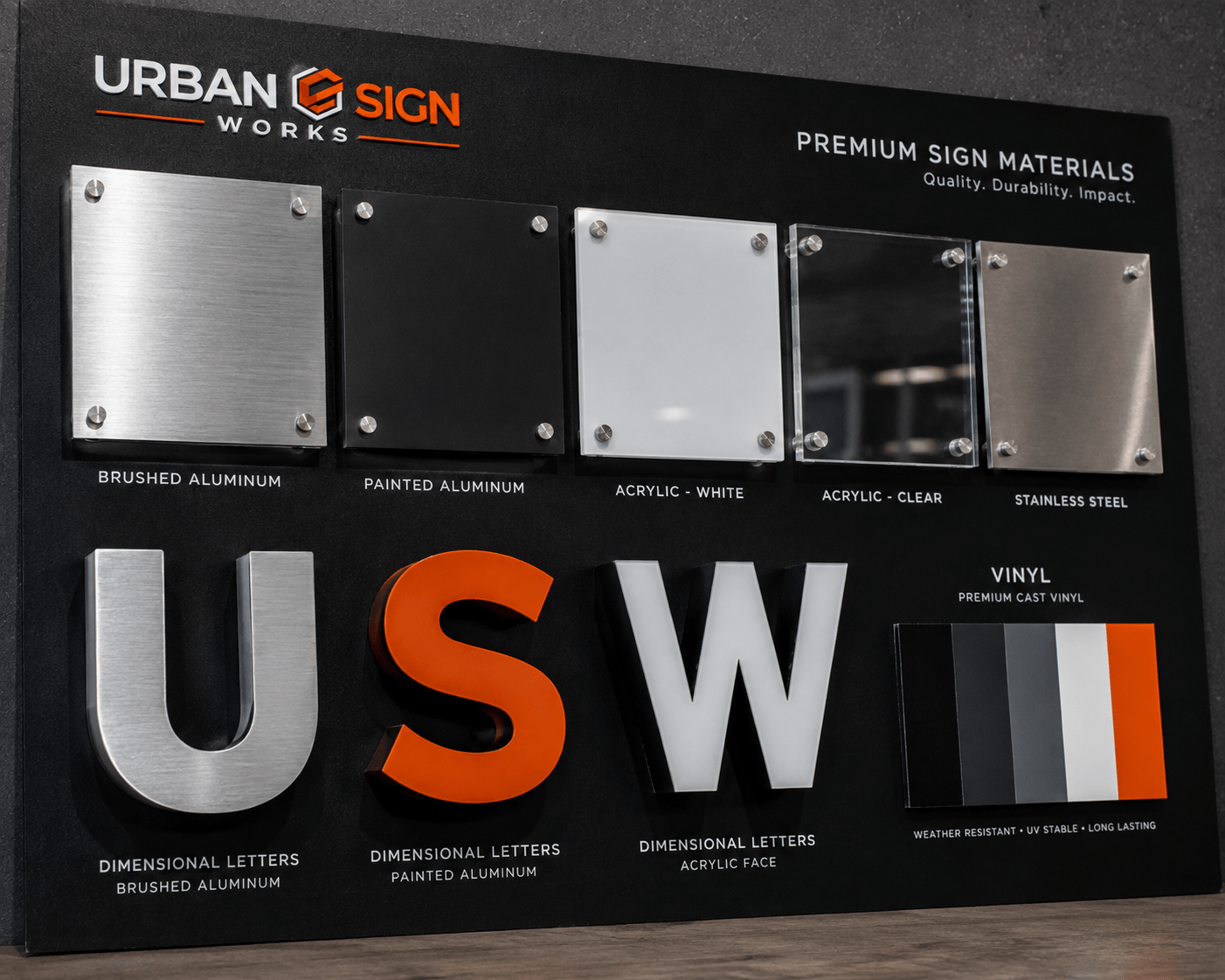
| Aluminum | Lightweight, durable, weather-resistant | Exterior panels, cabinets, frames, channel letters |
| Acrylic | Clean modern look, excellent for illumination | Sign faces, lobby signs, lit components |
| PVC | Cost-effective, easy to fabricate | Interior dimensional letters and wall elements |
| Stainless steel | Premium architectural feel | High-end lobby, office, and specialty signs |
| Wood | Warm, artisan appearance | Boutique, rustic, or heritage-style signs |
| Vinyl | Graphic flexibility, fast to produce | Window graphics, temporary signs, overlays |
The material rule that saves money: do not choose materials by initial appearance alone. Choose by fit for environment — sunlight, moisture, wind, maintenance tolerance, cleaning requirements, lifespan expectations, and the image the business wants to project.
For outdoor business signs in particular, UV exposure is the quiet killer: unprotected graphics fade, and cheap substrates chalk and crack. Ask your fabricator what finish and warranty they offer against fading in your climate.
Visibility Rules: The Four Reasons Signs Fail
Most business signs fail for one of four reasons: the sign is too small, the contrast is too weak, the placement is wrong, or the message is overloaded. Beautiful fabrication cannot rescue poor readability.
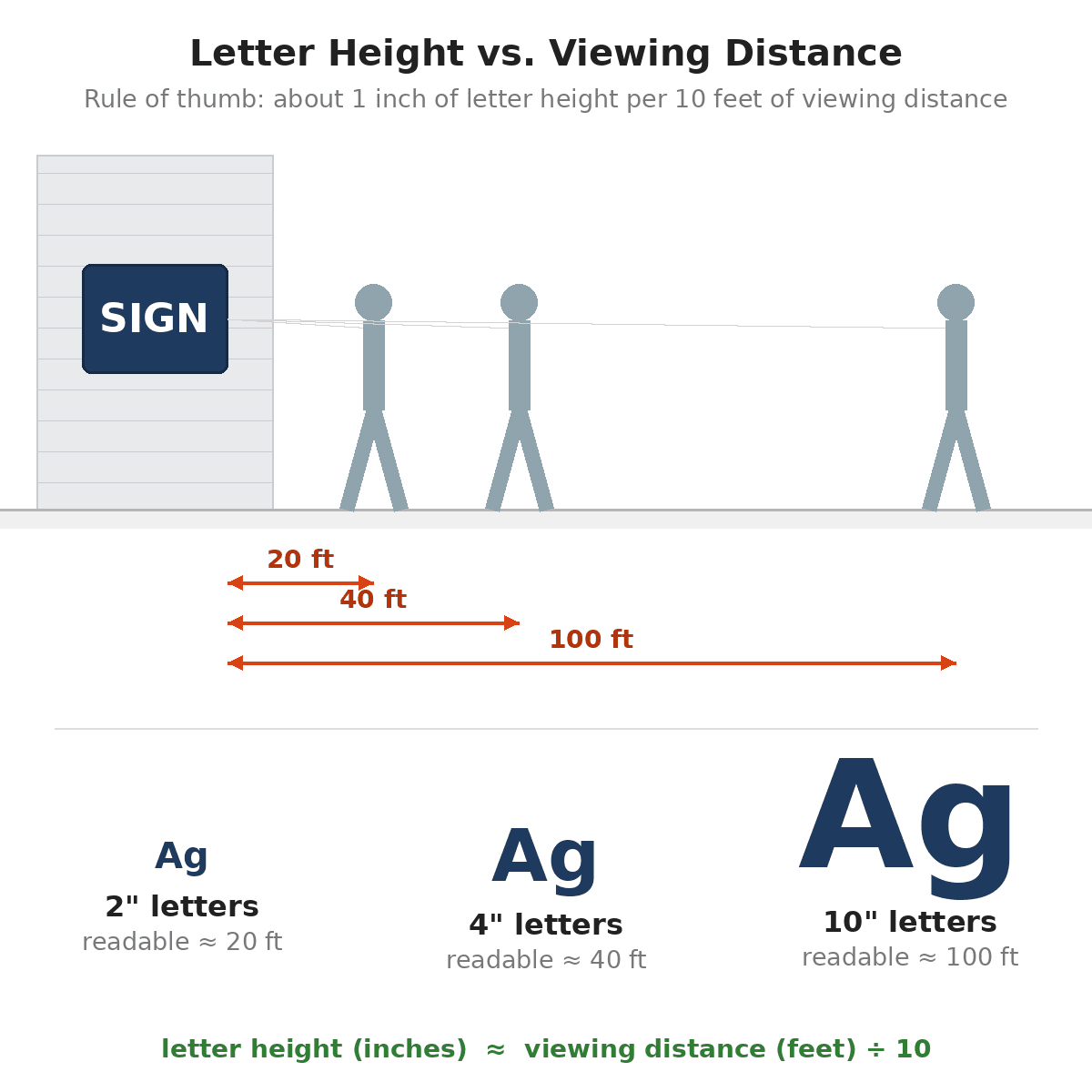
- Distance changes everything. A sign viewed from a highway needs larger, simpler messaging than one read from a sidewalk. A common rule of thumb: about 1 inch of letter height per 10 feet of viewing distance.
- Contrast first. High contrast between text and background is the single biggest readability lever. Test your color combination at the actual viewing distance, in the actual light.
- Simplicity beats clutter. The name, a symbol, or a short value marker — scannable in seconds. The more text you add, the more performance you usually lose.
- Placement is part of the design. Awnings, landscaping, parked vehicles, and facade clutter all block signs. Walk the customer’s approach route before finalizing the location.
- Light it when the hours demand it. If you operate in the evening or in a shaded environment, illumination is not optional — it is the visibility strategy.
How to Choose: Five Questions in Order
Answer these in sequence before talking sign types with any fabricator:
| Question | Why it matters | What it influences |
|---|---|---|
| How do customers approach the site? | Determines viewing angle and distance | Sign type, size, placement |
| What is the business trying to achieve? | Different goals need different sign systems | Exterior visibility vs. interior guidance |
| When does the business operate? | Evening hours need a stronger visibility strategy | Illumination choices |
| What look fits the brand? | Sign style should reinforce positioning | Materials, finishes, typography |
| What restrictions exist? | Codes, landlords, and property conditions limit options | Size, mounting method, installation path |
Question five deserves emphasis: check landlord sign criteria and municipal code before falling in love with a design. Height limits, illumination restrictions, and historic-district rules can rule out an entire sign category — finding out after fabrication is an expensive lesson.
Want a site-informed answer instead of a generic one? Get a free 3D mockup — send us photos of your location and we will show you what the recommended sign looks like on your actual building.
Costly Mistakes Businesses Make Again and Again
- Choosing by appearance alone. A design can look appealing in isolation and still underperform badly in the real environment.
- Too much copy. Business signs are not brochures. When identification matters, shorter is stronger.
- Ignoring site conditions. Power access, substrate, viewing angle, setbacks, and local rules should be tested before design assumptions harden into production decisions.
- Underestimating material quality. Cheap materials fade, fail, or date the business faster than expected — making the “savings” temporary.
Bottom line: the most expensive sign is often not the one with the highest initial price. It is the one that has to be replaced, corrected, or reworked because the early decisions were wrong.
What to Prepare Before You Request a Quote
If you want better recommendations and fewer revisions, prepare a simple sign brief:
- Wide photos of the site and approach angles
- Approximate desired sign location
- Business logo, colors, and brand references
- Known landlord or municipality requirements
- Whether the sign needs illumination
- Desired timing or opening date
- Existing sign problems you want solved
- Your budget range or investment approach
The best question to ask a sign company: “Based on my site conditions and viewing distance, what sign strategy would you recommend — and why?” That question leads to a better conversation than asking for the cheapest sign.
Frequently Asked Questions
What is the best type of business sign?
The best sign depends on location, traffic speed, viewing distance, lighting conditions, brand style, and operational needs. Storefront channel letters, monument signs, and blade signs are often strong exterior options, but the right fit depends on context — walk through the five questions above first.
Do all businesses need illuminated signs?
No. Illumination is most valuable when the business operates in low-light conditions, needs stronger attention after dark, or sits in a visually competitive environment. Many daytime-only businesses perform well with non-illuminated signs if visibility is strong.
Which material is best for outdoor business signs?
Aluminum and acrylic are widely used because they combine durability, finish quality, and design flexibility. The best material for your sign depends on the sign type, exposure, and maintenance expectations.
How long do business signs last?
Lifespan varies significantly by material, environment, fabrication quality, illumination method, and maintenance. Well-built exterior signs generally last many years, but avoid one-size-fits-all longevity claims — ask your fabricator what to expect in your specific conditions.
What is the most common business-sign mistake?
Choosing a sign that looks good in a concept mockup but is too small, too cluttered, or poorly positioned for the real site. Always evaluate the design against the actual viewing distance and approach.
How is this different from your pricing guide?
This guide helps you choose the right sign type, materials, and visibility strategy. For cost breakdowns by sign type, see How Much Does a Business Sign Cost? — the two posts are designed to be read together.
Get a Sign Recommendation Built Around Your Site
UrbanSign Works helps businesses move from confusion to clarity by matching the sign to the site, the brand, and the real-world viewing conditions. If you want a practical, site-informed recommendation — not a generic answer — the next step is a conversation built around your actual location and business goals.
Request a quote for a free 3D mockup of your sign on your building, or contact us to talk through your options.