
Quick answer: For most homes, choose a weather-resistant welcome sign (powder-coated metal, aluminum, or sealed cedar), sized to about one-third to one-half of your door width, and hang it with its center roughly 58–62 inches from the floor. Use a tall leaner sign (48–60 in.) for porches, or a 12×18 to 18×24 in. sign for a door or porch wall. Businesses and communities should scale up: dimensional letters or monument-style bases, legible from a moving car, with lighting for night visibility.
Your outdoor welcome sign is the first friendly thing guests see, and it takes seconds to set the mood for your whole property. But a sign that looks perfect online can end up too big for the door, too faded after one summer, or too plain for the porch. This guide covers how to pick the right size, material, style, and position for homes — and when businesses, churches, schools, and neighborhoods need to step up to commercial-grade options.
Types of Outdoor Welcome Signs
Vertical Porch Leaner
Tall, narrow signs (about 4–5 ft) that lean beside the door. They add height without using wall space, and need no drilling — a plus for renters. The classic “WELCOME” stacked-letter design lives in this category.
Hanging Door Sign
Wood or metal signs hung on the door or porch wall. Round signs fit the door width neatly. Best when wall space is limited but you still want something visible at the entrance.
Horizontal Plank Sign
A 12×24 in. style board that works above a bench, beside the door, or on a covered wall. The most versatile format for personalized text.
Personalized Family Sign
Your family name, house number, or established year — a favorite for housewarming gifts. Personalization also works for businesses: a shop name plus “established” date reads as heritage even for a new brand.
Seasonal / Interchangeable Signs
Swap icons or inserts through the year to keep the porch fresh at low cost. The base stays put; only the seasonal panel changes.
Garden Stake & Yard Signs
Ground-level signs that guide guests along the walkway. No wall mounting needed, which makes them good for renters — and the same format scales up for businesses as directional signage along driveways.
Outdoor Welcome Sign Size Guide
Scale matters more than design. A sign that is too small gets lost, while an oversized one overwhelms the door.
| Location | Recommended size | Tip |
|---|---|---|
| Front door porch wall | 12×18 to 18×24 in. | Cover ⅓–½ of the door width |
| Porch leaner | 48×12 to 60×14 in. | Place beside the door, not blocking the path |
| Fence or gate | 18×24 to 24×36 in. | Pick bold, high-contrast lettering |
| Yard / garden | 24×36 in. or larger | Must read from the street |
Pro tip: Cut a piece of cardboard to the sign’s size and tape it where it will hang. Check it from the street and from the porch before you buy. This five-minute test prevents the most common sizing mistake.
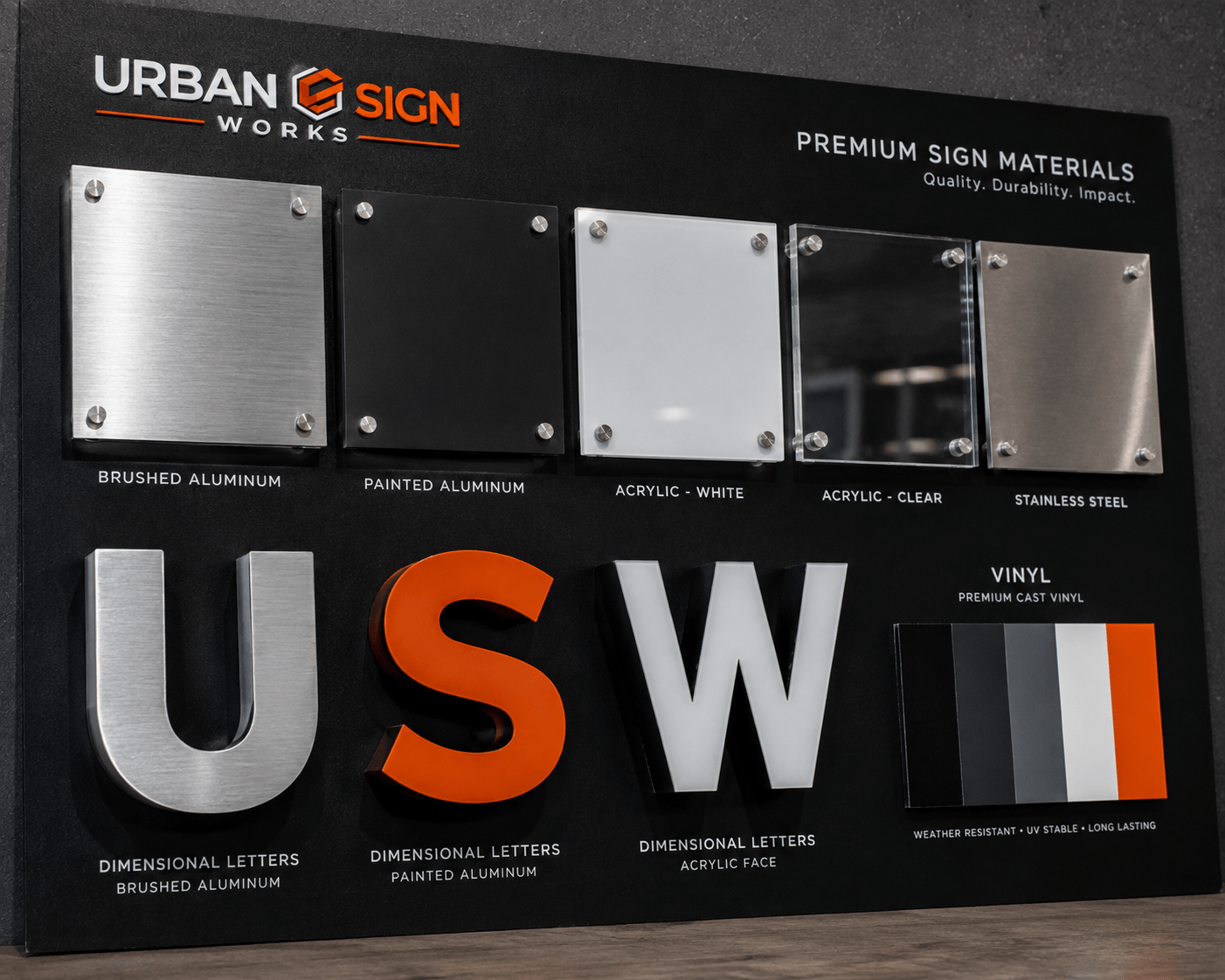
Best Materials for Outdoor Welcome Signs
| Material | Pros | Watch out for |
|---|---|---|
| Powder-coated metal / aluminum | Rust-resistant, strong, UV-stable, modern look | Better quality costs more |
| Cedar & marine-grade wood | Natural, rustic, resists moisture and insects | Needs sealing; reseal over time |
| Wrought iron | Classic, sturdy, many decorative designs | Heavier; needs solid mounting |
| Composite / weatherproof board | Can stay out all year, textured wood-grain look | Less natural than real wood |
| Stone | Timeless, low maintenance | Expensive and hard to mount |
| Acrylic / vinyl | Affordable, easy to print | Not ideal for strong sun or heat |
If you live in a hot, humid, or rainy area, favor UV-resistant paint, sealed wood, and rust-free coatings. Untreated wood can rot within a season, and acrylic can warp in extreme heat. Powder-coated aluminum remains the best durability-per-dollar option for most homes — it simply outlasts painted wood with far less maintenance.
Choose a Style That Matches Your Home
- Modern: Clean lines, black or metallic finish, simple lettering.
- Farmhouse / rustic: Distressed wood, stenciled or script lettering, warm neutrals.
- Traditional: Framed wood or metal, classic serif fonts, bronze or gold tones.
- Coastal: Light weathered wood, soft blues and whites, rope or nautical touches.
Pick lettering that contrasts with the background. Dark text on a light sign (or the reverse) reads best from a distance, and one clear message looks better than two competing ones.
Placement & Mounting Tips
- Height: Center the sign about 58–62 in. from the floor, around eye level.
- Door width: Aim for a sign one-third to one-half as wide as the door.
- Lighting: A nearby wall light or lantern keeps the sign welcoming after dark. For a built-in glow, ask about an illuminated option — illuminated signs explains backlit and halo-lit approaches that work for entrance signage too.
- Anchors: Use masonry anchors for brick, Tapcon screws for concrete, and exterior-grade screws for wood siding. Stainless steel hardware resists rust.
- Shelter: A covered porch spot protects paint and wood from rain and direct sun.
- Renting? Use a leaner, a stake, or a hook-hung door sign that does not need drilling.
How Much Do Outdoor Welcome Signs Cost?
Prices vary by size, material, and customization. As a rough guide based on current retail listings:
| Type | Typical price range (USD) |
|---|---|
| Metal wall sign | $34–$38 |
| Wood porch leaner | from $41 |
| Seasonal leaner | from $47 |
| 60″ wood leaner | about $52 |
| Custom family-name sign | about $60+ |
Retail listings change often, so check current prices before buying. Fully custom, commercial-grade welcome signs — dimensional letters, aluminum cabinets, monument-style bases — are priced per project and start higher, typically in the hundreds to thousands of dollars depending on size, materials, and illumination. You can get a free 3D mockup with an itemized quote before committing.
How to Make Your Sign Last Longer
- Choose weather-resistant material from the start — material matters more than any maintenance routine.
- Apply a UV-resistant exterior sealer or topcoat to wood, and refresh it as needed.
- Dust and clean the sign every few months with a soft cloth and mild soap.
- Keep it under a roof or awning where possible.
- Check screws and anchors each season, especially after storms.
Outdoor Welcome Signs for Businesses & Communities
Welcome signs are not just for homes. Shops, offices, schools, parks, places of worship, and neighborhood entrances use larger versions to greet visitors and show brand identity. This is where residential thinking stops working:
- Scale for drivers, not walkers. Text must be readable from a moving car, which typically means letter heights of 6 inches or more — far larger than porch signage.
- Use commercial-grade materials. Aluminum cabinets, dimensional letters, or monument-style bases hold up to weather, vandalism, and years of exposure in ways that decorative home signs cannot.
- Add lighting. A business welcome sign that goes dark at 6 pm stops working when evening foot traffic peaks. Backlit, halo-lit, or floodlit options keep it visible after dark.
- Check permits. Most municipalities regulate the size, height, and placement of commercial signs. Check local sign rules and obtain permits before installing.
- Consider a monument sign. For property entrances, a monument sign is the purpose-built format: ground-level, permanent, professional — the commercial equivalent of a front-door welcome sign, built to represent the whole property.
Our exterior signs page covers the full range of outdoor commercial signage formats if you are planning an entrance beyond a simple wall plaque.
Frequently Asked Questions
What size should an outdoor welcome sign be?
For a door or porch wall, 12×18 to 18×24 inches. For a leaner, 48–60 inches tall. As a rule, cover one-third to one-half of your door width. For businesses, scale up so text reads from a moving car.
What is the best material for an outdoor welcome sign?
Powder-coated aluminum or metal resists rust and weather best, and sealed cedar gives a natural look that also holds up. Untreated wood, vinyl, and acrylic last less well outdoors.
How high should I hang a welcome sign?
At eye level, with the sign’s center about 58–62 inches from the floor. For commercial entrance signs, mount per local code and sight-line requirements rather than this rule.
Can wooden welcome signs stay outside all year?
Yes, if they are weather-resistant wood like cedar, properly sealed, and ideally sheltered under a porch roof. Exposed, unsealed wood in wet climates will deteriorate within a season or two.
Hanging or leaning: which is better?
Hanging signs suit doors and walls where drilling is fine. Leaning signs suit porches with floor space and need no drilling — the better choice for renters.
Are personalized welcome signs worth it?
Yes. Names, dates, and custom messages make a sign feel intentional, and they make thoughtful housewarming gifts. For businesses, a custom welcome sign with the brand name and tagline reinforces identity at the entrance.
Do businesses need permits for welcome signs?
Most do. Commercial signage is typically regulated by size, height, illumination, and placement. Check your local sign code before fabricating anything for a business entrance.
Final Thoughts
The best outdoor welcome sign is not the biggest or most decorated. It is the one that fits your door, survives your climate, and matches your home’s style. Measure first, choose a weatherproof material, mount it at eye level, and add a little light. Your entrance will feel welcoming from the street to the door.
For businesses and communities, the same principles apply at a larger scale: commercial materials, car-readable text, night lighting, and a permit check before installation.
Need a Custom Outdoor Welcome Sign?
Tell us your size, style, and location, and we will recommend the right material and finish — for a home porch or a full commercial entrance. Send a photo of where it will go and we will build you a free 3D mockup so you can see it before you buy.