
Quick answer: Retail signage covers storefront signs, window graphics, in-store directional signs, promotional displays, point-of-purchase signs, and wayfinding — all working as one branded system. The highest-ROI investments for most stores are a readable illuminated storefront sign, window graphics for promotions, and clear in-store wayfinding that shortens the path to purchase.
Retail signage plays a direct role in attracting customers, communicating information, promoting products, and building a strong brand presence. From storefront displays and window graphics to promotional signs and in-store signage, the right signage helps stores stand out and creates a better shopping experience. Whether you operate a small boutique, a shopping center, a restaurant, a supermarket, or a large retail store, professionally designed retail store signs make your location easier to recognize while supporting your overall marketing strategy.
What Is Retail Signage?
Retail signage refers to the system of signs and visual displays a retail business uses to identify its location, promote products, provide information, and guide customers. These signs can be installed indoors or outdoors and include branded graphics, illuminated displays, directional signs, promotional displays, and window graphics.
Simply defined: signage is the use of signs and visual displays to communicate messages to people. In a retail environment, that means helping customers understand where to go, what products are available, and which promotions are currently running.
Effective retail signage should be:
- Easy to read and understand at the intended viewing distance
- Consistent with the brand identity
- Visible from the appropriate distance and angle
- Designed for the environment it will live in (indoor vs outdoor)
- Durable and suitable for long-term use
- Helpful to customers without creating visual clutter
Types of Retail Signage
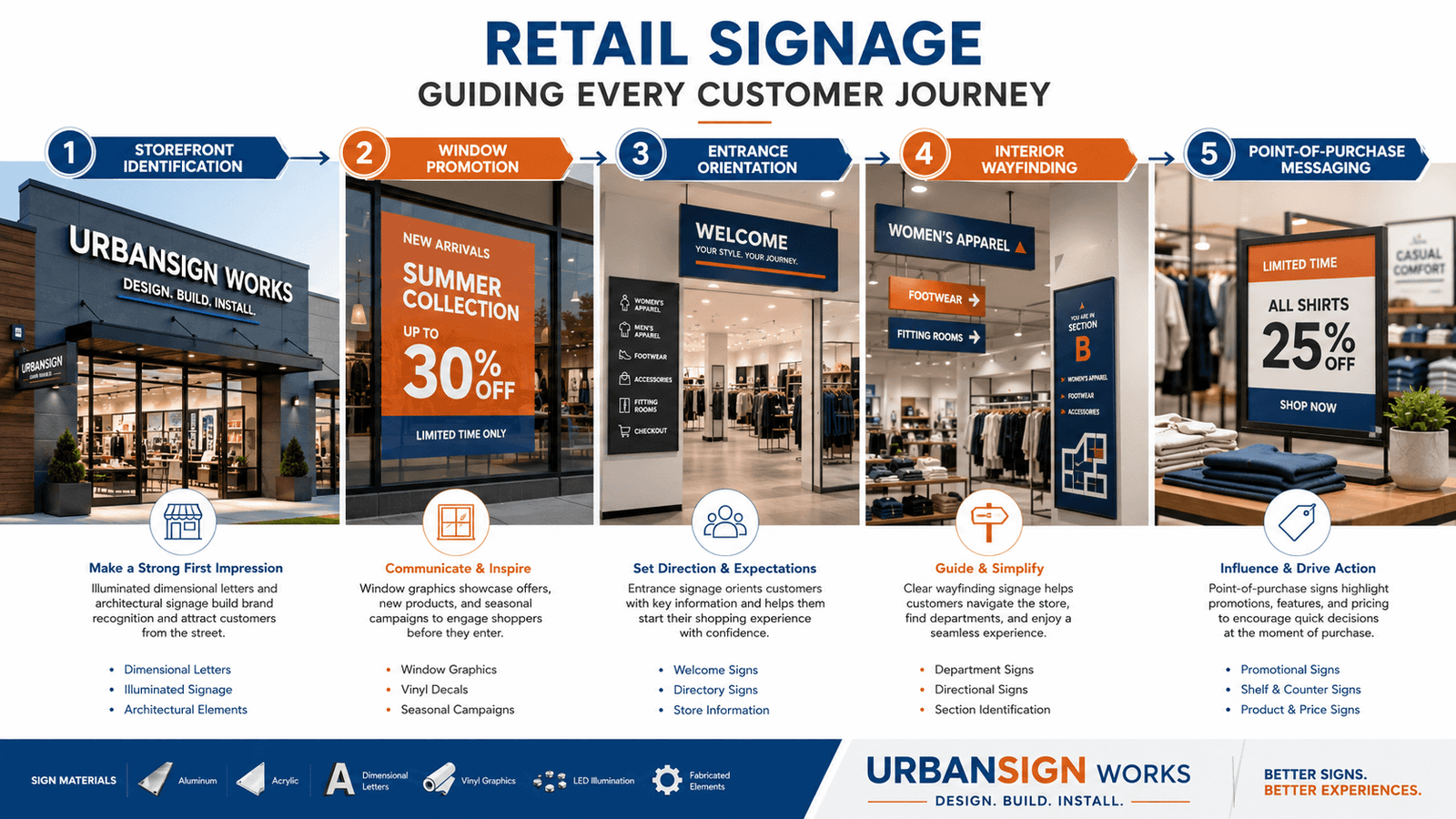
1. Storefront Signs
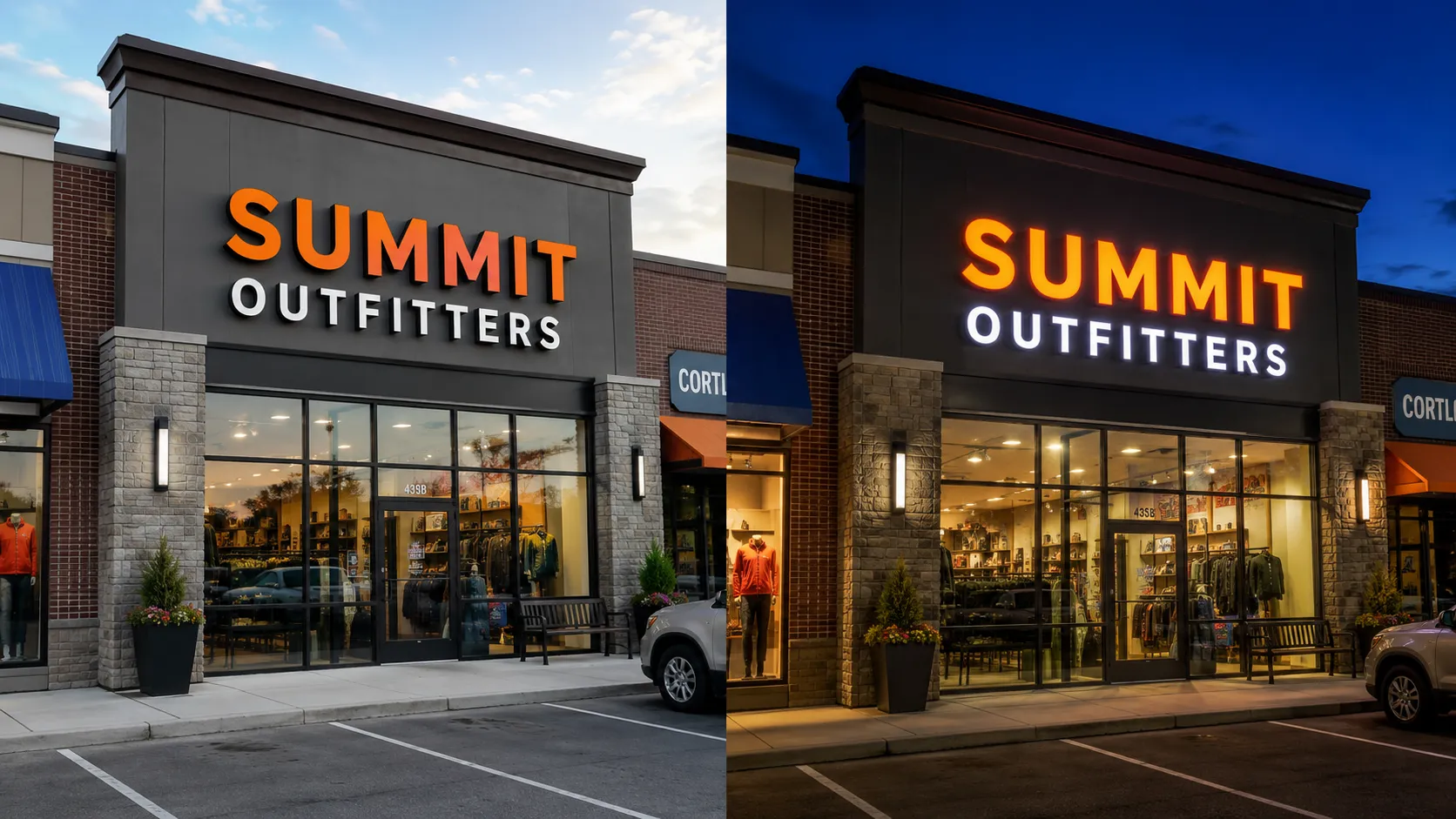
Storefront signage is often the first thing customers see — and the single most important sign investment most retailers make. Channel letters, dimensional letters, illuminated cabinets, and other exterior displays make a business identifiable from the street. A well-designed store sign communicates the business name clearly while complementing the surrounding architecture.
If your store trades after dark, illumination is not optional — it is the difference between being found and being passed. Our illuminated signs cover the lit storefront options.
2. Window Signs and Graphics
Window graphics promote sales, services, seasonal campaigns, new products, or brand messaging while putting otherwise unused space to work. Retailers also use temporary window graphics to display promotions — signs of a sale — helping customers immediately recognize special offers as they walk past.
3. In-Store Signage
In-store signage helps customers navigate the retail environment and find departments, products, services, checkout areas, and facilities. Examples include:
- Department signs
- Product information signs
- Promotional displays
- Checkout signs
- Directional signs
- Restroom signs
- Customer service signs
Clear in-store communication makes shopping easier and reduces customer confusion — and shorter paths to purchase measurably help conversion.
4. Promotional Signs
Promotional signage communicates special offers, discounts, new products, and seasonal campaigns. These signs are most effective with concise messaging, readable typography, and strong visual contrast. Retailers use temporary signs, posters, window graphics, hanging displays, and banners to communicate promotions.
Hanging signs — perpendicular blade-style signs — are particularly effective for promotions in shopping centers and malls, where they catch the eye of shoppers walking the corridor.
5. Wayfinding Signs
Wayfinding signage helps shoppers move through larger retail spaces. Directional signs identify departments, entrances, exits, restrooms, checkout areas, and other important destinations. Effective wayfinding improves the customer experience by providing the right information at the right location.
6. Point-of-Purchase Signs
Point-of-purchase signs sit near checkout areas or products to encourage additional purchases, highlight product benefits, or communicate special offers. These are particularly useful for limited-time promotions and impulse-buy products placed where dwell time is highest.
7. Outdoor Signs
Outdoor retail displays attract customers before they enter: illuminated signs, monument signs, channel letters, projecting signs, window graphics, and promotional banners. Our exterior signs page covers the outdoor formats in detail. Outdoor signage should be designed with visibility, weather exposure, installation conditions, and local requirements in mind.
Why Retail Signage Matters: The Business Case
Well-planned retail signage contributes to both customer experience and business visibility. The commercial benefits break down like this:
| Benefit | How signage delivers it |
|---|---|
| Brand recognition | Consistent colors, typography, logos, and design elements help customers remember your business |
| Foot traffic | A readable, illuminated storefront captures attention from pedestrians and passing motorists |
| Navigation | Directional signage gets shoppers to departments and checkout faster |
| Promotion | Window and point-of-purchase signs communicate sales without staff involvement |
| Professional appearance | High-quality signage makes a retail environment look organized and established |
| Basket size | Point-of-purchase and promotional displays encourage additional purchases |
| Visibility | An attractive outdoor sign makes a business identifiable from nearby roads and walkways |
Prioritizing Your Signage Budget
Not every sign earns its keep equally. For most retail owners, the ROI order is:
- Storefront identification — if customers cannot find you, nothing else matters. Budget for this first.
- Window graphics — the cheapest promotional surface you own, and it changes with every campaign.
- In-store wayfinding — reduces confusion and abandoned visits, especially in larger footprints.
- Point-of-purchase displays — lift basket size at the point of decision.
- Branded interior elements — dimensional signs for interior brand moments that customers photograph and share.
When you are ready to scope the project, get a free 3D mockup to see your storefront options visualized before you commit budget.
How to Design Effective Retail Signage
Good retail signage combines attractive design with practical communication. Before producing a sign, consider your audience, location, viewing distance, lighting, and message. Key design rules:
- Keep the primary message short and clear — one idea per sign.
- Use readable fonts and appropriate text sizes for the viewing distance (a common rule of thumb: roughly 1 inch of letter height per 10 feet of viewing distance for storefront text).
- Maintain consistent brand colors and imagery across every sign.
- Create strong contrast between text and background.
- Avoid overcrowding the sign with unnecessary information.
- Consider illumination for signs that need evening visibility.
- Select materials that match the environment and expected lifespan.
- Position signs where customers can easily see them — check sight lines from the actual approach path.
- Use consistent design elements throughout the store.
- Make promotional messages understandable at a glance — shoppers will not stop to decode them.
Materials Used for Retail Signs
Common options include acrylic, aluminum, PVC, wood, metal, vinyl, and specialty sign materials. The best material depends on:
- Indoor or outdoor installation
- Weather exposure
- Desired appearance
- Budget
- Expected lifespan
- Maintenance requirements
- Brand style
Metal provides a durable, premium appearance; acrylic creates a clean, modern look; vinyl is the workhorse for graphics, windows, banners, and promotional applications. For exterior durability, aluminum with proper finishes is the commercial standard.
Retail Signage and Brand Consistency
Your signage should feel like part of the same brand as your website, packaging, advertising, and other marketing materials. Keep these elements consistent across every sign:
- Logo placement
- Brand colors
- Typography
- Graphic style
- Photography or imagery
- Tone of messaging
- Materials and finishes
A coordinated signage system makes different areas of a retail location feel connected rather than visually inconsistent. Well-known retailers are instantly recognizable precisely because their signage follows one system everywhere — the broader lesson is that consistent signage reinforces brand identity across every physical location, including yours.
Retail Wayfinding: A Quick System Check
Large stores and shopping environments need more than attractive signs — customers need clear information about where they are and where to go. A well-planned wayfinding system includes:
- Entrance and exit signs
- Department signs
- Directional arrows
- Restroom signs
- Checkout signs
- Parking information
- Service-area signs
- Accessibility-related signage
The goal: provide useful information at the right location without overwhelming customers with too many messages. When in doubt, fewer, clearer signs beat a wall of options.
Maintenance and Sign Longevity
Even high-quality retail signage requires maintenance. Dirt, weather, sunlight, damaged graphics, and electrical issues affect appearance and performance over time. Regular inspections should catch:
- Faded graphics
- Damaged panels
- Loose mounting hardware
- Burned-out illumination
- Cracked or deteriorated materials
- Dirty surfaces
- Electrical problems
Keeping signs clean and in good condition maintains a professional appearance and protects the investment. Budget for an annual lighting check on illuminated signs — a half-lit storefront actively works against you.
Choosing the Right Retail Signage Partner
When selecting a signage company, look for experience with retail environments and a complete project process: design, materials, fabrication, installation, and maintenance considerations. Before starting a project, ask about:
- Portfolio and previous retail projects
- Design capabilities and mockups before fabrication
- Material options for your environment
- Fabrication quality and warranty
- Installation experience and timelines
- Local permitting requirements
- Maintenance and support after install
The right signage partner turns your brand identity into a practical, attractive sign system — not just a single sign. For common questions about ordering and pricing, see our FAQ.
Frequently Asked Questions
What is retail signage?
Retail signage includes the indoor and outdoor signs retail businesses use for branding, promotion, customer information, navigation, and communication — from storefront letters to window graphics to checkout displays.
What are the most common types of retail signage?
Common types include storefront signs, window graphics, promotional signs, in-store signage, wayfinding signs, point-of-purchase displays, outdoor signs, and illuminated signs.
How can retail signage attract customers?
Visible, readable, professionally designed signage captures attention, communicates the business’s identity, highlights promotions, and makes a store easier to recognize — especially from the street and after dark when illuminated.
What is the first sign a retail store should invest in?
Storefront identification. If customers cannot find you, every other sign underperforms. Illuminated channel letters or dimensional letters readable from the street are the standard starting point.
What material is best for retail signage?
There is no single best material. The right choice depends on whether the sign is indoors or outdoors, the desired appearance, durability requirements, budget, and installation environment. Aluminum and acrylic cover most commercial retail needs.
Should retail signs be illuminated?
Illumination is strongly recommended when a business needs visibility during evening hours or sits in a location with limited natural lighting. The appropriate solution depends on the property’s conditions and local requirements.
How often should retail signage be maintained?
Inspect regularly for dirt, fading, damage, loose components, and lighting problems. Illuminated signs deserve an annual lighting check; exterior signs should be checked seasonally, especially after storms.
How do I keep all my store signs visually consistent?
Design them as one system: same typography, same color palette, same materials family, and one supplier when possible. Retrofitting a new sign to match an existing one almost always costs more than planning the set together.
Conclusion
Effective retail signage is more than a way to display a business name. It attracts attention, strengthens brand recognition, promotes products, improves navigation, communicates sales, and creates a better customer experience. From storefront signs and outdoor signs to in-store signage, promotional displays, wayfinding systems, and banners, every sign should have a clear purpose and work as part of a consistent visual system.
By choosing the right design, materials, placement, and signage partner, retailers can create a professional environment that communicates their brand effectively and helps customers navigate the shopping experience with confidence.
Ready to Upgrade Your Retail Signage?
Tell us about your store — storefront photos, logo, and what you want customers to notice first. We will recommend the right sign package for your budget, build you a free 3D mockup so you can see the finished result before fabrication, and quote it factory-direct.