
Bar Neon Signage: How to Choose the Right Sign for Your Bar
A bar looks unfinished until something glows on the wall. A neon sign gives guests a focal point and gives photos a backdrop. It also tells people, before anyone pours a drink, what kind of place this is.
But buying one can be confusing. Sizes, colors, power types, and outdoor ratings all vary, and a sign that looks perfect online can look wrong on your wall. This guide covers how to choose a sign you’ll still like years from now.
What counts as bar neon signage?
Bar neon signage is any lit sign made to look like neon tubing and used to decorate or brand a bar. Most fall into six groups:
| Type | Best for | Watch out for |
|---|---|---|
Name signs (“Mike’s Bar”) |
Home bars, personal branding |
Long names get wide fast |
Drink icons (martini, beer mug, wine glass) |
Small spaces, quick recognition |
Generic designs look like everyone else’s |
Quotes and phrases |
Personality, photo spots |
Pick wording you won’t tire of |
Logo signs |
Commercial bars and brands |
Trademarked logos may need permission |
“Open” and “Bar” signs |
Entrances and windows |
Visibility from outside |
Neon art (tiki, skyline, animals) |
Themed rooms |
Detail costs more and needs space |
If you’re unsure, start with a name or short phrase. Artwork works best when it matches a theme you’ve already committed to.
LED neon vs glass neon
Traditional neon uses gas-filled glass tubes powered by a high-voltage transformer. LED neon uses flexible LED strip inside a silicone or PVC jacket, shaped to look like neon tubing.
| Type | LED neon | Glass neon |
|---|---|---|
Power |
Typically low-voltage (often 12V) |
Heat |
Heat |
Stays cool to the touch |
Tubes can get warm |
Fragility |
Flexible, shatter-resistant |
Glass can break in shipping or handling |
Weight |
Light |
Heavier |
Repair |
Often replaceable by section or part |
Usually needs a specialist |
Look |
Very close to neon, with small differences up close |
Classic glow and depth |
Typical cost |
Lower |
Higher, especially for custom work |
Choose glass if you want the traditional look and have the budget and the right wall. Choose LED for nearly everything else, especially rentals, home bars, and busy venues where guests might bump a sign.
Sellers often quote tens of thousands of hours of life for LED signs. Treat that as a claim, and compare warranty terms instead.
Quick picks by situation
| Your situation | A good starting point |
|---|---|
Small home bar or bar cart |
Short name or drink icon, small to medium size, plug-in with dimmer |
Basement or man cave |
Name or phrase sign in warm white or a bold color |
Renting your home |
LED sign that hangs from screws or standoffs, with no hardwiring |
New commercial bar |
Name or logo sign behind the bar, sized for the farthest seat |
Patio, tiki bar, or pool bar |
Outdoor-rated sign with a sheltered power adapter |
Gift for a home bar owner |
Their name or a phrase they actually say |
Home bar or commercial bar?
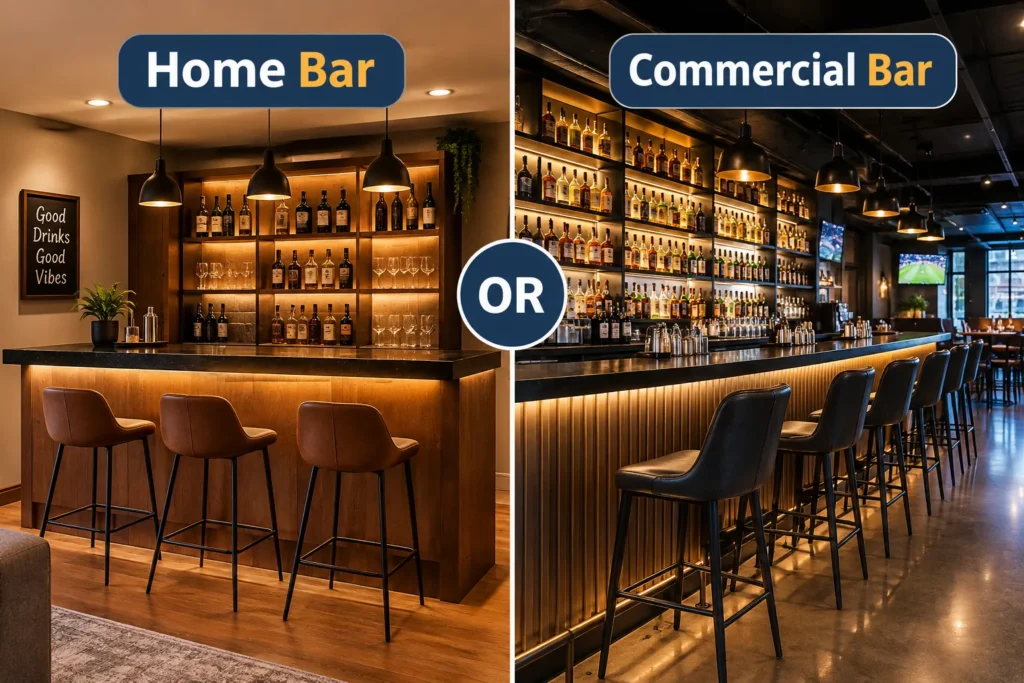
For a home bar, the sign should fit your room’s style and your real wall space. Dimming matters, because a sign that’s perfect at a party can be too bright on a quiet night. Plug-in signs with a remote suit renters, since there’s no hardwiring.
For a commercial bar, think about visibility, durability, and rules. Customers photograph signs behind the bar, so placement affects how your venue appears on social media. If a sign goes outside or in a window, check your city’s sign rules, because permits or size limits may apply. If you want a beer or liquor brand’s logo in neon, remember that logos are trademarked. Check the seller’s rights and the brand’s guidelines. This isn’t legal advice, so ask a professional if you’re unsure.
How to choose the right size
Start with the wall, not the sign.
- Match the furniture. A sign about half to two-thirds the width of the back bar, shelf, or cabinet beneath it usually looks balanced. This is a design rule of thumb, not a standard.
- Match the distance. A common signage rule is about 1 inch of letter height for every 10 feet of viewing distance.
- Watch text length. Every extra letter adds width. If a name makes the sign too wide, try two lines or a shorter phrase.
- Test it. Cut a paper template to size, tape it to the wall, and look at it from where guests will stand.
Colors and styles that work behind a bar
- Warm white or amber blends with wood, brass, and dark walls, and suits classic or speakeasy rooms.
- Pink, blue, and purple read as modern and photograph well.
- Red has a traditional pub feel.
- Multi-color or RGB signs let you change the mood, but ask how accurate the colors look at low brightness.
Choose a font that stays readable at a distance. Script fonts look good up close, but thin strokes can blur across a room. Keep the design to one or two colors unless it really needs more.
Where to place a bar neon sign
- Behind the bar, above the bottles. The classic spot, where every guest looks.
- A feature wall facing the entrance. Gives the room a focal point.
- The entrance or doorway. The first thing people see.
- A photo corner. A quote or name sign on a plain wall invites pictures.
- A covered patio or outdoor bar. Only with a sign rated for outdoor use.
Plan the power first. The cable needs to reach an outlet without trailing across the room, and the power adapter needs somewhere to sit. Avoid mounting directly opposite a window or mirror if glare would wash out the glow.
Indoor vs outdoor bar signs
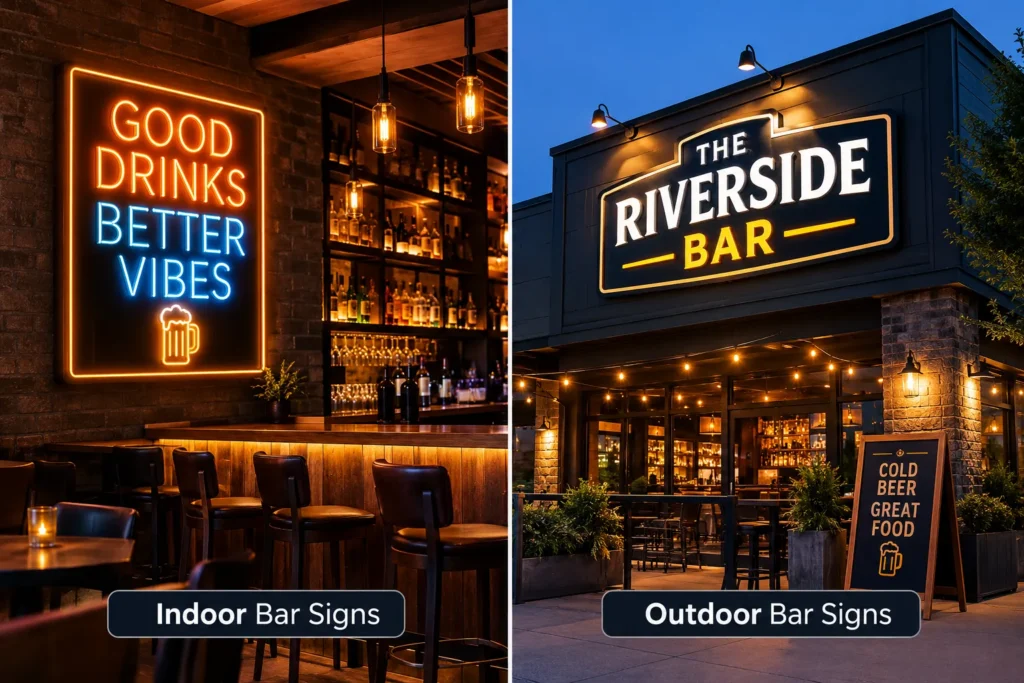
Indoor signs aren’t built for moisture. For a patio, tiki bar, pool bar, or storefront, you need a sign made for outdoor use with a stated waterproof rating. IP ratings come from the IEC 60529 standard. The first digit covers dust and the second covers water, so ask the seller what the rating means for that exact sign and how to handle the plug and adapter.
Even a rated sign should have its power supply kept dry and sheltered. For a permanent exterior sign on a commercial building, check local zoning and sign ordinances before you buy.
What affects the price?
Price depends mostly on:
- Size. More LED strip and a bigger backboard.
- Complexity. Artwork and multiple colors cost more than one line of text.
- Custom or ready-made. Stock designs are usually cheaper than a fully custom piece.
- Outdoor rating. Waterproofing adds cost.
- Extras. UV printing, color-changing controls, and shipping.
As of late 2026, ready-made bar designs on US-facing store pages commonly list in the low hundreds of dollars, and one seller states that simple custom signs start under $100. Large or elaborate custom pieces cost more. Prices change often, so confirm current numbers with the seller.
Common mistakes to avoid
- Buying before measuring. A sign that looked right online can overwhelm a small wall or disappear on a large one.
- Choosing a trendy phrase. Wording with personal meaning ages better.
- Forgetting the outlet. A cable running across the room ruins the look.
- Ignoring brightness control. Make sure there’s a dimmer.
- Using an indoor sign outside. Moisture is the quickest way to ruin one.
- Skipping the proof. For custom text and colors, ask for a mockup before production.
Checklist before you order
- Measure the wall space and the distance to the nearest outlet.
- Confirm indoor or outdoor rating in writing.
- Check that the sign includes a power adapter, mounting hardware, and a dimmer or remote.
- Look for a recognized electrical listing (such as UL or ETL) and ask which components it covers.
- Read the warranty length and what it excludes.
- Ask about production and shipping time, which varies by seller and by how custom the sign is.
- Ask for a mockup of custom text and colors before production.
- Read the return policy, since custom items are often non-returnable.
Installing and caring for your sign
Most LED neon signs hang from a pre-drilled backboard with screws or standoffs. Mark the holes with a level, use wall anchors if you’re not drilling into a stud, and keep the cable tidy. Don’t kink or sharply bend the neon tube, and never cut the cable. Dust it with a dry, soft cloth with the power off. If part of the sign stops working, contact the seller before attempting repairs, because some warranties are voided by opening the sign.
Frequently asked questions
Aim for roughly half to two-thirds the width of the furniture or back bar below it, and size the letters for your viewing distance. A paper template taped to the wall is the quickest test.
For most buyers, yes. It’s lighter, cooler, and less fragile. Glass is worth considering if you want the traditional look and can budget for it.
Only if it’s made for outdoor use and has a stated waterproof rating. Ask the seller what the rating covers, and keep the power adapter sheltered.
It depends on your city and whether the sign is inside or visible from outside. Check with your local planning or permitting office before installing an exterior sign.
It varies by seller and design. Ask for a production estimate and shipping time, and request a proof before work starts.
Brand logos are trademarked, so you may need permission, especially for a business. Ask the seller how they handle licensing, and consult the brand or a legal professional.
LED neon is generally a low-power accent light. Check the sign’s listed wattage if you want to estimate running costs.