
Your sign works hardest after dark — when competition for attention is lowest and a well-lit storefront can pull customers straight off the street. But “illuminated sign” covers a wide range of technologies, looks, and price points, and the wrong choice wastes money twice: once on fabrication, and every night in missed visibility.
This guide walks through every major type of illuminated sign, how each one actually produces light, what they cost, and how to match the type to your business. It’s the informational companion to our illuminated signs for businesses page, which covers ordering and pricing.
What Counts as an Illuminated Sign?
Any business sign with a built-in lighting system that makes lettering, logos, or graphics visible in low light. The light source in modern commercial signage is almost always LED — modules, strips, or flexible neon-style tubing — though you’ll still encounter older fluorescent and true glass-neon signs in the field. Illumination can be:
- Internal — light sources inside the sign structure (channel letters, cabinets)
- External — light aimed at the sign from outside (spotlights, floodlights, gooseneck lamps)
- Edge or back — light washing a wall behind the sign (halo-lit letters)
The 7 Types of Illuminated Signs
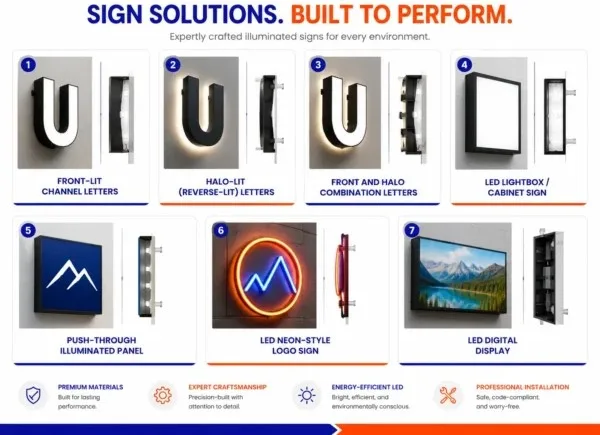
1. Channel Letters
Individual three-dimensional letters, each with its own LEDs — the premium storefront standard. Front-lit (light through the acrylic face), halo-lit (light washing the wall behind), or combination (both). Maximum customization, highest perceived quality. See our full breakdown of channel letter types.
2. Cabinet / Lightbox Signs
A single aluminum box with translucent faces that glow as one illuminated surface. The economical choice for large copy areas — one cabinet can carry a logo, tagline, and graphics across 20+ feet for less than individual letters. Double-faced cabinets on poles double as pylon and monument sign faces.
3. LED Neon Signs
Flexible LED tubing traces lettering, logos, and shapes with a continuous neon-like glow — no glass, no high voltage. The go-to for windows, interiors, feature walls, and modern brands. Lower cost than true glass neon, far more durable, and available in the full color spectrum. More on our custom neon signs page.
4. Halo-Lit (Reverse Channel) Letters
Solid-faced letters mounted off the wall, washing light backward for a sophisticated glowing outline. The choice for law firms, clinics, hotels, and upscale retail — premium impression, softer brightness.
5. Push-Through Signs
Acrylic letters or graphics push through a solid sign face (often an aluminum cabinet or architectural panel) and glow from within, creating a refined backlit effect against an opaque background. Popular for corporate buildings, healthcare facilities, and premium retail where the sign must look architectural by day and luminous by night. See push-through signs.
6. Marquee Signs
Bold dimensional letters with exposed bulbs — the vintage theater look. High character, unmistakable presence. Modern versions use LED bulbs for the classic marquee glow without the maintenance burden of incandescents. Ideal for restaurants, theaters, event venues, and hotels. See marquee signs.
7. LED Infinity Mirror Signs
Layered reflective surfaces with LEDs create the illusion of infinite depth — a visual centerpiece for lobbies, retail feature walls, hospitality spaces, and brand activations. More art installation than wayfinding, and unforgettable for it.
Types Compared: Cost, Impact & Best Use
| Type | Relative cost | Nighttime impact | Best for |
|---|---|---|---|
| Channel letters | $$$ | Maximum brightness + prestige | Storefronts, restaurants, offices |
| Cabinet / lightbox | $ | Broad, even glow; large copy | Shopping centers, gas stations, franchises |
| LED neon | $$ | Stylish glow; interior pop | Windows, bars, salons, modern brands |
| Halo-lit letters | $$$$ | Soft premium halo | Corporate, clinics, luxury retail |
| Push-through | $$$$ | Refined architectural glow | Corporate buildings, healthcare |
| Marquee | $$$ | Vintage high-character | Theaters, restaurants, venues |
| Infinity mirror | $$$$ | Dramatic feature effect | Lobbies, hospitality, activations |
How the Lighting Actually Works: LED Basics
Nearly every type of illuminated sign built today runs on LEDs. The key components:
- LED modules — sealed units with 2–4 diodes each, laid out on a calculated grid inside letters and cabinets for even illumination without hot spots. Quality modules carry UL recognition and IP65 weather ratings.
- LED strips and neon flex — continuous runs for outlines, borders, and neon-style lettering.
- Power supplies (drivers) — convert line voltage to 12V or 24V DC. Good practice sizes drivers at ~80% of rated capacity, not 100%, for longevity.
- Color temperature — 6500K daylight white for crisp face illumination; 3000–4000K warm white for hospitality and halo effects; RGB for color-changing.
- Lifespan — quality LED modules are rated 50,000+ hours: roughly 11 years at 12 hours a night.
Compared with the technologies they replaced, LEDs use a fraction of the electricity of neon transformers and fluorescent ballasts, contain no fragile glass tubes or mercury, and need essentially no relamping — just occasional face cleaning and wiring checks. Our LED signs page goes deeper on the technology.
LED vs. Glass Neon: The Honest Comparison
Glass neon’s warm glow is iconic — and fragile, power-hungry, and short-lived, with high-voltage transformers and hand-bent glass tubes that break. LED neon flex replicates the look with sealed, low-voltage diodes: a fraction of the energy use, 50,000+ hour life, no breakable glass, dramatically lower operating cost. Choose true glass neon only when its specific aesthetic is a deliberate brand decision — not as a default.
Front-Lit vs. Backlit vs. Halo-Lit
These terms describe where the light goes, and the choice changes the sign’s entire character:
- Front-lit: light projects through the face toward the viewer. Brightest, most readable, highest energy impression. The retail default.
- Backlit (translucent back): light shines through a translucent back panel — used in some cabinet and push-through designs for a soft overall glow.
- Halo-lit: light projects backward onto the mounting wall, outlining each letter in glow. Most sophisticated, least raw brightness, needs a light-colored wall.
Combination designs layer front-lit faces with halo backs for maximum depth and nighttime presence.
Indoor vs. Outdoor Illuminated Signs
Exterior illuminated signs prioritize weather resistance and distance legibility: sealed aluminum construction, IP65-rated LEDs, UV-stable faces, and letter sizing calculated for road speed. Channel letters, cabinets, and monument faces dominate. See our exterior signs overview.
Interior illuminated signs prioritize atmosphere and detail: LED neon feature walls, halo-lit lobby logos, infinity mirrors, backlit reception lettering. Viewing distances are short, so finer detail and subtler lighting work — and weather sealing doesn’t matter.
What Do Illuminated Signs Cost?
Typical US ranges as of 2026 for the different types of illuminated signs:
- Small LED cabinet sign: from ~$800–$2,000
- Channel letter set (typical storefront): $3,000–$8,000
- Halo-lit letter set: 20–40% more than front-lit equivalent
- LED neon sign (window/interior): $300–$2,500 depending on size and complexity
- Push-through sign: $2,500–$10,000+
- Marquee letter set: $4,000–$15,000+
- Large/complex illuminated signs: $10,000+
What drives the price: size and letter count first, then type (cabinets cheapest per square foot; channel letters priced per letter), complexity, and electrical components. What shouldn’t drive the price: layers of middlemen — factory-direct manufacturing prices materials and labor, not broker markups.
Choosing a type and want a firm number? Get a free 3D mockup showing your business in your preferred sign type — day and night — with an itemized quote.
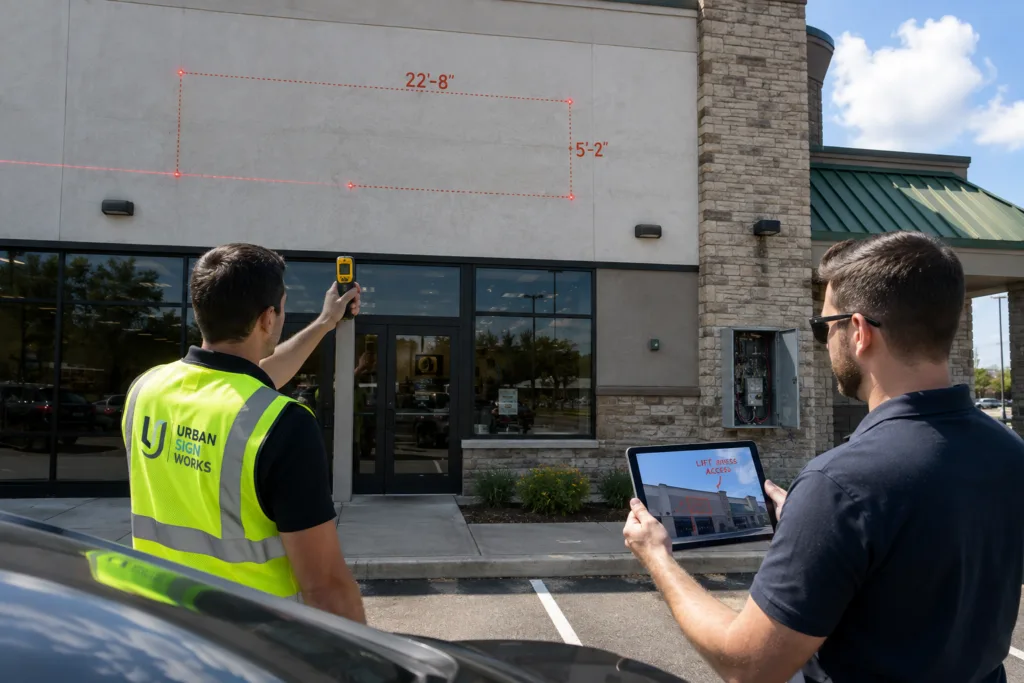
Electrical, Permits & Installation: Plan Early
Every type of illuminated sign needs power: typically a dedicated circuit from your electrical panel to the sign location, sized from the manufacturer’s spec sheet and run by your electrician. Permits are the critical path — most municipalities require both a sign permit (size, placement, brightness) and an electrical permit (wiring). Some jurisdictions restrict illumination hours, cap brightness, or prohibit animation. This paperwork routinely takes longer than fabrication, so start it the day you request a quote.
Installation is your local licensed installer’s job, working from the manufacturer’s drawings and hardware. For illuminated signs, confirm your installer is comfortable with the electrical scope — or that your electrician and installer coordinate.
One more planning note: think about serviceability before you buy. LED modules eventually need replacement, drivers fail, and faces get damaged. Signs designed with accessible drivers, removable faces, and labeled wiring take minutes to service; sealed, undocumented builds take hours. Ask your fabricator how each type they sell gets serviced — the answer tells you a lot about the build quality.
Choosing the Right Type: A Decision Guide
- Need maximum storefront visibility? Front-lit channel letters.
- Big copy area on a budget? Cabinet/lightbox sign.
- Premium brand, corporate or hospitality? Halo-lit or push-through.
- Window or interior with style? LED neon.
- Vintage character? Marquee letters.
- Lobby centerpiece? Infinity mirror or halo-lit dimensional logo.
- Franchise with strict brand standards? Whatever the brand book specifies — usually channel letters or cabinets.
Frequently Asked Questions About Illuminated Sign Types
Which type of illuminated sign is best for a small business?
Front-lit channel letters for exterior visibility, or LED neon for windows and interiors on a smaller budget. Cabinets win when you need a large illuminated face economically.
Are LED signs better than neon for businesses?
For most businesses, yes. LEDs use a fraction of the electricity, last 50,000+ hours versus roughly 15,000–30,000 for glass neon, have no fragile tubes or high-voltage transformers, and cost less to run and maintain.
How much electricity does an illuminated sign use?
Less than you’d expect. A typical LED channel letter set draws roughly the same as a few household light bulbs — commonly 100–400 watts total depending on size. At average commercial rates, nighttime operation typically costs well under a dollar a day.
Do illuminated signs need permits?
In most municipalities, yes — typically both a sign permit and an electrical permit. Some jurisdictions restrict brightness, illumination hours, or animation. Start permits early; they often take longer than fabrication.
How long do illuminated signs last?
LED modules rated 50,000+ hours run about 11 years at 12 hours nightly. Aluminum cabinets and returns last 15–20 years. Typical maintenance is occasional face cleaning and wiring checks — no bulbs to change.
Can illuminated signs be dimmed or put on timers?
Yes. LED drivers commonly support dimming, and photocells or timers automate dusk-to-dawn operation — cutting energy use and meeting jurisdictions that restrict late-night illumination.
What’s the difference between a channel letter sign and a lightbox sign?
Channel letters are individual 3D letters, each independently illuminated — premium look, priced per letter. A lightbox (cabinet) sign is one box with a glowing face — more economical for large copy areas, less dimensional.
How do I choose between front-lit and halo-lit?
Front-lit for maximum brightness and traffic-stopping visibility; halo-lit for a premium, sophisticated impression. If budget allows and the brand warrants it, combination (both) delivers maximum nighttime presence.
See Your Business Lit Up Before You Decide
The type decision gets easy once you see it on your building. Send your logo and a storefront photo — we’ll render your business in channel letters, cabinet, halo-lit, or LED neon, day and night, free within two business days, with a firm itemized quote.
Start with a free 3D mockup: Request your free quote or contact our signage team. For ordering details, see our illuminated signs for businesses page and our signage FAQ.