Buying Advice

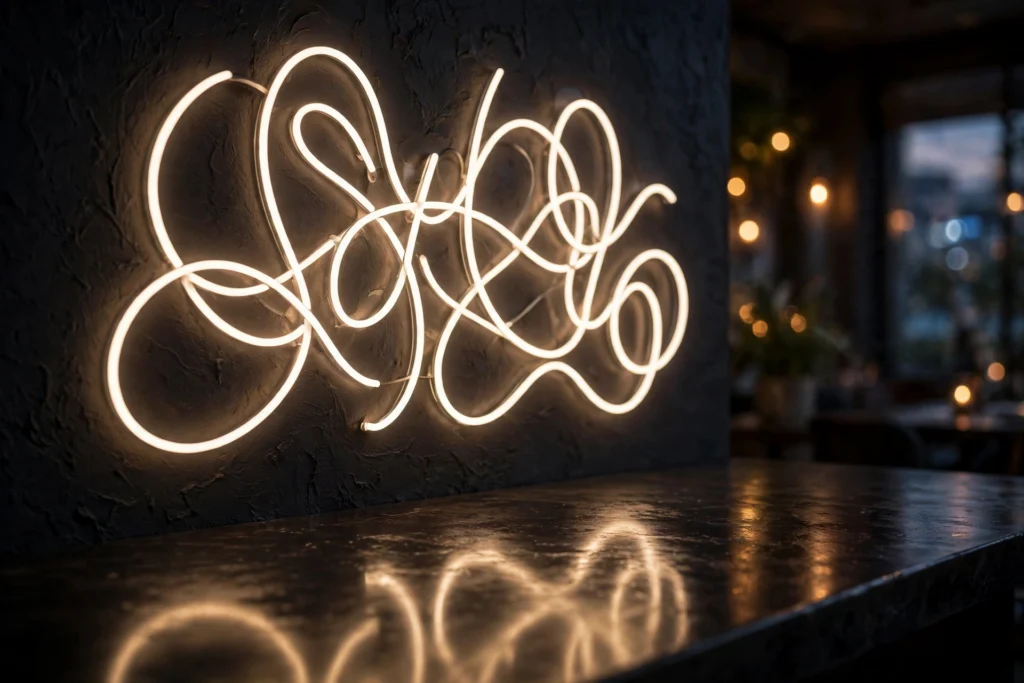
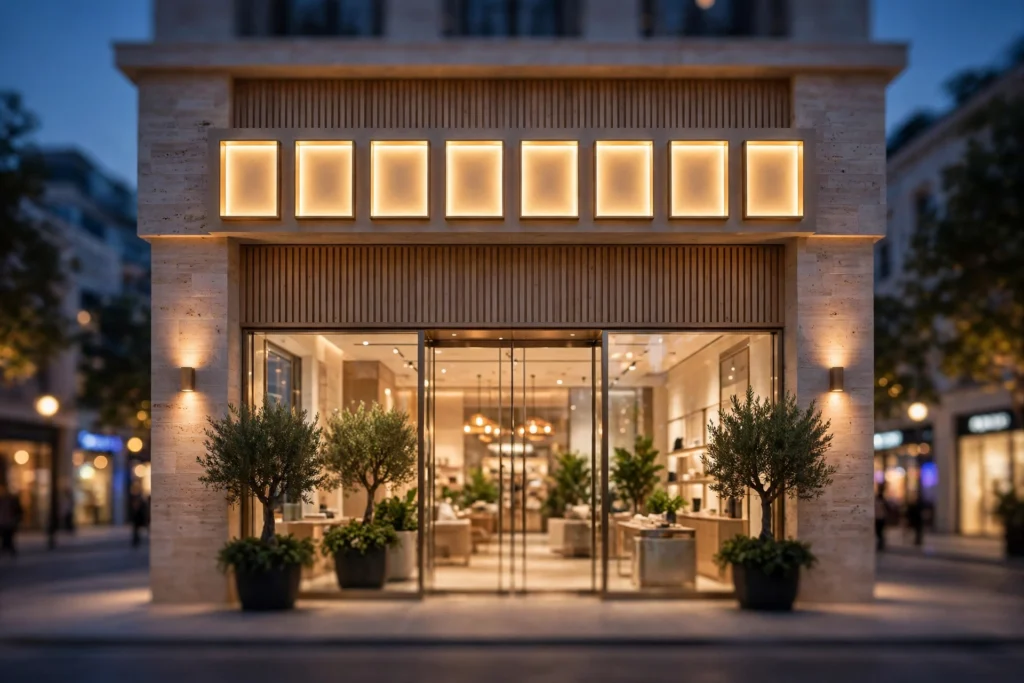
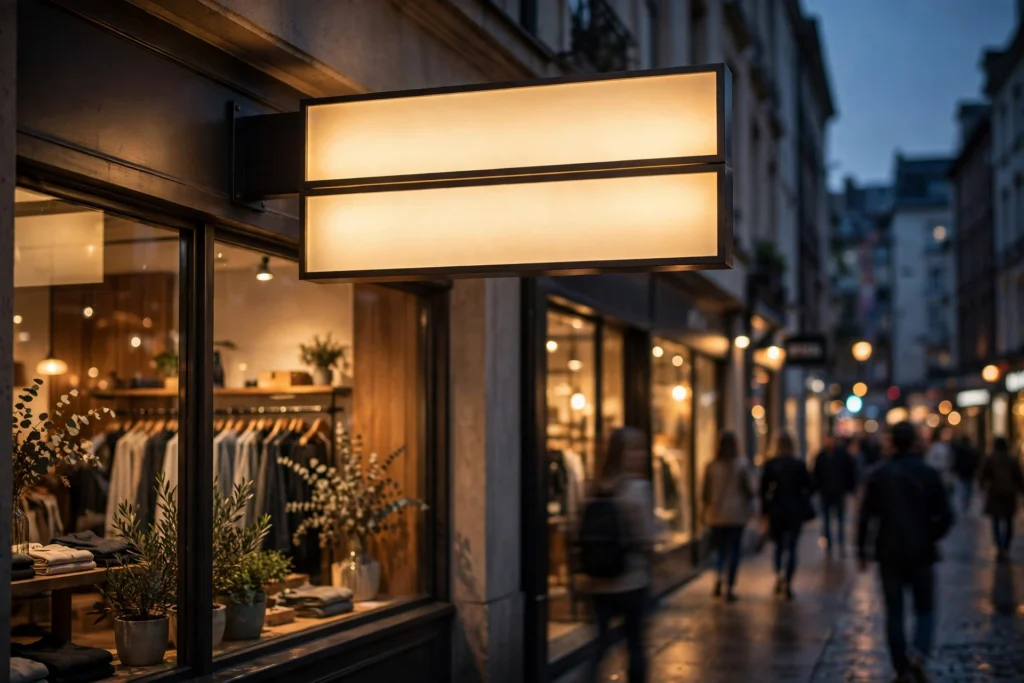
Infographic overview of commercial signage types — channel letters on a storefront, a monument sign at a property entrance, a blade sign on a downtown street, and an LED neon sign — the four main sign families compared in this guide
Buying Advice

How Much Does a Business Sign Cost? Full 2026 Comparison

“How much does a business sign cost?” is the most common question in the signage industry — and the most expensive question to get wrong. Not because the answer is complicated, but because most buyers compare the wrong numbers: a fabrication quote from one company against an installed total from another, and conclude the cheaper number is the better deal. It isn’t. It’s a different number. This guide gives you factory-direct benchmarks for every major sign type, the seven factors that actually drive the price, and a framework for comparing quotes honestly. Everything below separates fabrication from freight, permits, and installation — because that’s the only comparison that means anything. Quick answer: A business sign’s cost is set by sign type first, then size, illumination, materials, and complexity. Our factory-direct starting prices (fabrication to your approved design): Sign type Starting price (fabrication) Channel letters, front-lit $129 per letter Channel letters, halo-lit $249 per letter Channel letters, non-illuminated $59 per letter Monument signs $2,900 per sign Blade / projecting signs $590 per sign Dimensional letters $6.50 per letter LED neon signs $149 per sign Lightbox / cabinet signs $49 per sq ft ADA signs $29 per sign Hanging signs $250 per sign Starting prices cover fabrication to your approved design. Insured freight delivery to the United States, Europe and Australia, local permits, electrical work, and installation are quoted separately — installation is handled by your local licensed contractor. Compare fabrication quotes against fabrication quotes, never against installed totals. Why Sign Costs Vary So Much A non-illuminated dimensional letter set and a large illuminated monument sign are both “business signs,” but they live in entirely different budget universes. Three things create the spread: The sign type sets the baseline. Fabrication labor is the biggest cost in any sign. Individual 3D letters with internal LEDs take far more labor than a single cabinet with one face — so channel letters cost more than cabinets of similar size, always. Size and complexity multiply it. More square footage means more material, more structure, more lighting. Custom shapes cost more than rectangles because of extra fabrication labor. Everything after fabrication is separate. Freight, permits, electrical hookup, and installation are real costs, but they belong to different vendors and different line items. A quote that bundles them hides where the money goes. Keep those three apart and sign pricing stops being mysterious. 2026 Benchmarks by Sign Type These are typical market ranges for finished, manufactured signs — the number most buyers actually encounter. Our starting prices below each are the fabrication baseline; the gap between the two is materials upgrades, size, freight, and installation. Channel Letters — $2,000–$10,000 Individually fabricated 3D letters, usually front-lit or halo-lit with LEDs. The default choice for retail storefronts, restaurants, and offices. Price climbs with letter height, letter count, and lighting style — a modest front-lit set sits near the lower end, while large halo-lit or combination-lit sets reach the upper end. Our starting price: front-lit from $129 per letter, halo-lit from $249 per letter, non-illuminated from $59 per letter. Worked example: a 10-letter front-lit set starts at $1,290 in letter fabrication (10 × $129). Crating, freight, permits, and installation sit on top of that baseline. See the full breakdown in our channel letter pricing guide. Monument Signs — $5,000–$30,000+ Low, ground-level freestanding signs near the road — the sign drivers actually read at speed. A small non-illuminated monument for a single tenant runs near the bottom of the range; a large illuminated multi-tenant monument with premium finishes climbs well past the top. Foundation work and permits are separate local costs that can add substantially to the project total. Our starting price: $2,900 per sign (fabrication). A small single-tenant painted-aluminum monument starts at $2,900 in cabinet fabrication; crating and freight are quoted on top, and the foundation plus local permits are priced by your own contractors. Full detail in our monument sign pricing guide. Cabinet / Lightbox Signs — Typically Less Than Channel Letters Simpler to fabricate than individual 3D letters — one cabinet, one or two faces — which usually makes them the most affordable illuminated storefront option. A practical choice when budget matters more than dimensional depth. Our starting price: $49 per sq ft (fabrication). See LED lightbox and cabinet signs for configurations. Dimensional Letters & Logos — Mid-Range; Non-Illuminated Is Most Affordable Non-illuminated dimensional letters are among the most cost-effective ways to get a premium look — flat-cut or fabricated letters mounted directly to the facade or lobby wall. Adding halo illumination moves them upmarket. Our starting price: $6.50 per letter (fabrication). Explore dimensional sign options. Blade / Projecting Signs — Compact; Priced by Size and Features Cost is driven by cabinet size, single- vs. double-sided faces, illumination, and the mounting bracket. One of the smaller total investments in commercial signage — ideal where pedestrians, not drivers, are the audience. Our starting price: $590 per sign (fabrication). See our blade signs page. LED Neon Signs — Wide Range by Size and Complexity A small, simple indoor LED neon design is among the most affordable illuminated signs you can buy; a large, intricate outdoor piece costs many times more. Traditional glass neon costs more than LED neon to build and run. Our starting price: $149 per sign (fabrication). Full breakdown in our custom neon sign pricing guide. The 7 Factors That Drive Any Sign’s Price Whatever sign type you choose, these seven factors set the number: Size. The dominant factor. Sign pricing scales with area and with letter height — a sign twice as wide isn’t twice the price, but it’s substantially more, because materials, structure, and lighting all scale. Illumination. LEDs add modules, drivers, wiring, and sealing labor. Non-illuminated is always the budget option; halo-lit is the premium finish. Materials. Acrylic vs. polycarbonate faces, aluminum vs. stainless returns, painted vs. stone-clad monuments — material choice is where “looks like $15,000” vs. “looks like $40,000” gets decided. Complexity. Custom shapes, multi-tenant panels, electronic message centers, intricate neon bends —
hero 4
Buying Advice

How Much Does a Monument Sign Cost? 2026 Pricing Guide

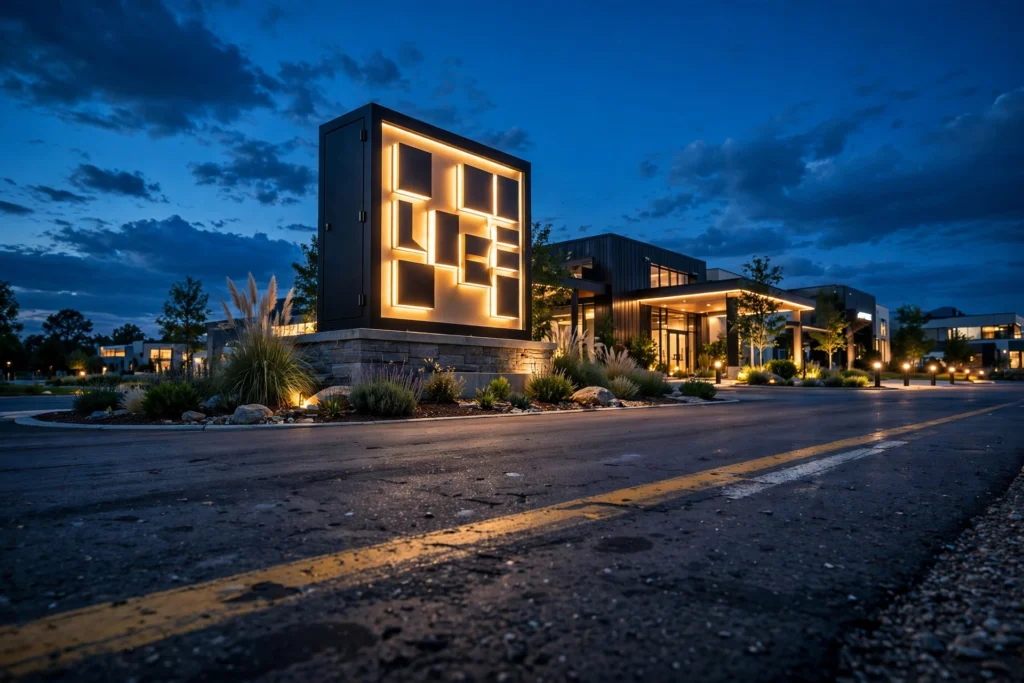
A monument sign is the most expensive sign most businesses will ever buy — and the one most commonly budgeted wrong. Not because the sign itself is mysterious, but because buyers price the cabinet and forget everything around it: the concrete foundation, the permits, the engineering stamp, and the months of lead time those add. We manufacture monument cabinets every week, and the pattern is consistent: the fabrication quote is the number everyone compares, while the foundation and permits are the numbers that decide the actual budget. This guide gives you both, with the factory-direct starting price we actually charge, the cost drivers we see in production, and the questions that separate an accurate quote from a guess. The short answer: a manufactured monument sign typically runs $5,000–$30,000+ depending on size, cladding, and illumination. Our factory-direct starting price is $2,900 per monument sign (fabrication to your approved design). Foundation work, permits, and engineering are separate local costs — on large projects they can rival the fabrication number — so compare fabrication quotes against fabrication quotes, never against installed totals. What a monument sign actually is (and why it costs what it does) A monument sign is a low, ground-level freestanding structure: a fabricated cabinet or frame, finished faces carrying your graphics, and a concrete foundation engineered for the structure’s size and local wind loads. Unlike a building-mounted sign, every monument is a small construction project — structure, enclosure, electrical, and site work in one package. That construction-project nature is the whole pricing story. A channel letter set is a product you bolt to a wall. A monument is a product plus civil work. Buyers who understand that distinction budget accurately; buyers who don’t get surprised by the foundation line item. (The Sign Research Foundation publishes independent research on how on-premise signs perform for businesses — worth a read if you’re building the business case internally.) The manufactured sign itself breaks down into four cost centers: Structure and cabinet — the aluminum framework and enclosure. Welded aluminum returns (0.063″ gauge or heavier on commercial builds) form the cabinet; this is the skeleton everything else hangs on. Faces and graphics — acrylic or polycarbonate faces with printed, vinyl, or dimensional graphics. Faces are consumable in a sense: they take the UV and weather beating, and they’re what gets replaced in a refresh. Cladding and finishes — painted aluminum is standard; stone, brick veneer, or textured architectural finishes go over the structure for upscale developments. Illumination — LED modules inside the cabinet, halo-lit letters on the faces, or external floodlighting. Then the local work: concrete foundation, permits, engineering, and installation by your licensed contractor. We manufacture and ship the sign; your local team handles everything that touches the ground and the municipality. Price ranges by configuration Configuration Typical manufactured cost Best for Small non-illuminated, single tenant, painted aluminum $5,000–$9,000 Single-tenant offices, small retail Mid-size internally illuminated cabinet $9,000–$18,000 Retail plazas, medical offices, restaurants Large illuminated with tenant panels or premium cladding $18,000–$30,000+ Multi-tenant developments, corporate campuses Monument with electronic message center (EMC) $30,000+ (separate line item) High-traffic corridors, churches, schools These ranges cover the manufactured sign — design, fabrication, crating, freight. Our factory-direct starting price of $2,900 per monument sign is the entry point: a small painted-aluminum cabinet fabricated to your approved design, with insured freight delivery to the United States, Europe and Australia quoted alongside it, and permits, electrical work, and installation quoted separately. Why does a $2,900 starting price coexist with $5,000–$30,000+ project ranges? Because fabrication is one line item. Design time, export crating, freight, the concrete foundation, and permits sit on top of it. A small single-tenant painted-aluminum monument starts at $2,900 in cabinet fabrication — and that’s a real, buildable sign — while finished projects climb as size, cladding, illumination, and site work accumulate. The only accurate budget for your project comes from an itemized quote against your specific site. The seven cost drivers, from the factory floor 1. Overall size and height. Cost scales with every dimension: more square footage means more aluminum structure, more face material, more internal steel, and more LED modules if illuminated. A monument twice as wide isn’t twice the price, but it’s substantially more — structure and materials scale with area while engineering complexity grows. Check your sign code early: many municipalities cap monument height at 6–8 feet, so designing bigger than allowed wastes design money, and designing bigger than needed wastes fabrication money. 2. Cabinet construction. The standard commercial build is a welded aluminum cabinet with acrylic faces — durable, weather-resistant, and the basis for most prices in the table above. What to look for in any quote: welded (not just riveted) seams on the returns, specified aluminum gauge, and a stated face material. These are the details that separate a 15-year cabinet from a 7-year one, and they’re invisible in a photo. 3. Cladding and finishes. Painted aluminum is the honest default. Stone, brick veneer, or textured architectural finishes are applied over the aluminum structure — significant material and labor cost, but they transform the sign’s presence. For upscale developments, medical campuses, and corporate parks, masonry cladding is often worth it; a brick monument signals permanence in a way paint can’t. This is the single biggest aesthetic upgrade cost on a monument. Spend it where the audience is closest — the faces drivers actually read. 4. Face graphics: flat vs. dimensional. Flat vinyl or printed graphics are the budget choice and perfectly respectable. Individually fabricated dimensional letters on the faces cost more — each letter is its own small fabrication — but they read as premium from the road. For tenant panels that change frequently, flat graphics are the smarter choice: cheap to reprint, easy to swap. 5. Illumination. Three honest options, three price points: – Internally illuminated cabinet: LED modules inside shine through acrylic faces. The most common choice — genuine nighttime visibility at a moderate step over non-illuminated. What matters in manufacturing: even module spacing (no hot spots),

hero 9
Buying Advice

How Much Does a Custom Neon Sign Cost? 2026 Guide

The $39 neon and the $2,400 neon are not the same product Illustrative example: a café owner searches “custom neon sign” and finds two offers. One is $39 on a marketplace — a 12-inch wordmark, ships in a week. The other is $2,400 from a sign manufacturer — a 6-foot logo, outdoor-rated, on a cut-to-shape backing. Both are called “custom neon.” They share almost nothing: different tubing, different construction, different lifespan, different use case. The buyer who compares them on price alone learns the difference the expensive way — usually when the cheap one arrives and doesn’t survive its first year, or when the expensive quote gets rejected without understanding what it actually covers. This guide explains what a custom neon sign really costs in 2026, why quotes vary so wildly, and how to read one like a manufacturer. The short version: there is no per-square-foot rate for neon. Cost is set by tubing length, design density, and whether the sign is built with LED neon flex or traditional hand-bent glass. Quick answer: what does a custom neon sign cost? A small, simple indoor LED neon wordmark is the most affordable kind of custom neon. A large, intricate, multicolor outdoor piece in hand-bent glass sits at the opposite end — potentially ten times the price or more for the same nominal “custom neon sign.” Our factory-direct starting price is $149 per LED neon sign — fabrication to your approved design. That covers the sign itself: tubing, backing, wiring, and driver. Insured freight delivery to the United States, Europe and Australia, plus any local permits, electrical work, and installation, are quoted separately — installation is handled by your local licensed contractor. Everything below explains what moves the price between that baseline and the top end, so you can look at any quote and know exactly what you’re paying for. What “custom neon” actually means in 2026 The word “neon” covers two fundamentally different products, and most pricing confusion starts here. LED neon flex is the modern standard: flexible silicone (or PVC) tubing housing a strip of LED diodes, bent to follow your design and mounted on a backing board. It runs on low voltage, stays cool to the touch, won’t shatter, and the LED modules are typically rated for 50,000+ hours — run a sign 8 hours a day and that’s over 17 years of service life. (The efficiency edge of LED over legacy lighting is well documented — see the U.S. Department of Energy’s solid-state lighting program.) The vast majority of custom neon sold today is LED neon flex. Traditional glass neon is hand-bent glass tubing filled with gas, lit by high-voltage transformers. It produces a distinctive glow that purists prize, but it is fragile, runs hot, draws significantly more power, and needs specialist repair when a tube fails. It remains the right choice for restoration work and specific aesthetic goals — and it commands a real premium for the skilled hand-bending involved. When a quote seems inexplicably high, check which technology it specifies. When a price seems impossibly low, check the same thing — and check the tubing length, because a surprising amount of “custom neon” at marketplace prices is a stock-sized wordmark with your text dropped in, not a sign engineered for your space. The 5 cost drivers, in order 1. Size — the tubing is the sign More linear feet of tubing means more material, more labor to bend and mount it, a larger backing board, a bigger driver, and a bigger shipping crate. Size affects neon pricing more directly than almost any other factor. Practical guidance: measure the intended wall before requesting a quote, and photograph it with approximate dimensions. A sign scaled correctly for its space always looks better than an oversized piece — and costs less. Neon too large for its wall overwhelms the room; neon too small disappears into it. A good manufacturer will recommend scale from your photo before you commit to anything. 2. Design complexity — density beats dimensions This is the factor buyers most consistently underestimate. There is no clean per-size rate for neon because a dense, intricate 2-foot logo can use more tubing and labor than a simple 4-foot wordmark. Two signs the same size can differ in price by multiples on complexity alone. Cost climbs with: – Intricate artwork and logos — detailed shapes take more bending time and more tubing per square foot – Multiple colors — each color is a separate tube run with its own circuit and driver channels – Layered or dimensional effects — stacked elements, cut-to-shape backings, standoff mounting A useful rule from the fabrication floor: simplifying a design slightly for neon often cuts cost noticeably without losing the look. Not every detail of a printed logo survives translation to tubing — a good neon designer will tell you which elements carry the design and which ones just add labor. Ask for that input during the mockup stage, before the design is finalized. 3. LED neon flex vs. glass — the biggest single decision LED neon flex Traditional glass neon Construction Silicone tubing + LED diodes Hand-bent glass tubing, gas-filled Manufacturing cost Lower Higher — skilled hand-bending Running cost A fraction of glass; draws less than a light bulb Significantly higher electricity use Lifespan 50,000+ hour LED modules Shorter; tubes degrade over time Safety Runs cool, won’t shatter Fragile glass, high voltage Maintenance Minimal Specialist repair required For a business sign, LED neon flex wins on price, safety, lifespan, and maintenance. Glass remains a considered choice for restoration projects and specific aesthetics — go in knowing the premium is real, both upfront and over the sign’s life. 4. Indoor vs. outdoor — weatherproofing is built in, not added on Outdoor neon requires weatherproof construction: sealed connections, UV-stable backing materials, appropriate ingress protection (IP) ratings, and mounting hardware suited to exterior walls and exposure. That adds cost — and it is non-negotiable. An indoor-rated sign installed outside will fail, often within a single

hero 10
Buying Advice

How Much Do Channel Letters Cost? 2026 Pricing Guide

The $129 number and the $6,000 project Illustrative example: a café owner sees “channel letters from $129/letter” and does quick math on her 11-letter name: about $1,400. She budgets $2,000 to be safe. Three months later the finished sign — fabricated, shipped, permitted, and installed — costs just under $6,000. Nobody lied to her. The $129 was real. It was also only one line item: the per-letter fabrication price. The rest was freight, a raceway, power supplies, the permit, the electrician, and the install crew. That gap — between the per-letter price everyone advertises and the project total you actually pay — is the whole subject of this guide. As a manufacturer, we publish our starting prices openly: front-lit from $129/letter, halo-lit from $249/letter, non-lit from $59/letter (fabrication to your approved design; freight and installation quoted separately). This guide shows you how those numbers turn into a finished project, what moves them, and how to compare quotes without getting burned. Quick answer: channel letter pricing Front-lit channel letters: from $129/letter — light shines through the acrylic face. The standard storefront look. Halo-lit (reverse) channel letters: from $249/letter — solid faces, light spills from behind onto the wall. Premium glow, more labor. Non-lit channel letters: from $59/letter — same fabricated construction, no LEDs or power supplies. Combination-lit: front-lit face plus halo effect — quoted per project, the most expensive option. Those are fabrication prices to your approved design. A typical finished storefront set (10–15 letters, 24–36″ tall, front-lit) lands between $2,000 and $7,500 once freight, mounting, permits, electrical, and installation are in. Halo-lit or large sets run $6,000–$10,000+. For the full picture across all sign types, see our business sign cost guide. What a channel letter actually is Every price discussion starts here, because the construction explains the cost. A channel letter is a three-dimensional fabricated metal box: an aluminum return (the sides), a back, an acrylic face, and LED modules with wiring inside. Each letter is cut, bent, welded, wired, and faced individually — by hand, one at a time. That hand-built reality is why channel letters are priced per letter and why the count matters as much as the size. It is also why a channel letter quote and a flat-cut dimensional letter quote for the “same” word are barely related: one is a hollow illuminated enclosure, the other is a solid shape. (See our dimensional signs guide for the flat-cut side of that comparison.) The six cost drivers, in order of impact 1. Letter size — the single biggest lever Doubling letter height roughly quadruples the face area — and with it the aluminum, acrylic, LED modules, power supply capacity, and crate size. Most storefront channel letters are 18–36″ tall. Push past 36″ and you are paying for substantially more of everything: deeper returns, larger power supplies, bigger crates, sometimes a two-person install crew instead of one. Practical advice: measure your facade and your sightlines before requesting a quote. Letters slightly smaller than the maximum your landlord allows are often just as readable — and meaningfully cheaper. One inch of letter height reads at roughly 25 feet of distance, so a sign read from 150 feet needs 6″ letters minimum, not 36″. 2. Number of letters Every letter is built individually. A five-letter word costs notably less than a fifteen-letter business name at the same height. This is where taglines quietly inflate budgets: “PIZZA” plus a second line of “WOOD-FIRED OVEN · EST. 2011” is a second set of letters, each one fabricated and wired. Budget per line, not per sign. 3. Lighting type The second-biggest lever after size: Lighting type From (per letter) How it works Best for Front-lit $129 LEDs shine through the acrylic face Standard retail, restaurants, services — the default look Halo-lit (reverse) $249 Solid faces; light spills from behind onto the wall Upscale brands, offices, hospitality — sophisticated glow Combination Quoted Front-lit face + halo behind Flagship locations that need maximum presence Non-lit $59 Same fabrication, no LEDs/power Daytime visibility, monument tenants, tight budgets Halo-lit costs more for honest manufacturing reasons: the faces are solid aluminum instead of acrylic, each letter stands off the wall on spacers (a second mounting operation), and the LED layout must wash the wall evenly — which takes more modules and more layout labor, not fewer. If a halo quote looks barely above a front-lit quote, ask what was left out. All three illuminated styles use LED modules rated for 50,000+ hours. At 12 hours a night, that is more than a decade before module replacement becomes a conversation — so energy and maintenance costs stay low whichever style you choose. 4. Materials and finishes Standard channel letters use aluminum returns with acrylic faces — weather-resistant, lightweight, proven over decades. That is the configuration behind the starting prices above. Upgrades that add cost: Stainless steel faces or trim caps — premium metallic look, heavier, harder to fabricate Custom paint colors — standard colors are cheapest; we match to your supplied Pantone, RAL, or hex reference and confirm the match in your mockup before fabrication Specialty acrylics — perforated vinyl faces, smoked or colored acrylic Deeper returns for very large letters — structural, not cosmetic None of these are necessary for a great-looking, durable sign. They earn their cost when brand guidelines demand an exact color match or a metallic finish. 5. Mounting: raceway vs. individual letters How letters attach to your building affects both fabrication cost and your installer’s labor: Raceway mounting: letters mount to a slim metal box behind them that houses the wiring. The raceway simplifies installation — which can reduce your installer’s labor bill — and keeps penetrations to a few points. The trade-off is a visible bar behind the letters (painted to match the facade, it mostly disappears). Individual (flush) mounting: each letter mounts directly to the wall with its own wiring runs, so letters appear to float on the facade. Cleaner look, longer install, more wall penetrations. A good fabricator quotes both

Get a Free Mockup
Scroll to Top